
Vandaag of morgen in huis

Kwaliteit gegarandeerd

Welkomstaanbiedingen ontgrendelen: GRATIS bezorging | Tot 80% korting | Gratis 30 dagen JoyPlus-proefperiode
Download de app
Asian snacks are popular with fans of spicy flavours, street food and unusual textures. Online shops offer Chinese snacks, Thai snacks, Japanese snacks and Korean snacks, among others. But eye-catching packaging does not always tell you what you are getting. If you order without comparing products, you could end up with a portion that is too small, a flavour that is far hotter than expected or a product containing allergens you had overlooked.
This guide explains what to look out for before buying Asian snacks online. That way, you can choose more confidently: a snack for the journey, an Asian snack box for a party or a supply to keep at home.
A wide bag or box may contain mostly air. That is why you should check the net weight in grams, rather than looking only at the size of the packaging. A 70 g bag of crisps is suitable as a small portion, while a 185 or 200 g pack makes more sense for sharing.
When buying multipacks, also check the contents carefully. A product with several tubes or sachets can be useful for a group, but make sure the stated quantity applies to each item or to the entire pack.
Spicy Asian snacks can taste very different from one another. Chilli may be combined with sweetness, lime, garlic, Sichuan pepper, wasabi or smoked spices. Chinese snacks with mala seasoning are particularly distinctive: as well as heat, Sichuan pepper creates a tingling or numbing sensation in the mouth.
If you prefer a milder introduction, start with sweet chilli or paprika. Fans of more pronounced flavours can look for konjac snacks, roasted chilli or Sichuan-style seasoning. The terms “hot” and “spicy” are not part of a standardised scale, so read the product description and ingredients list carefully.
Seafood snacks often contain ingredients such as squid, fish, prawns or surimi. Soya, wheat, milk and sesame are also frequently found in seasoning mixes and sauces. Always check the allergen information on both the product page and the packaging.
Examples from the range include:
The packaging supplied with your order remains the final point of reference, as recipes and labels may change.
Choose the size according to how you plan to use it:
Individual sachets, such as those in a box of konjac snacks, make portioning and storage easier. An opened bag of crisps, on the other hand, should be sealed properly to keep the contents crunchy.
The base has more impact on the eating experience than much of the packaging suggests:
If you are mainly looking for crunch, consider rice crackers, corn puffs or ridged crisps. If you prefer a firm, chewy texture, seafood snacks, konjac or wheat gluten are more likely to suit you.
Always compare products per 100 g, rather than looking only at the pack size. This gives you a fairer basis for comparison. Pay particular attention to salt, sugar, fat and saturated fat. A smaller pack can still contain a relatively high amount of salt per 100 g.
A low energy value does not automatically mean that a product is suitable for everyone. For example, Wei Long Konjac Snack Spicy Flavor lists 84 kcal per 100 g, but also contains 2.8 g of salt per 100 g. The larger mala konjac box lists 5.0 g of salt per 100 g. Use the nutritional table as a comparison tool, not as health advice.
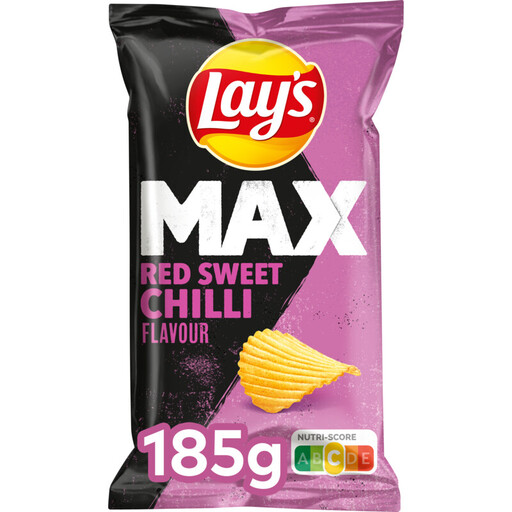
Why it suits this profile: A familiar ridged crisp with a sweet chilli flavour and a size that is suitable for sharing.
The 185 g net weight is clearly stated. The flavour description distinguishes between sweet red chilli and extremely hot spices.
185 g, ridged texture, suitable for vegetarians according to the product information and 0.65 g of salt per 100 g.
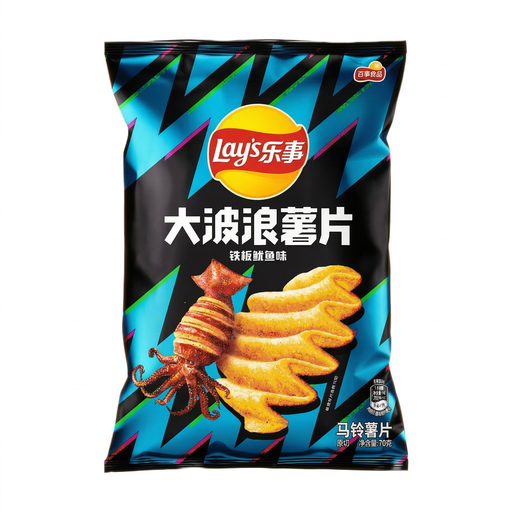
Why it suits this profile: For anyone looking for a distinctive Japanese street-food-inspired flavour in a firm, ridged potato crisp.
The product information explicitly describes the grilled squid flavour and thick ridged texture. This makes your choice less dependent on the packaging alone.
70 g, thick ridges and savoury seafood seasoning. Please note: the product contains squid, soya, wheat, milk and sesame, among other ingredients.
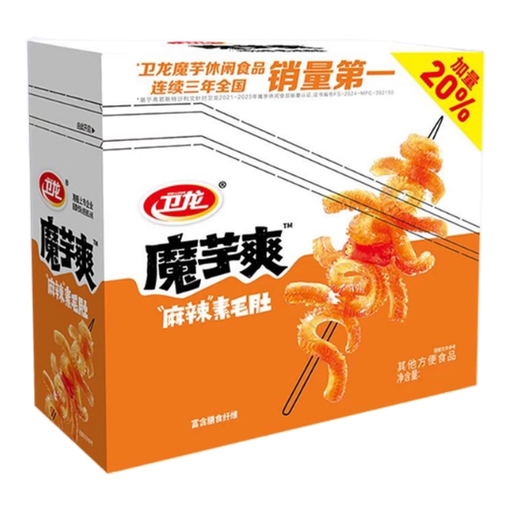
Why it suits this profile: The box contains 20 individual sachets, making it practical for stocking up, sharing and enjoying over several snack breaks.
The packaging states both 360 g and 20 individual portions. The product description also highlights the chewy texture and mala seasoning.
20 individual sachets, 360 g in total and a vegetarian konjac base according to the product information. Contains sesame and lists 5.0 g of salt per 100 g.
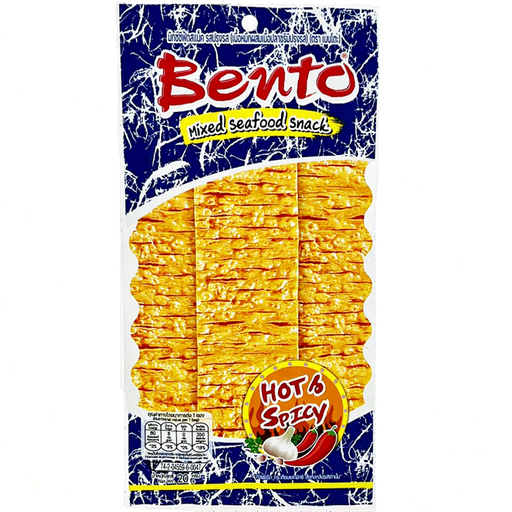
Why it suits this profile: A compact Thai seafood snack that you can open straight away on a train journey, during a break or on a day out.
At 20 g, the portion size is clearly defined. The product information states that refrigeration is not required; however, store it in a dry place away from direct sunlight.
20 g, ready to eat and made with squid and minced surimi fish according to the description. Contains fish and squid; check the current label.
We have put together a complete, up-to-date list of products that fully meet these strict selection criteria and the applicable European safety regulations.
Start with familiar flavours such as sweet chilli, paprika or barbecue. Gusto Paprika Corn Puffs and Lay’s Max Red Sweet Chilli have a crisp base and a clearly described flavour. With seafood snacks, always check whether you enjoy a firm or chewy texture.
Store opened snacks as directed on the packaging in a cool, dry place, away from sunlight, heat and moisture. Seal bags securely. Individual portions are useful when you do not want to finish the entire pack at once. Do not use products if the packaging is damaged.
Compare the net weight, ingredients, allergens, nutritional value, origin and best-before information. Also check whether the product is ready to eat and whether it needs to be refrigerated. With spicy crisps and konjac snacks, it is best to compare the seasoning and salt content rather than relying on the product name alone.
