
Vandaag of morgen in huis

Kwaliteit gegarandeerd

Welkomstaanbiedingen ontgrendelen: GRATIS bezorging | Tot 80% korting | Gratis 30 dagen JoyPlus-proefperiode
Download de app
Soft mochi, crispy rice crackers and glutinous rice desserts are becoming easier to find online in the UK. However, Asian rice snacks vary greatly in flavour, preparation, storage and allergen information. A product that looks appealing on the packaging may not automatically suit how you plan to use it.
The most common purchasing pitfalls are:
First, see whether the product is ready-to-eat, chilled or frozen. Q-Brand Japanese Style Mixed Mochi 450g should be stored at -18 °C or lower according to the product information, and needs around 15 to 20 minutes to thaw. That is a different experience from Bamboo House mochi, which can be eaten straight from the packet.
China Town Glutinous Rice Ball Coconut 200g is a raw frozen product. These rice balls need to be cooked in boiling water until they float to the surface, then boiled for another one to two minutes. This type of rice ball works well as a dessert, but not as a quick snack without any preparation.
The term glutinous rice cake can refer to several different types of product. A Thai sticky rice cake with coconut and sweet potato is soft and can be heated up quickly. A mochi usually has a chewy rice layer with a sweet filling. Mini rice balls without filling, on the other hand, are mainly a base for soup, ginger syrup or shaved ice.
When comparing, pay attention to:
If you want to buy mochi for a family or to share, it is better to compare the total quantity and individual packaging rather than just the price of one bag.
The product packaging is always the definitive source. Check especially for milk, egg, soya, wheat, crustaceans and molluscs. Bamboo House Double Filling Banana Mochi lists milk and egg as allergens. The rice snack with squid flavour lists molluscs, soya and gluten from wheat. Lai Yifen Glutinous Rice Crab Flavour contains crab and prawn, and according to the product information may contain traces of soya, wheat, peanuts and sesame.
You should also check “gluten-free” on a product-by-product basis. Mae Napa Sticky Rice Cake Coconut & Sweet Potato is listed as gluten-free in the product information, whereas other rice snacks contain wheat or possible traces of it. If you have an allergy, always refer to the current label and allergen declaration.
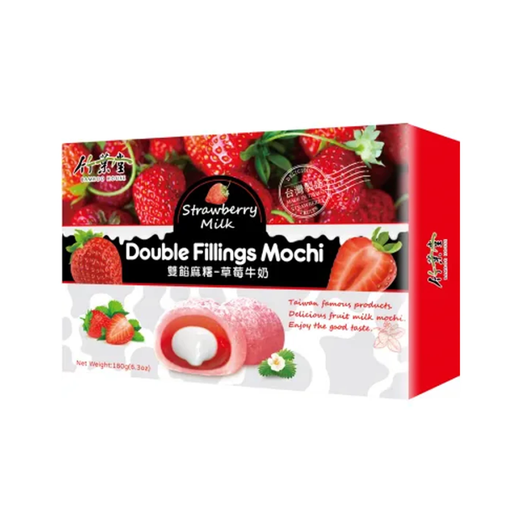
Why this fits the profile: A straightforward 180 g pack with individually wrapped mochi. Ideal for getting to know sweet Asian snacks without committing to a large frozen pack.
The product information states it is ready-to-eat mochi, to be stored in a cool, dry place, and lists allergens such as milk and egg.
180 g, individually wrapped, strawberry filling with a milk layer and made in Taiwan according to the product details.
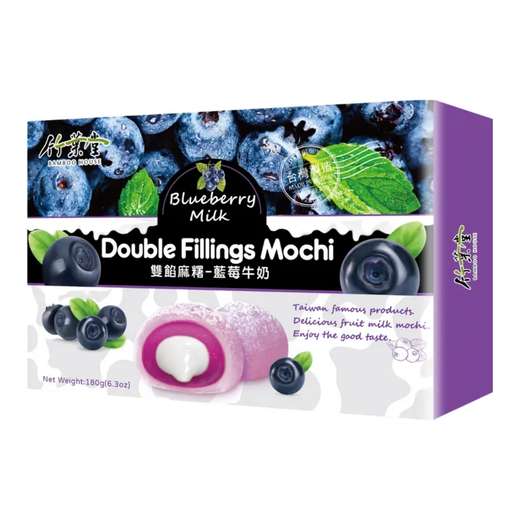
Why this fits the profile: For those looking for a more layered flavour: the product description mentions a blueberry layer and a milky filling inside a soft rice layer.
The flavour is not just judged from the front of the pack: the ingredients list blueberry paste, blueberry juice, milk powder and glutinous rice powder.
180 g, double filling, 332 kcal and 38.3 g sugars per 100 g according to the provided nutritional information.
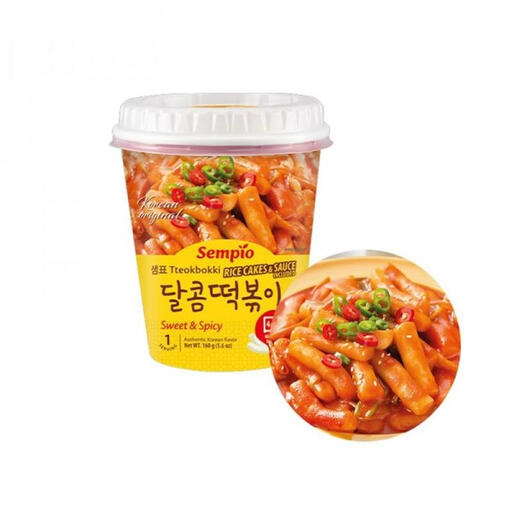
Why this fits the profile: A practical choice for fans of savoury rice snacks and Korean flavours. The portion contains rice cakes with a sweet and spicy sauce.
The product information clearly states the sauce, preparation as an instant product and allergens such as soya and wheat.
160 g, made in South Korea according to the product information, with 227 kcal and 1.5 g salt per 100 g.
We have put together a full, up-to-date list of products that fully meet these strict selection criteria and comply with current European safety regulations.
Mochi is usually a soft, chewy glutinous rice cake with a sweet filling. Rice balls can be either sweet or savoury. Fresh ASIA Mini Rice Ball 300g contains small, unfilled balls that need to be cooked and can then be added to soup, syrup or ice cream desserts. China Town Glutinous Rice Ball Coconut, on the other hand, has a coconut filling and is also a frozen product that must be fully heated first.
This varies by product. Many shelf-stable mochi can be stored unopened in a cool, dry place away from direct sunlight. Q-Brand Mixed Mochi is a frozen product according to the product information. Bamboo House mochi, however, should be stored in a cool, dry place; once opened, an airtight container helps prevent it from drying out. Always check the packaging, best-before date and any instructions from the importer.
Yes, some Thai rice desserts are already packed in individual portions and only need to be heated briefly. Mae Napa Glutinous Rice with Coconut Cream & Taro contains six portions of 80 g and can be heated in the microwave or in hot water according to the product information. The variant with coconut and purple sweet potato can also be heated up quickly. Just be sure to follow the recommended time and handle a heated pouch with care.
