
Vandaag of morgen in huis

Kwaliteit gegarandeerd

Welkomstaanbiedingen ontgrendelen: GRATIS bezorging | Tot 80% korting | Gratis 30 dagen JoyPlus-proefperiode
Download de app
Asian rice snacks come in many forms: from Japanese rice crackers with wasabi to Chinese rice snacks with seaweed and Korean snacks with prawn or chilli. Rice cakes with cheese, barbecue or chocolate also fall into the same search category for many shoppers. That wide choice is handy, but it makes comparing more difficult.
A striking packet doesn't always tell you how much rice is inside, which allergens are present, or how big the pack really is. With this practical buying guide, you can compare flavour, ingredients, portion size and when to eat them before you order online.
"Wasabi", "honey" or "seaweed" can be either a main ingredient or just a flavouring. For example, Amanoya Himemaru Wasabi lists rice as the first ingredient, followed by oil, sugar, salt, wasabi powder and chilli. With Yuki & Love Rice Cracker with Seaweed, the seaweed content is 1.7% according to the product information.
So don't just look at the front of the packet. Check the ingredients list and pay attention to the order: ingredients are usually listed from highest to lowest quantity.
A 500g bag might look appealing for a family or a party, but large packs lose their crunch more quickly when opened frequently. Smaller bags or individually wrapped portions can be more practical for a lunchbox, the office or eating on the go.
Compare the net weight, the number of portions and the individual packaging. WANT WANT Original Flavour Snow Cake contains 150g and twelve individual packs according to the product description, whereas a product like RICHY SWEET RICE CRACKER contains 303g and is designed for sharing.
Rice cakes often feel light and airy, but that doesn't tell you anything about the overall nutritional value. Snack a Jacks Cheese Rice Wafers, for instance, list 382 kcal, 2.4g fat and 1.2g salt per 100g. Want Want Senbei states 4.0g salt per 100g according to the product specification.
So don't use nutritional claims as your only selection criterion. Always check the table per 100g and, where stated, the values per portion too.
Not every snack that looks like a rice cracker is mainly made from rice. Snack a Jacks Barbecue Pepper contains 47% brown rice and 46% corn according to the ingredients list. PanPan Xiao Bei Original Flavour, on the other hand, contains at least 60% wheat flour and rice flour according to the product information.
If you're specifically looking for rice crackers, rice cakes or Japanese rice snacks, it's worth checking:
Choose the flavour based on when you'll be eating it. For a mild snack, honey, sweet-savoury or chocolate often work well. Richy Jinju Rice Cracker Honey Flavour combines rice, honey, sugar and soy sauce according to the product information. For a savoury option, rice snacks with seaweed, cheese or barbecue are logical choices.
For fans of spicy rice crackers, wasabi, chilli and hot prawn flavours are available. Amanoya Himemaru uses wasabi powder and chilli; NongShim Shrimp Cracker (Hot) lists 8.5% fresh prawn and chilli powder. "Spicy" remains a subjective description of taste. If you're unsure, start with a small pack.
Always check the current packaging before you buy. Soy, wheat, milk, sesame, crustaceans and molluscs are particularly common in Asian snacks. Examples:
The best before date is on the packaging. Store rice snacks in a cool, dry place, away from direct sunlight and moisture. Seal an opened bag tightly. A damp cupboard or a half-open bag can make the crunchy texture deteriorate more quickly.
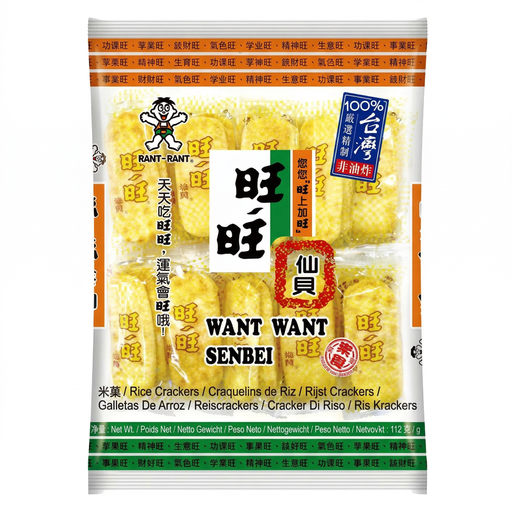
Why This Fits Their Persona: A compact pack for anyone who wants to try Japanese or Chinese rice snacks first without buying in bulk straight away.
The net weight is clearly stated: 112g. Do check the salt content of 4.0g per 100g.
Crunchy baked rice crackers with a sweet-savoury profile; ready to eat and great for sharing.
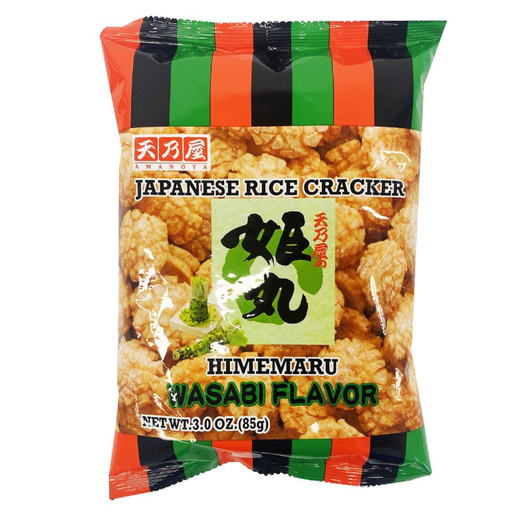
Why This Fits Their Persona: Ideal for anyone looking for a distinctive Japanese flavour and a firm crunch to enjoy with tea or drinks.
The wasabi and chilli flavour is explicitly mentioned in the product description; allergen information remains the key guide.
Product of Japan according to the product information; 85g and 450 kcal per 100g.
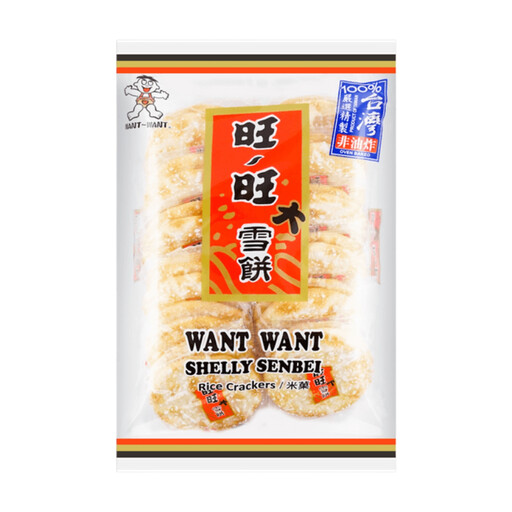
Why This Fits Their Persona: Handy for families, lunchboxes and occasions when several people want to grab a portion.
The individual wrappers help keep the rest of the stock sealed and the texture fresher for longer.
150g, twelve individual packs according to the product description, and ready to eat straight away.
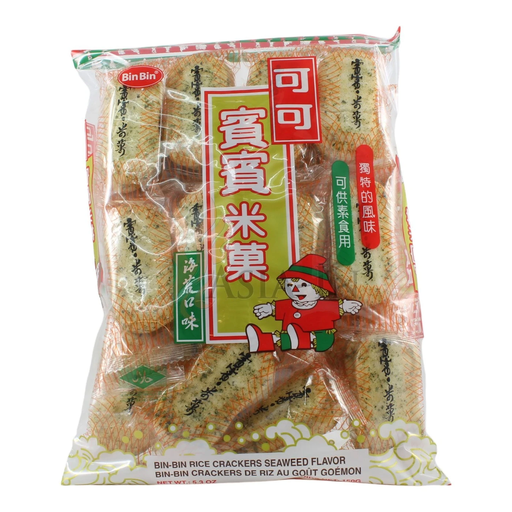
Why This Fits Their Persona: A savoury choice for a sharing platter, with tea or for a casual get-together at home.
The product information lists both the seaweed content of 0.8% and the presence of wheat and soy.
150g and a combination of sweet, savoury and seaweed; ready to eat with no preparation needed.
Browse a current selection of rice snacks and compare flavours, pack sizes, ingredients and allergen information.
Japanese rice crackers, such as senbei, are usually more compact and more savoury in flavour. Rice cakes are often larger, airier and sometimes made from a combination of rice and corn. Check the ingredients list to see the difference.
Keep them in a cool, dry place and seal the packaging as airtight as possible. Avoid moisture and direct sunlight. Individually wrapped snacks are practical when a bag isn't eaten all at once.
That depends on the specific allergy. Soy, wheat, milk, sesame and crustaceans are common. Always read the current labelling and warnings on the packaging, even if a product seemed suitable before.
