
Vandaag of morgen in huis

Kwaliteit gegarandeerd

Welkomstaanbiedingen ontgrendelen: GRATIS bezorging | Tot 80% korting | Gratis 30 dagen JoyPlus-proefperiode
Download de app
When you buy Asian rice noodles online, you’ll quickly see dozens of packets that look very similar. Yet rice vermicelli, rice sticks and wide noodles differ greatly in thickness, preparation and use. Choosing the wrong type can leave you with noodles that fall apart, clump together or stay too firm.
This buying guide will show you what to look for before you order Vietnamese, Thai or Chinese rice noodles.
Not every thin, white noodle is a rice noodle. Rice vermicelli is usually made from rice and water, while glass noodles often contain mung bean or other starches. So always check the ingredients list.
A product like Go-Tan Vermicelli Noodles, for example, consists of 85% mung bean starch and water. That’s a glass noodle, not a rice vermicelli, even though the shape looks similar.
A 908 g packet might seem good value, but it’s not necessarily practical if you only need one or two portions. On the other hand, a small packet can work out more expensive if you regularly make pho, bun or stir-fries.
So look at:
Some dried rice noodles need to be soaked and briefly blanched. Other varieties are fresh or frozen and require boiling, steaming or direct heating. Cooking a fine vermicelli for too long can make it soggy, while a wide noodle needs enough soaking time first.
Always follow the instructions on the packet. The current packaging takes priority over online product information.
For gluten-free rice noodles, the ingredients list matters more than just a claim on the front. Products made solely from rice, tapioca, water and salt contain none of the 14 major EU allergens according to the available product information. However, do check the label for possible cross-contamination and recipe changes.
Pay extra attention to sauce packets. A rice noodle roll or ready meal may contain wheat, soya, peanut, sesame, fish or shellfish. For example, the A KUAN Hong Kong Steamed Rice Noodle Rolls list gluten, peanut, sesame, soya and oyster among the allergens.
The thickness determines how the noodle behaves in a dish:
For pho, flat or medium-wide rice noodles are typically used. For Thai stir-fries, rice sticks with a suitable width are more practical than very fine vermicelli.
Dried noodles are easy to store in your cupboard. Fresh Vietnamese rice noodles usually have a shorter shelf life and need to be kept chilled. Frozen products, such as Freshasia Shrimp Cheung Fun, must be stored at -18 °C or below and prepared from frozen according to the packet instructions.
Before ordering, also check the delivery conditions. A chilled or frozen product requires different planning than dried rice sticks.
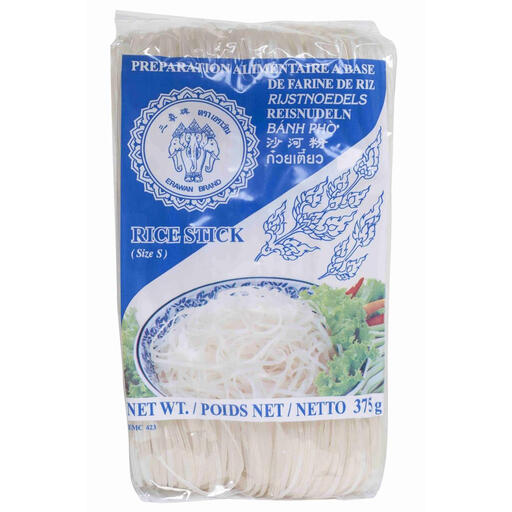
Why it suits this profile: The 375 g packet is a manageable size for anyone wanting to try different Asian dishes without buying a bulk pack straight away.
The product information states 1 mm thick rice vermicelli with rice and water as ingredients. This makes the difference from mung bean noodles clearer.
Gluten-free according to the product information; suitable for stir-fries, soup, salad and fresh spring rolls.
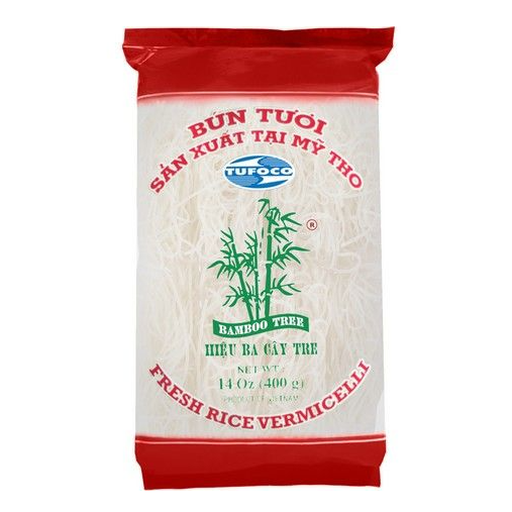
Why it suits this profile: This thicker fresh bun tuoi is designed for Vietnamese dishes that need a firm noodle texture, such as bun bo Hue and bun cha.
The product page states a preparation method of soaking for 3 to 5 minutes, then draining and rinsing with cold water. This helps prevent overcooking.
Thicker variety for Vietnamese soups and noodle bowls; ingredients listed as rice, tapioca and water.
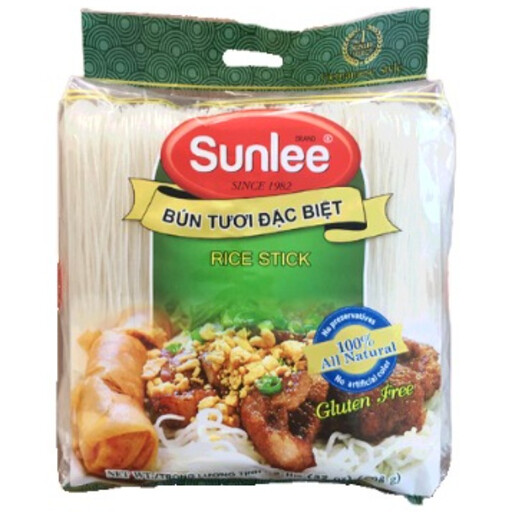
Why it suits this profile: The bulk pack is practical for households that regularly make bun, Vietnamese rice noodle soup or meals for several people.
The diameter of 1.2 mm is stated, so you can better match the noodle to bun dishes rather than relying only on the packet image.
908 g contents; made from 100% rice according to the product information and listed as free from the 14 major EU allergens.
We’ve put together a full, up-to-date list of products that fully meet these strict selection criteria and comply with current European safety regulations.
No. Many rice noodles are made from rice and water and are labelled gluten-free. However, sauces, wheat starch or production lines can introduce gluten. So always check the ingredients and allergen information on the packet.
Dried rice noodles can usually be kept in a cool, dry cupboard until the date on the packet. Seal an opened packet well and protect it from moisture. Fresh and frozen varieties have different storage times; follow the specific instructions for those.
Choose a thin to medium-wide rice noodle that is suitable for soaking and brief blanching. Very fine rice vermicelli is better suited to bun, salads and spring rolls. Always check the preparation instructions, as the required time varies by brand and size.
