
Vandaag of morgen in huis

Kwaliteit gegarandeerd

Welkomstaanbiedingen ontgrendelen: GRATIS bezorging | Tot 80% korting | Gratis 30 dagen JoyPlus-proefperiode
Download de app
Fancy a crunchy rice snack with your tea, while you're working, or on the go? When you want to buy Asian rice crackers, you'll quickly spot lots of similar-looking packs. Yet the products differ greatly in flavour, ingredients, allergens and size. A sweet honey cracker suits a different moment than a savoury senbei with seaweed or a spicy snack with Sichuan pepper.
What's more, the packaging doesn't always tell the full story. So look out for these common pitfalls before you buy rice crackers.
Some products are described as "Japanese-style" or senbei rice crackers, yet they're made in another country. That doesn't automatically mean the flavour or quality won't meet your expectations, but the origin is still relevant. So check the country of origin and the full product description.
For example, the WANT WANT Senbei Rice Crackers 112g are described as crunchy, baked rice crackers with a sweet-savoury taste and are made in China. The WANT WANT Senbei Large 520g has a Japanese style, but is likewise a product of Taiwanese origin that's produced in China.
A light texture doesn't tell you much about the overall nutritional value. Rice snacks can contain roughly 390 to over 550 kcal per 100 grams, depending on the amount of oil, sugar and other ingredients. So always check the nutritional information per 100 grams, especially energy, fat, sugars and salt.
"Non-fried" doesn't automatically mean a snack is low in calories either. The Mi Laotou Barley Rice Bar, for instance, contains 509 kcal and 25 grams of fat per 100 grams according to the product information. So use such terms as an indication of the preparation method, not as a general health promise.
A 150-gram pack may contain loose crackers, while another pack has individually wrapped portions. For on the go or in a lunchbox, individual portions are often more practical. For a film night or when you have guests, a larger family-size pack can be better value, but once opened you'll need to seal the bag well to keep the crackers crunchy.
First, choose the flavour type that suits the occasion:
Bear in mind that not every product in the range is a rice cracker. A product made mainly from wheat flour, like some biscuits, has a different base and texture. Frozen glutinous rice cakes, meanwhile, are desserts that need steaming or microwaving – they're not ready-to-eat crunchy rice snacks.
Always check the allergen information on the product page and packaging. Many Asian rice crackers contain soya and wheat via soy sauce powder. Seaweed varieties may also contain fish. Products with peanut pieces list peanuts as an allergen; sesame is common in seasoned or puffed snacks.
The WANT WANT Seaweed Rice Crackers 160g contains soya, wheat and fish according to the product information. The Lai Yifen Glutinous Rice Crisps contain soy sauce with soya and wheat, and may contain traces of peanut and sesame. If you have allergies, always check the current packaging, as the composition or warnings can change.
Don't just compare the price per bag – also look at the net weight and number of portions. Here are a few examples:
Store dry rice snacks in a cool, dry place, away from direct sunlight and moisture. Seal the pack well after opening and consume the product promptly. A soft texture after opening usually indicates moisture absorption, not a fault with the recipe.
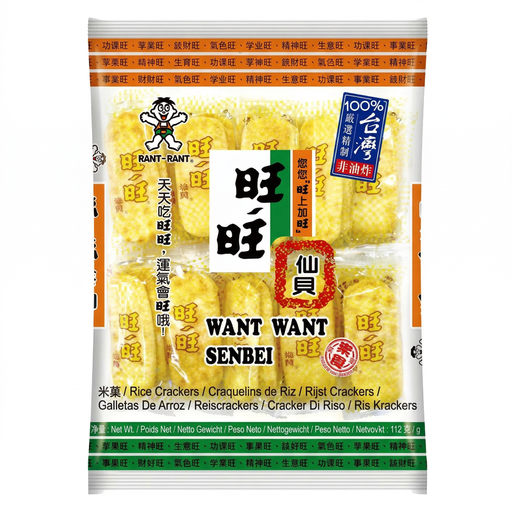
Why this fits the profile: The 112-gram size is manageable when you're trying Asian rice crackers for the first time. The described sweet-savoury flavour is approachable with tea or as an office snack.
The product information states the weight, flavour, allergens and nutritional values, so you don't have to rely on the packaging alone.
112 grams, ready to eat, with a rice base and a combination of sweet and savoury flavours.
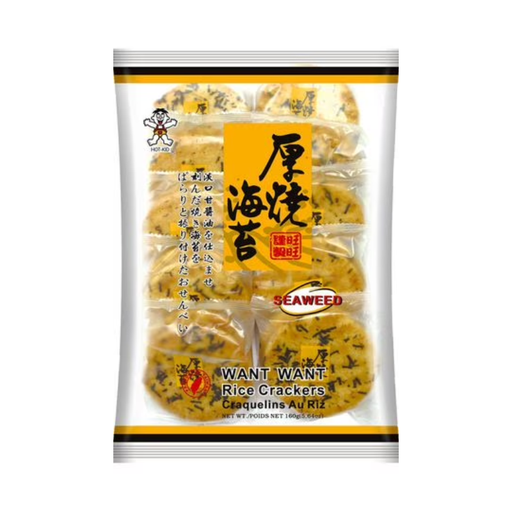
Why this fits the profile: The combination of a crunchy rice base, seaweed and a savoury flavour suits fans of pronounced umami. Individual wrappers are handy for sharing.
The product page clearly states that the product contains fish, soya and wheat. This means you can check the ingredients before you order.
160 grams, individually wrapped and with seaweed, soy sauce and bonito extract according to the product information.
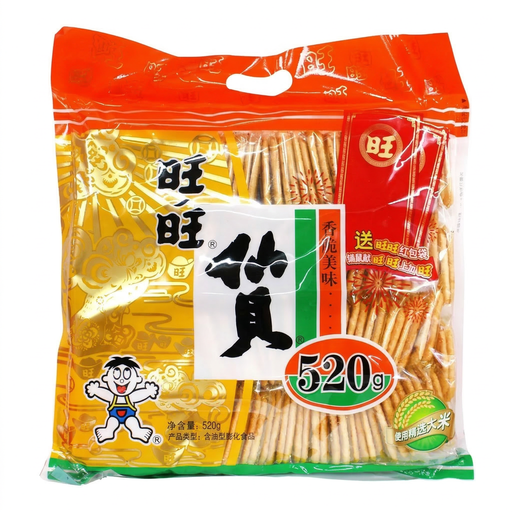
Why this fits the profile: The large size with 88 individual packs is aimed at households, parties and regular sharing. The individually wrapped crackers are practical for multiple snacking occasions.
The number of packs and net weight are listed, so you can match the size to your consumption rather than just looking at the bag size.
520 grams, 88 packs, crunchy texture and a lightly savoury flavour profile according to the product description.
We've put together a full, up-to-date list of products that fully meet these strict selection criteria and comply with current European safety regulations.
For a first purchase, small packs like 52, 98 or 112 grams are handy. If you want to compare several flavours, choose two different profiles: for example, a savoury senbei and a sweet honey rice cracker. The Richy Jinju Rice Cracker Honey Flavour, 100 grams, combines rice, honey, sugar and soy sauce according to the ingredients.
For a family or office, a larger size makes more sense. In that case, check whether the crackers are individually wrapped and compare the price per 100 grams. If you're after a bold flavour, you can look at spicy varieties with chilli or Sichuan pepper, such as the Lai Yifen Glutinous Rice Crisps. Bear in mind that these contain 2.5 grams of salt per 100 grams according to the nutritional information provided.
Asian rice crackers are crunchy snacks made from rice, rice flour or glutinous rice. They can be baked, puffed or processed in another way. Common flavours include soy sauce, seaweed, honey, coconut, peanut and chilli. The term covers products from Japan, China, Taiwan, Vietnam and Southeast Asia, among others.
Keep them in a cool, dry place, seal the bag well and keep them away from moisture and direct sunlight. Individual wrappers help preserve the texture for longer. Always check the storage advice on the packaging. Frozen glutinous rice cakes don't belong in this category – according to the product information, they must be stored at a minimum of -18 °C and prepared before eating.
Compare flavour, net weight, portion packaging, ingredients, allergens and nutritional value per 100 grams. Also check the origin and the best-before information. This way, you'll avoid buying a large pack with a flavour that doesn't suit you, or choosing a product that's not suitable because of soya, wheat, fish, peanut or sesame.
