
Vandaag of morgen in huis

Kwaliteit gegarandeerd

Welkomstaanbiedingen ontgrendelen: GRATIS bezorging | Tot 80% korting | Gratis 30 dagen JoyPlus-proefperiode
Download de app
Asian noodles come in many forms: from instant noodles and Korean noodles to udon, rice noodles and wide Chinese noodles. The difference isn't just about flavour. Cooking time, texture, portion size, ingredients and allergens all determine whether a pack is right for your meal.
If you only look at the eye-catching packaging or the lowest price, you can easily fall into some common traps.
Not every pack labelled "instant" is ready without cooking. Some products need to be prepared in boiling water for a few minutes first. Others contain pre-cooked noodles that only need to be mixed or reheated.
Always check the instructions. For example, with the A'KUAN Broad Noodle, you need to add around 500 ml of boiling water and leave the noodles covered for 4 to 5 minutes. According to the product information, the YuanXian Chengdu cold noodles can be mixed straight away with the sauce and toppings.
Wide noodles generally hold a lot of sauce, while thin noodles cook faster and are often suitable for light soups. Udon noodles are thicker and have a firm texture. Rice noodles have a different bite to wheat-based noodles.
So a wide noodle isn't automatically right for every dish. For a stir-fry, you want a type that won't fall apart easily. For noodle soup, it's important that the noodle complements the broth and doesn't absorb too much liquid.
Asian noodle products can be high in salt, especially when a full seasoning mix, oil or sauce is added. So look at the nutritional value per 100 g and also at the portion size.
Also pay attention to allergens. Many Chinese noodles, Korean noodles and Japanese noodles contain wheat and gluten. Sauces can also contain soya, sesame, peanut, fish or shellfish. The information on the packaging is what matters; product compositions can change.
Wheat noodles are often firm and elastic. They work well with stir-fries, soups and hotpot. Udon, Chinese noodles and some Korean noodles fall into this group.
Rice noodles are usually lighter in texture and are used in dishes such as Thai noodle soup, Vietnamese dishes and salads. Check whether the noodles need to be soaked or cooked. The MAMA Yentafo pack contains flat rice noodles and states a cooking time of 2 to 3 minutes.
The shape determines how a sauce behaves:
The JinShaHe Shaved Noodles have a wide, ribbon-like shape and are cooked for 5 to 7 minutes according to the product information. The Bai Xiang Knife-shaved Noodles are around 8 mm wide and contain konjac flour as well as wheat flour.
For a student or busy household, individual sachets and a short preparation time are practical. For a restaurant, catering business or large family, a bulk pack can be more cost-effective, as long as you store the noodles dry and well sealed.
Look out for these points:
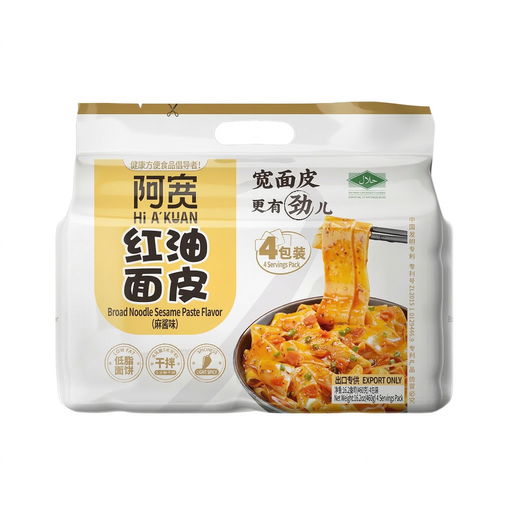
Why this fits the profile: The wide noodle sheets are packed per portion and prepared with hot water. That's practical for a quick meal without many extra ingredients.
The preparation steps and required amount of water are clearly stated in the product information. Do check the allergens present: wheat, soya and sesame.
460 g content, wide texture and separate sauce, seasoning and chilli oil packets.
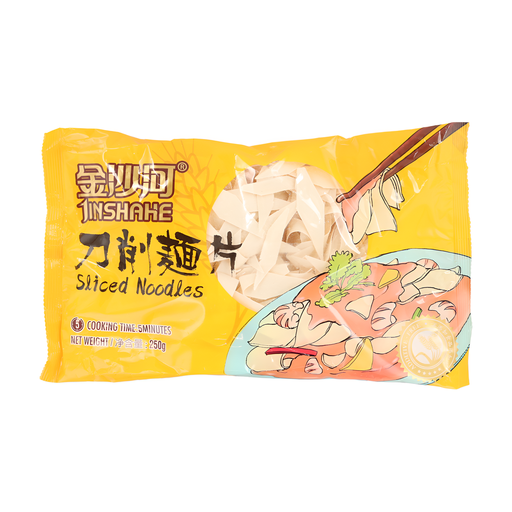
Why this fits the profile: The wide, shaved shape is suitable for home cooks who value texture and want to make their own sauce or broth.
There is no ready-made sauce included, so you can control the amount of salt, oil and seasonings yourself.
Simple composition of wheat flour, water and salt; suitable for soup and stir-fry dishes.
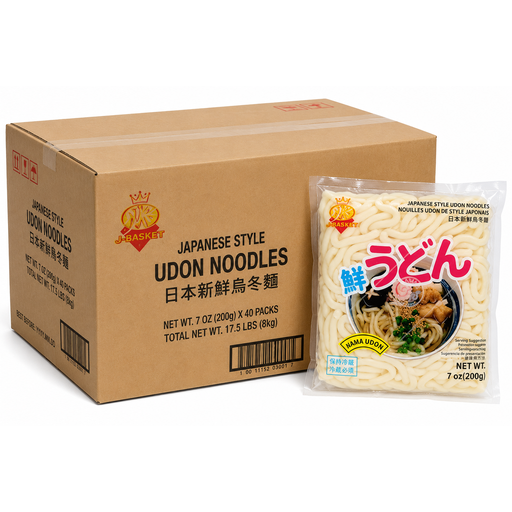
Why this fits the profile: The box of 30 individual portions is aimed at hospitality, catering, large households or frequent udon preparation.
The portions are individually packed. This means you don't have to divide up a large opened pack each time.
30 portions of 200 g; suitable for udon soup, stir-fry dishes and cold noodles.
We've put together a full, up-to-date list of products that fully meet these strict selection criteria and comply with current European safety regulations.
Instant noodles with separate seasoning sachets are practical when you have little preparation time. Just check whether cooking is needed and look at the salt content. For a quick stir-fry meal, pre-cooked udon noodles are handy: you only need to heat them up and mix with vegetables, sauce or tofu.
Udon noodles are usually thick, smooth and firm. Chinese noodles vary more in shape: they can be thin, wide, dried or knife-cut. Wide Chinese noodles work well with strong sauces and broths. Always check the specific ingredients and preparation on the packaging.
Unopened dry noodles can be stored until the date on the pack, as long as they are kept cool, dry and out of direct sunlight. Fresh or pre-cooked noodles often have different storage instructions. After opening, they should be sealed well and used according to the packaging. When in doubt, always check the product packaging.
