
Vandaag of morgen in huis

Kwaliteit gegarandeerd

Welkomstaanbiedingen ontgrendelen: GRATIS bezorging | Tot 80% korting | Gratis 30 dagen JoyPlus-proefperiode
Download de app
Asian noodles come in many forms, from instant noodles and ramen to Chinese noodles, Korean noodles, rice vermicelli and wide noodles for stir-fries. This extensive range is useful, but it can also make choosing more difficult. Eye-catching packaging tells you little about preparation time, portion size or flavour intensity.
So pay particular attention to these three common pitfalls:
The right noodles depend on the preparation method and the texture you want.
Do not just look at the number of minutes; check the method too. According to the product information, A Kuan Red Oil Broad Noodle Mala needs to soak in boiling water for 5 to 6 minutes. You then drain the water and mix in the oil, powder and vinegar sachets. This is different from a noodle soup, where the cooking water remains part of the dish.
Other products need to be boiled in a pan instead. Wheatsun Shanxi Knife-Cut Noodles 400g, for example, has a stated cooking time of 6 to 8 minutes. For busy working days, bowls with a preparation time of around 3 minutes are often more convenient.
The base determines the texture. Wheat flour generally creates an elastic texture, while sweet potato or rice starch can produce a smoother, more translucent noodle. Always check the allergens on the label as well.
Many Asian noodles contain wheat and gluten. Soya, sesame, mustard, peanuts, egg, fish or shellfish may also be present in the flavourings. According to the product information, NongShim Shin Ramyun Black lists gluten, egg, sesame, soya, fish and molluscs, among other allergens. If you have allergies, check the current packaging and do not rely solely on product photos.
A 110 or 120-gram bowl is different from a pouch containing five portions. Check:
For example, the A Kuan Red Oil Broad Noodle Bowl contains 110 grams and states 4.5 grams of salt per 100 grams. The exact nutritional information may vary by recipe and packaging, so use the label as your starting point. You can use only part of a flavour sachet and add extra vegetables, egg or tofu if you want to customise the meal.
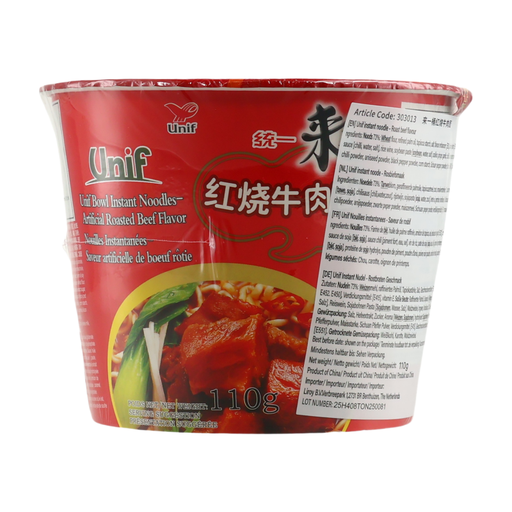
Why it suits this profile: A ready-to-prepare bowl is straightforward for anyone buying instant noodles for the first time and who does not want to measure out separate ingredients.
The 110-gram weight and bowl format make the portion clear. However, check the current preparation instructions on the packaging.
Roast beef flavour, dehydrated vegetables and preparation with hot water according to the product description.
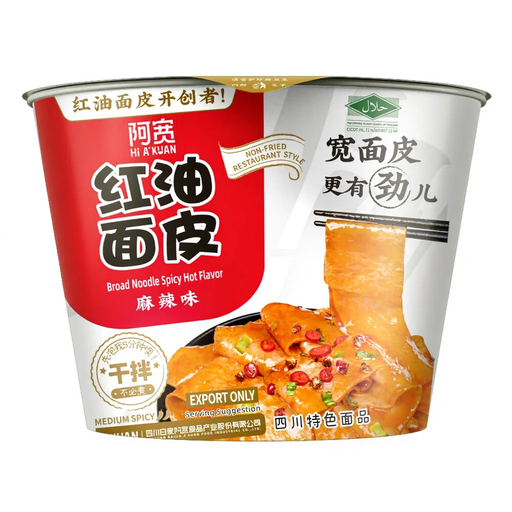
Why it suits this profile: Ideal for fans of wide, elastic noodles with chilli oil, vinegar and a distinctive mala-style flavour.
The product information specifically states that the noodles are non-fried and need to soak for 5 to 6 minutes. The level of heat depends on how much sauce you use.
Wide wheat noodles, separate oil, powder and vinegar sachets, plus plenty of scope for toppings such as vegetables, egg or peanuts.
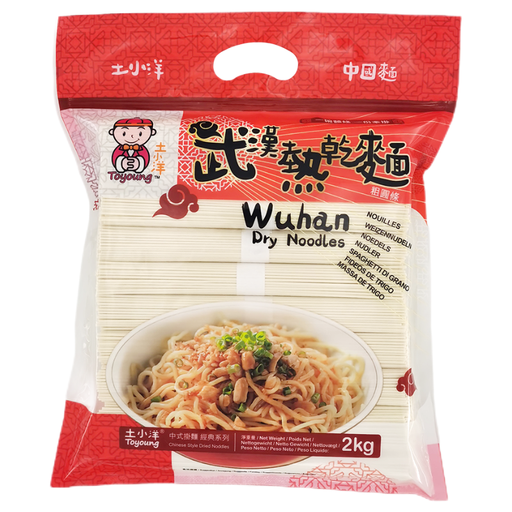
Why it suits this profile: The large pack is practical for meal prep, families, keen cooks and catering businesses that want to choose their own sauces and toppings.
You are not paying for multiple small bowls or separate flavour sachets. However, allow for a cooking time of around 4 to 5 minutes and keep the opened pack sealed.
2 kg of wheat noodles with flour and salt as the main ingredients, suitable for stir-fries, soups, cold noodles and Wuhan hot dry noodles.
We have put together a complete, up-to-date list of products that fully meet these strict selection criteria and the applicable European safety regulations.
Instant noodles in a bowl are usually the easiest option: add hot water and follow the stated soaking time. For more control over the sauce and toppings, wide noodles or dried Chinese noodles are more suitable. Always check whether you need to drain the noodles or retain the stock.
Store dried noodles in a cool, dry place away from direct sunlight. Once opened, it is important to keep the pack tightly sealed to limit exposure to moisture and odours. For large packs, also check the best-before date on the packaging.
Not necessarily. The intensity varies by sauce and brand. Start with part of the chilli oil sachet and add more later if you wish. If you have allergies, check the ingredients and allergens, especially if sesame, soya, wheat or peanuts are a concern.
