
Vandaag of morgen in huis

Kwaliteit gegarandeerd

Welkomstaanbiedingen ontgrendelen: GRATIS bezorging | Tot 80% korting | Gratis 30 dagen JoyPlus-proefperiode
Download de app
Asian jelly sweets and snacks are popular with fans of Japanese, Korean, Thai and Chinese flavours. You’ll find soft fruit jelly, konjac jelly, mochi, gummies and individually wrapped snacks in flavours such as mango, lychee, peach and grape.
However, colourful packaging doesn’t tell the whole story. Some products are high in sugar, others contain gelatine or animal-derived ingredients, while some appear low in calories but use sweeteners that not everyone is looking for. With these practical checks, you can compare products more effectively and find a snack that suits your household, dietary preferences and occasion.
A flavour such as mango, lychee or peach often refers to flavouring, concentrate or a small amount of juice. COZZO Fruit Jelly Sticks, for example, contains four varieties. According to the ingredients list, the mango jelly contains water, sugar, thickener, 0.50% mango juice and flavouring, among other ingredients. The lychee jelly contains 1.00% lychee juice.
So don’t rely solely on the front of the packaging. Check:
A low-calorie snack can be useful if you’re monitoring your energy intake, but also check which sweeteners and thickeners have been used. According to the product description, Hethstia Konjac Jelly Lychee contains 7 kcal per 100 grams/ml and 0 grams of sugar. The ingredients list includes erythritol, konjac flour and carrageenan, among others.
Jele Light Grape contains 37 kcal per 100 grams and 8.4 grams of sugar per 100 grams. “Light” therefore does not mean the same as sugar-free. Always compare the nutritional values per 100 grams or 100 ml and take the serving size into account.
Many jelly sweets and gummies contain gelatine. According to the ingredients list, ENNJOI Sourmeow Gummy Grapefruit Flavor contains gelatine. ENNJOI Peeling Gummy 2.0 Peach Flavor also contains gelatine.
If you follow a vegan diet, look for products with an explicit vegan label and check the ingredients as well. Delief Vegan Collagen Konjac Jelly Peach lists plant-based ingredients, including carrot as a source of “vegetable collagen”. A product that uses the word “collagen” is therefore not automatically animal-derived, but always check the current packaging.
Texture varies considerably between product types:
With konjac jelly and other firm jelly products, always check the usage instructions and warnings on the packaging. Young children may have difficulty with certain shapes and textures. Only serve snacks in a way that is appropriate for the child’s age, and supervise them whenever necessary.
Use the nutrition table to compare products fairly. Here are a few examples from the range:
These figures make it clear that “jelly” is not a single nutritional category. Gummies and mochi are more akin to sweet treats, while konjac jelly can be considerably lighter in terms of energy content.
For school, the office, travel or parties, individually wrapped snacks are practical. COZZO Fruit Jelly Sticks contains 12 sticks of 20 grams each. Seiki Kyoho Grape Mochi and Seiki Ramune Mochi are individually wrapped, according to the product description.
Also pay attention to the storage instructions:
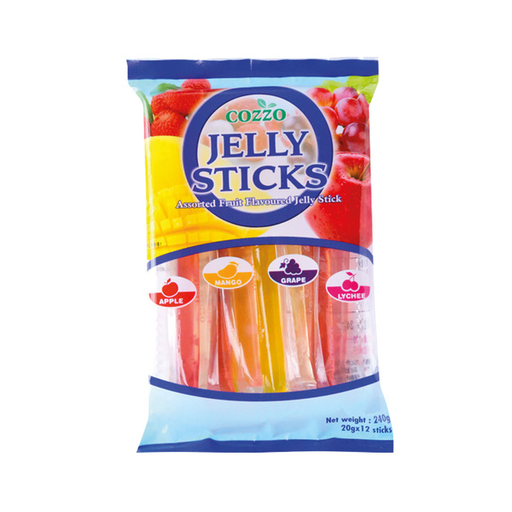
Why it’s a good fit: A shareable pack with four fruit flavours for families, entertaining or anyone trying Asian jelly for the first time.
The serving format is clear: 12 sticks of 20 grams each. You know exactly how many individual snacks you’ll receive.
Four flavours, individually wrapped, and 104 kcal per 100 grams according to the product information.
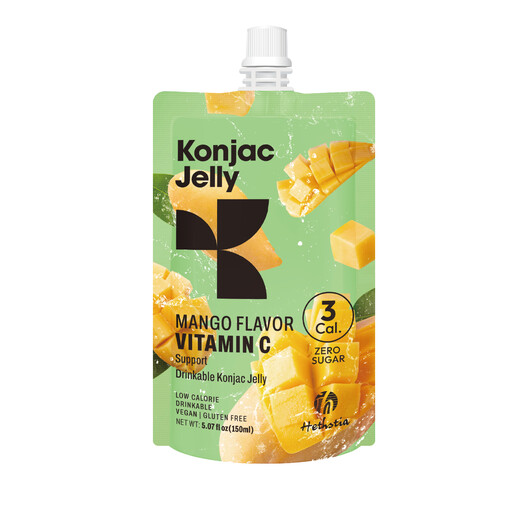
Why it’s a good fit: A smooth mango jelly in a squeezable pouch for the commute, the office or a chilled snack break.
The product description lists 3 kcal and 0 grams of sugar per 100 grams/ml. Still, verify these details on the packaging you receive.
According to the product information, it is sugar-free, gluten-free and ready to eat straight from the pouch.
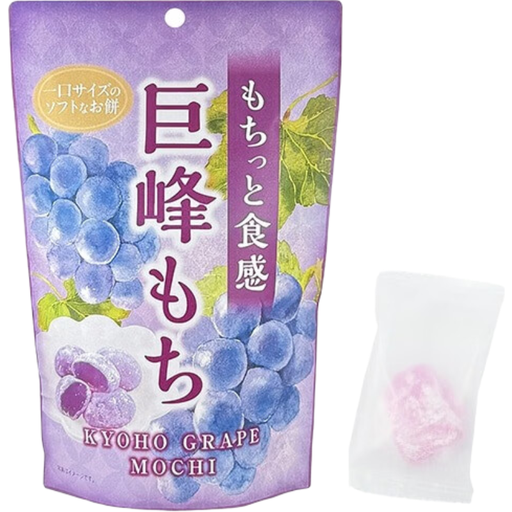
Why it’s a good fit: For anyone looking for a soft, chewy Japanese snack to enjoy with tea, serve to guests or savour as a small dessert.
Individual wrapping makes portions easier to manage than with a large open bag of sweets.
Kyoho grape juice appears in the ingredients list, with 235 kcal per 100 grams according to the product information.
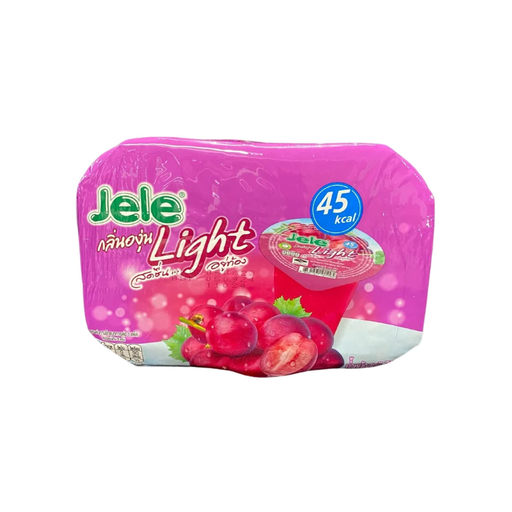
Why it’s a good fit: A Thai multipack for anyone who wants several portions at home for school, work or the pantry.
The packaging clearly states that it contains six 125-gram packs, so you don’t have to rely solely on the product image.
A 12-month shelf life according to the product description, plus 37 kcal per 100 grams.
Explore a current selection of products and compare flavours, ingredients, serving sizes and dietary preferences before placing your order.
That depends on the product. Hethstia Konjac Jelly Apple lists 3 kcal per 100 grams/ml, while Jelly B Konjac Jelly Mango also lists 3 kcal per 100 ml. Always check the nutrition table, as other jelly products may contain sugar or syrups.
Not necessarily. Gummies and jelly sweets sometimes contain gelatine, as is the case with the two ENNJOI products in this selection. Only choose vegan jelly when this is clearly stated in the product information, and check the ingredients for gelatine, milk, eggs and other animal-derived ingredients.
Dry snacks such as mochi and fruit sticks are generally best stored in a cool, dry place. According to the product information, opened pouches of konjac jelly often need to be refrigerated and consumed within a few days. Q-Brand Mico Mochi Mango Flavor must be stored in the freezer. Always follow the exact storage period stated on the product packaging.
