
Vandaag of morgen in huis

Kwaliteit gegarandeerd

Welkomstaanbiedingen ontgrendelen: GRATIS bezorging | Tot 80% korting | Gratis 30 dagen JoyPlus-proefperiode
Download de app
Asian jelly snacks come in many forms: from konjac jelly in a drinkable pouch to fruit jelly in individual cups, jelly sticks and soft Asian desserts. This wide range makes choosing fun, but also confusing. A packet with words like “light”, “fruit” or “natural” doesn’t automatically tell you enough about the ingredients, sugar content, texture or suitability for children.
With this practical buying guide, you can compare Asian jelly snacks on verifiable points. This way, you’ll avoid a purchase that’s too sweet, doesn’t suit your dietary preferences or turns out to be inconvenient for on-the-go snacking.
A fruit jelly may contain fruit pulp or fruit juice, but often also water, sugar, thickeners and flavourings. So look at the percentage of fruit, juice or purée in the ingredients list. For example, Taiwanese SHENG XIANG ZHEN White Peach Jelly states 8% white peach, while the Mandarin Orange Fruit Jelly states 5% fruit juice.
A low-calorie jelly snack may contain sugar, erythritol, sucralose or other sweeteners. Always check the nutritional information per 100 grams or 100 millilitres and the amount per packet. According to the product information, Jelly B Konjac Jelly Blueberry contains 10 kcal and 2 grams of sugar per 100 ml. Other variants state 0 grams of sugar but use sweeteners such as erythritol or sucralose.
A drinkable jelly in a pouch is handy for on-the-go, but a jelly cup is often more suitable as a dessert at home. Jelly sticks are individually wrapped and easy to take with you, while a large multipack is especially useful for families or sharing. With konjac jelly, also pay attention to the warnings on the packaging. Some jelly products are not suitable for young children due to the risk of choking.
Start with the ingredients list. Check in particular:
The European allergen information on the label is the leading source. Even when a product states in its description that it contains none of the 14 main EU allergens, it’s still wise to check the actual packaging.
For an individual snack, portions of around 100 to 180 grams are practical. Jelly B Konjac Jelly Peach and Blueberry come in pouches of 150 ml. The SHENG XIANG ZHEN fruit jellies consist of six cups of 180 grams. This way, you can see at a glance whether you’re buying a snack for one occasion or a supply for several people.
Choose a pouch for work, school or travel. A jelly cup is better suited to a dessert moment. For treats and lunchboxes, individually wrapped jelly sticks are a practical choice.
Konjac jelly usually has an elastic, soft texture and can be drinkable or squeezable. Fruit jelly sometimes contains fruit pulp or pieces of fruit. Nata de coco, on the other hand, adds small, firm coconut gel cubes. Many products are served chilled according to the product description, but always check the storage advice on the label.
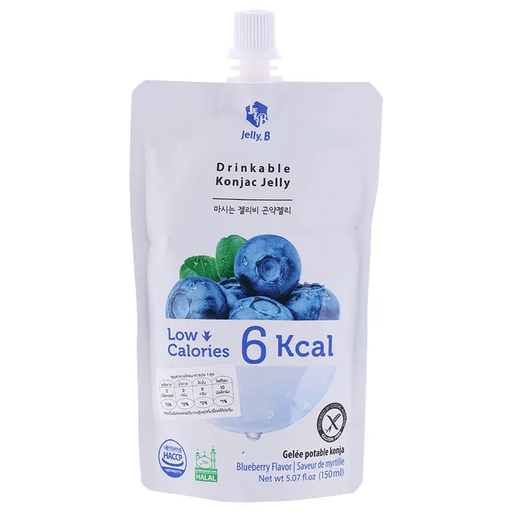
Why this suits the profile: A compact drinkable konjac jelly to get acquainted with the soft jelly texture and berry flavour, without having to buy a multipack straight away.
The product information states 10 kcal, 2 grams of sugar and 150 ml per packet. This makes the portion and nutritional values clearly defined.
Blueberry flavour, 150 ml pouch, Halal-certified according to the product description and made in Korea.
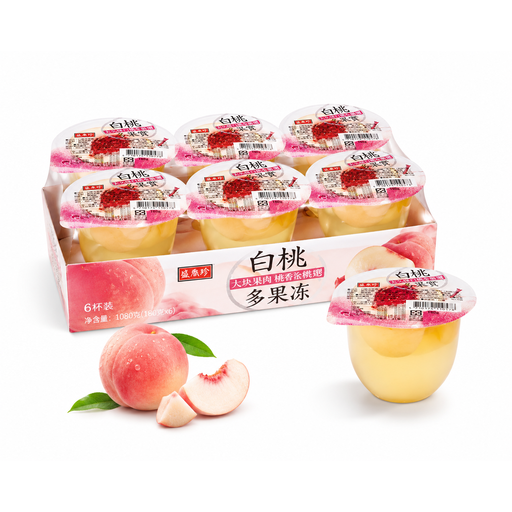
Why this suits the profile: Ideal for anyone looking for a fruit dessert with pieces of peach and a clearly portioned pack.
The stated peach percentage and nutritional information per 100 grams make it easier to compare with other fruit jellies.
8% white peach according to the product information, six individual cups of 180 grams and a stated energy value of 75 kcal per 100 grams.
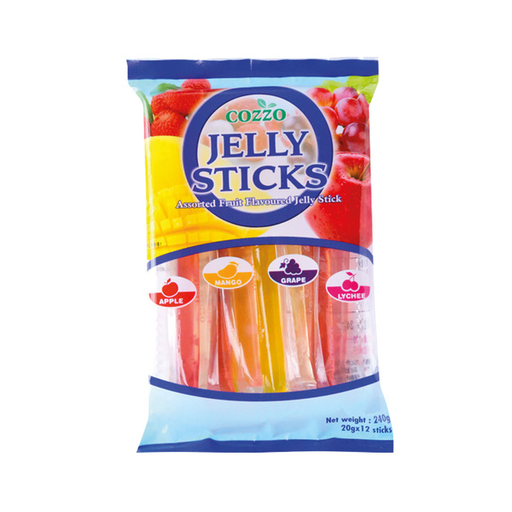
Why this suits the profile: Handy for lunchboxes, parties, travel and occasions where several small portions are needed.
The pack contains 12 individually wrapped sticks of 20 grams. This means you don’t have to open a large cup each time.
Four fruit varieties, 240 grams total weight and 104 kcal per 100 grams according to the product information.
We’ve put together a full, up-to-date list of products that fully meet these strict selection criteria and comply with current European safety regulations.
This varies by product and age. Always check the warning on the packaging. Some jelly products, due to their shape and texture, can pose a choking risk and are therefore not suitable for young children. Jelly sticks and cups should also be eaten under supervision when indicated on the label.
Store unopened products according to the instructions on the packaging, usually in a cool, dry place away from direct sunlight. An opened pouch or cup should often be kept in the fridge and consumed within the stated period. Check the seal and do not use any product with damaged packaging.
Some varieties are. For example, the range includes products with 3 to 10 kcal per 100 ml, but other fruit jellies contain around 60 to 75 kcal per 100 grams. So compare the nutritional information, portion size and sweeteners. “Low-calorie” is not a fixed product category and says nothing about the overall nutritional value of your daily diet.
