
Vandaag of morgen in huis

Kwaliteit gegarandeerd

Welkomstaanbiedingen ontgrendelen: GRATIS bezorging | Tot 80% korting | Gratis 30 dagen JoyPlus-proefperiode
Download de app
Asian jelly snacks come in many forms: from drinkable jelly in a pouch to firm konjac jelly, fruity cups and a large sharing pack. The choice may seem simple, but the text on the packaging can hide important differences. If you only look at flavour, a cheerful design or a term like “light”, you could end up with a product that doesn’t suit your intended use.
That’s why the Joybuy Product Recommendation Officer filters out the key information: portion size, texture, ingredients, nutritional values and warnings. This way, you can compare a Japanese jelly, Chinese jelly, fruit jelly snack or vegan jelly snack based on verifiable features rather than marketing language.
A box or bag with multiple portions may look appealing, but check the total weight and the number of individual packs. A 520g pack can be handy for a family, while a 150g pouch makes more sense for on the go. So compare the price per 100g, not just per pack.
Look at the ingredients list and the stated amount of fruit juice or fruit pulp. Some products contain a small percentage of concentrated juice and also use sugar, sweeteners and flavourings. That’s not necessarily a problem, but it does determine what you’re buying. For example, the Strong CICI variants state a fruit content of at least 15%; other jelly drinks focus on lychee pulp or nata de coco.
The soft texture makes a jelly drink different from a regular soft drink. Some products contain pieces of nata de coco or a firm gel structure. Packaging may carry a choking warning. The WANT WANT Vidor Jelly Drink, for instance, states that the product is not suitable for children under four years old and should be consumed under supervision. Always check the warning on the packaging and do not let young children eat or drink jelly unsupervised.
Konjac jelly uses konjac powder for an elastic, smooth texture. Carrageenan and other gelling agents also provide firmness. Nata de coco consists of small coconut gel pieces and adds extra bite. If you want to drink a jelly straight from the pouch, it’s best to look for a smooth texture and a suitable opening. If you prefer to chew, choose a variant with nata de coco or a firmer jelly.
For a snack in your bag, portions of 120g to 150g are practical. A 400g bag plus an extra 80g, or a 520g pack, is better suited for home use and sharing. Japanese jelly products from Orihiro are divided into small portions of 20g each. That makes portioning easy, but it also means you’ll be opening several small packs.
Read the ingredients list, especially if you have allergies or specific dietary requirements. A vegan product may contain plant-based ingredients, but always check the actual packaging. The DELIEF variant lists konjac powder, erythritol, sucralose and plant-based “collagen” of root origin, among others. That doesn’t imply any medical effect; it’s simply the stated product composition.
Also pay attention to sugar and carbohydrates per 100g. The Strong CICI drinks state around 59 to 61 kcal per 100ml, while a konjac product from DELIEF contains 5 kcal per 100g according to the product information. A lower number doesn’t automatically make a snack suitable for everyone. The total portion and your own diet remain relevant.
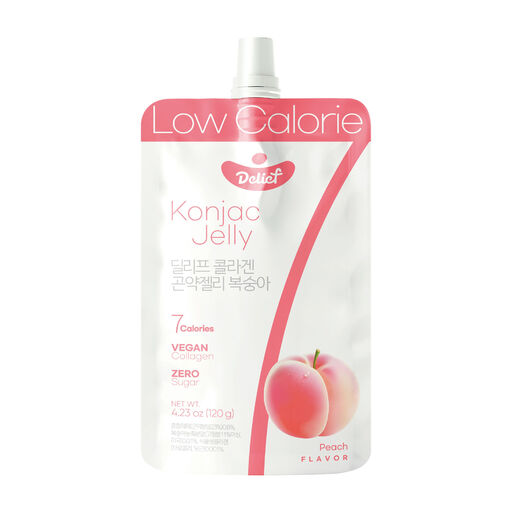
Why this fits the profile: A compact peach variant for anyone wanting to try a single vegan jelly snack without buying a large selection straight away.
The 120g weight is clear and easy to manage. Do check the current ingredients and any warnings on the packaging.
Peach flavour, konjac powder and a vegan positioning according to the product information; 5 kcal per 100g based on the stated nutritional panel.
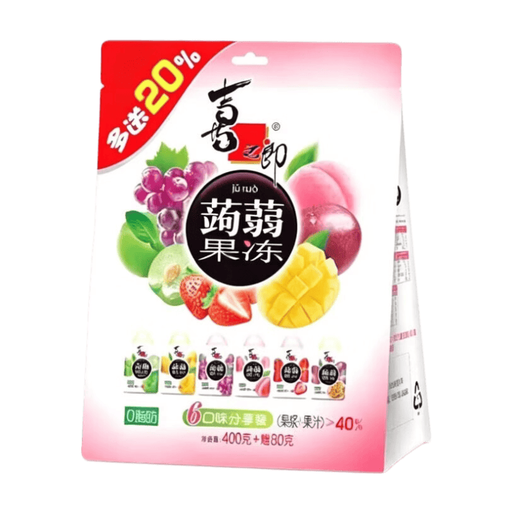
Why this fits the profile: Ideal for households that want to compare several flavours: peach, red grape, mango, strawberry, passion fruit and green plum.
The six listed flavours make it easier to choose variety rather than buying several separate packs.
Total quantity of 480g; according to the product information, at least 40% fruit content per flavour variant.
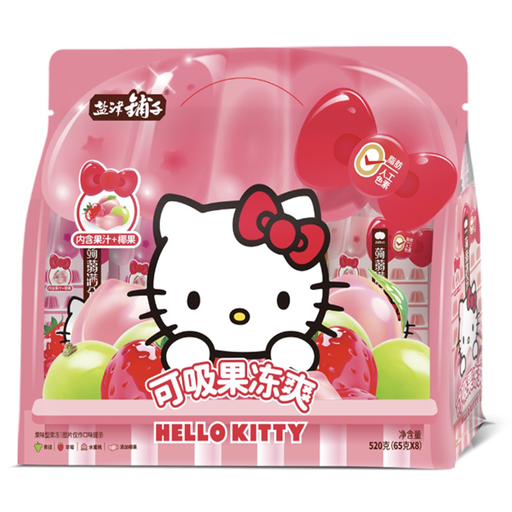
Why this fits the profile: A large selection for home, birthdays or fans of several fruity drinkable jelly flavours.
The contents and three flavours are clearly stated. Be aware of sweeteners and follow the usage and storage advice.
Peach, strawberry and green grape flavours; contains 2% nata de coco according to the product information and a total weight of 520g.
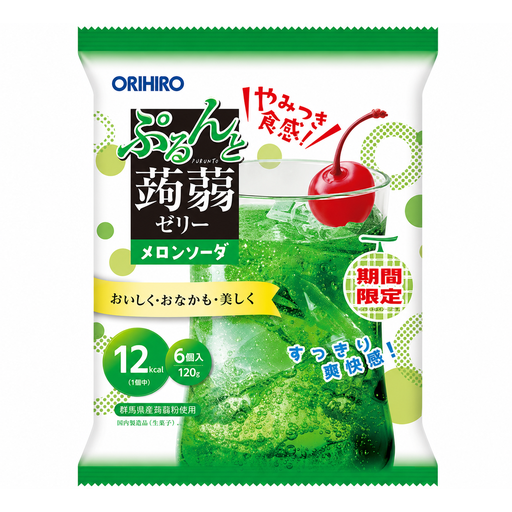
Why this fits the profile: A Japanese jelly in six small portions for anyone looking for a compact snack with a melon soda flavour.
The pack contains six individual portions of 20g, so you don’t have to open a large amount all at once.
Konjac powder as a gelling agent; according to the product information, 12 kcal per 20g portion.
We’ve put together a full, up-to-date list of products that fully meet these strict selection criteria and comply with current European safety regulations.
Konjac jelly contains konjac powder and often has a springy, smooth texture. A regular fruit jelly may be based on other gelling agents. Check the ingredients list, because terms like “fruit jelly” don’t automatically tell you how much fruit or juice is in it.
Store an unopened jelly drink according to the label, usually in a cool, dry place out of direct sunlight. Once opened, you should generally keep it refrigerated and consume it quickly. Some variants taste better chilled, but always follow the specific instructions on the packaging.
That varies by product. Check age warnings, pieces of nata de coco, sweeteners and allergens. Some jelly products explicitly state they are not suitable for young children due to choking risk. Make sure children eat calmly, chew well and supervise them when the packaging advises it.
