
Vandaag of morgen in huis

Kwaliteit gegarandeerd

Welkomstaanbiedingen ontgrendelen: GRATIS bezorging | Tot 80% korting | Gratis 30 dagen JoyPlus-proefperiode
Download de app
Asian jelly snacks are popular for their soft texture, fruity flavours and convenient packaging. Options include konjac jelly, fruit jelly, drinkable jelly, lychee jelly and mango jelly from Korea, China, Taiwan and Japan. Yet products that look similar at first glance can differ considerably. Focusing only on the front of the package may result in a snack that does not match your preferred flavour, dietary requirements or intended use.
An image of mango, lychee or grapes on the packaging says little about the actual fruit content. Always check the ingredients list and any stated percentages. For example, SHENG XIANG ZHEN White Peach Jelly Cups list 8% white peach. The mandarin variant states that it contains 5% fruit juice. This provides a more accurate picture than the fruit flavour shown on the front alone.
A product may also consist primarily of water, sugar, fruit juice concentrate, thickening agents and flavourings. That is not necessarily a problem, but it helps you set realistic expectations for the flavour and texture.
Terms such as vegan, plant-based collagen and vegetarian collagen can have different meanings. Always review the full product description and label. According to the product information, DELIEF Vegan Collagen Konjac Jelly contains a plant-based collagen-like peptide. It does not contain animal-derived collagen.
Also check whether the product information covers allergens, halal suitability and possible cross-contamination. Some snacks state that they contain none of the 14 major EU allergens, while other products are made in facilities that also handle ingredients such as milk, eggs, fish or nuts.
A jelly multipack or large jar is convenient for sharing, but compare the price per 100 grams and the serving size. An 800-gram bag of individually wrapped jelly sticks is practical for a party, while six 180-gram cups may be better suited to a household that prefers to serve the snacks chilled.
Also check the best-before date, storage instructions and how the package should be stored after opening.
Textures range from smooth and soft to distinctly chewy, sometimes with fruit pulp or pieces of nata de coco. A jelly cup is generally eaten with a spoon. A squeeze pouch is designed to be consumed directly or squeezed into the mouth. Individual jelly sticks are compact and well suited to lunch boxes or kitchen cupboards.
With konjac jelly, it is important to follow the instructions on the packaging. Do not casually give jelly snacks with a firm or slippery texture to young children. Some products carry an explicit choking warning or specify a minimum age.
Do not compare calories per 100 grams alone. A 120-gram pouch and a 180-gram cup contain different total amounts. Here are some examples from the product information:
A low energy value does not automatically make a product suitable for everyone. Also check sweeteners, sugar, fibre, salt and any potential allergens.
For vegan jelly, gelatin and other animal-derived ingredients are key considerations. Products containing carrageenan, konjac powder or other plant-based gelling agents may be suitable for vegan consumers, but always verify the specific product listing.
DELIEF Vegan Collagen Konjac Jelly Lychee is described as vegan and halal in the supplied product information. The mango and peach variants are described as vegan. Always check the current label before purchase and again upon delivery, as ingredients and packaging may change.
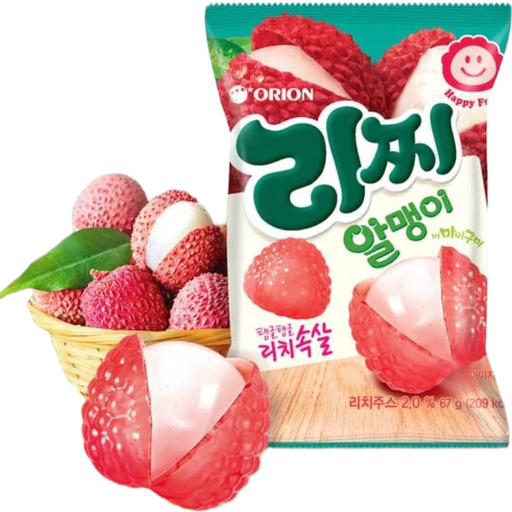
Why This Fits Their Persona: A clearly defined single-serve portion for anyone trying Asian sweets for the first time or looking for a snack to take on the go.
The package contains 67 grams, so you do not need to commit to a large supply straight away. The ingredients and nutritional values are clearly stated.
Lychee flavour, pieces of lychee seed, a soft chewy texture and 70 kcal per package according to the product information.
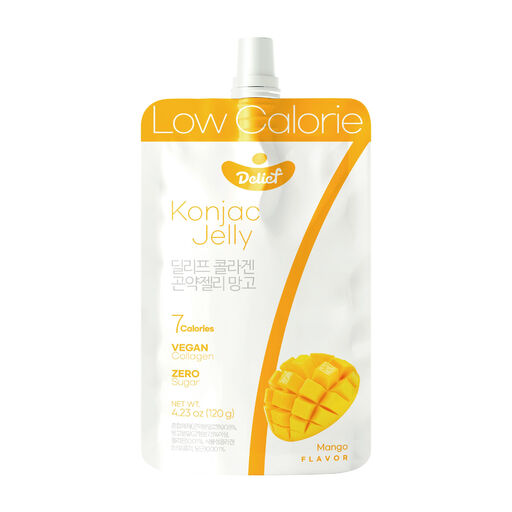
Why This Fits Their Persona: A good fit for consumers looking for a small, mango-flavoured pouch with a low energy value per 100 grams.
The product information lists 4 kcal per 100 grams and 0 grams of sugar per 100 grams. The pouch provides one clearly defined serving.
120 grams, mango flavouring and a vegan product designation according to the available product specifications.
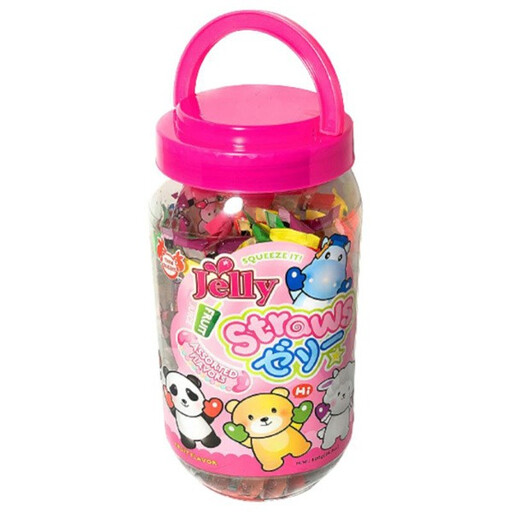
Why This Fits Their Persona: A large jar of individually wrapped jelly sticks for sharing, parties or keeping a regular supply at home.
The portions are individually wrapped, keeping the unopened supply better divided than a single large bag that is opened all at once.
800 grams total, assorted fruit flavours and individually wrapped sticks according to the product description.
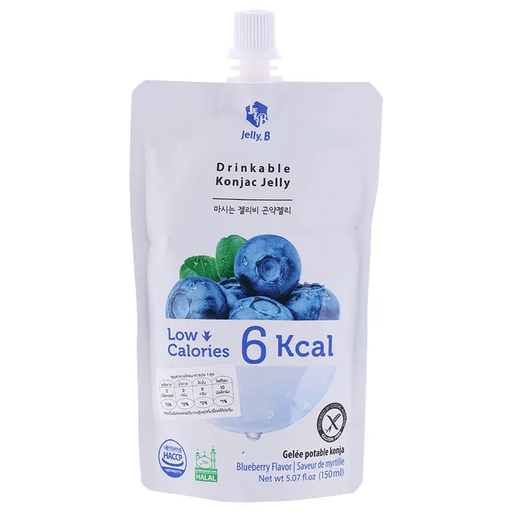
Why This Fits Their Persona: The drinkable jelly comes in a compact pouch that fits easily into a bag and can be enjoyed chilled, according to the product information.
The format is clear from the outset: 150 ml and 10 kcal according to the product information. This avoids confusion between a bottle, cup and multiple servings.
Blueberry flavour, konjac powder, a 150 ml pouch and a halal designation in the product description.
Browse a current selection of Asian jelly snacks and compare flavours, packaging, ingredients and nutritional values before ordering.
Choose a single-serve package if you want to take your jelly to school, the office or enjoy it on the go. Drinkable jelly is convenient when you do not want to use a spoon. Jelly cups are appealing at home, as they can be served chilled and are often eaten straight from the cup.
For sharing, SHENG XIANG ZHEN Fruit Jelly Grape and the white peach variant are interesting options thanks to their 6 × 180-gram packaging. According to the product information, the grape variant contains fruit pulp and 63.2 kcal per 100 grams. The peach variant lists 75 kcal per 100 grams. Compare this with the Strong Konjac Jelly Squeeze Pack Sharing Size, which contains 400 grams plus an additional 80 grams and comes in six flavours, including peach, red grape, mango and passion fruit.
With multipacks, check the total quantity, number of individual servings and storage requirements after opening. A large package is most worthwhile when you can use the contents within the stated period.
Some are, but not all. Konjac jelly made with plant-based gelling agents may be vegan, while other jelly snacks contain gelatin. Always check the current label. The DELIEF variants featured in this guide are identified as vegan in the available product information.
Not necessarily. A product may be low in calories because it uses sweeteners, while another fruit jelly may contain a relatively high amount of sugar. Check both the energy value and the amount of carbohydrates and sugars per 100 grams and per package.
This varies by product. Some snacks can be stored unopened in a cool, dry place. Others are best served chilled for optimum flavour and texture. Always follow the storage instructions on the packaging and check the best-before date upon delivery.
