
Vandaag of morgen in huis

Kwaliteit gegarandeerd

Welkomstaanbiedingen ontgrendelen: GRATIS bezorging | Tot 80% korting | Gratis 30 dagen JoyPlus-proefperiode
Download de app
When you buy Asian jelly snacks and drinks online, you’ll quickly spot colourful packaging, tropical flavours and terms like “light” or “natural”. Yet the front of a packet doesn’t always tell the full story. The difference between a konjac jelly, a nata de coco drink and an ordinary fruit drink lies mainly in the ingredients, nutritional values and portion packaging.
This buying guide helps you compare with confidence. That way, you’ll find a snack or drink that suits your taste, household and how you plan to use it.
A lychee drink, mango drink or other tropical fruit drink can taste refreshing, but may still contain relatively high levels of sugar. Always check the table per 100 ml or 100 g and calculate the full portion.
A Mogu Mogu lychee drink contains approximately 47–54 kcal and 11–13 grams of sugar per 100 ml, according to the available product information. A 320 ml bottle therefore works out at around 36–42 grams of sugar. That’s quite different from a sugar-free jelly snack, even though both are presented as fruity and refreshing.
Konjac jelly is usually soft and elastic. Nata de coco consists of pieces with a firmer, slightly crunchy mouthfeel. A regular jelly or jelly stick can be more like a sweet. If you’re looking for a drinkable snack, it’s worth paying attention to the words konjac, nata de coco, “jelly drink” and the stated contents.
Also check the usage instructions for jelly products. Don’t give a jelly snack carelessly to young children, and follow the warnings on the packaging. The shape, texture and packaging can vary from product to product.
A box of 10 or 12 pieces is handy if you already know the product. For a first purchase, a single pouch or a smaller pack can be more sensible. Compare the price per 100 ml, 100 g or per portion. That way, you avoid a large pack sitting unused in your cupboard.
If you want a low-calorie snack or sugar-free jelly snack, don’t just look at the claim on the product page. Check:
For Jelly B Konjac Jelly Lychee, the product information states 3 kcal and 0 grams of sugar per 100 ml. The mango and watermelon variants also show very low energy values. That makes them suitable for consumers looking for small portions, but the ingredients list remains important if you want to avoid certain sweeteners.
A 150 ml pouch is easy to take to work, school or on the go. A tray of 12 cans of 330 ml is more practical for families or regular stock. Also pay attention to storage advice: many drinks don’t need refrigeration unopened, but must be kept in the fridge after opening and used quickly.
Check the full ingredients list on the product packaging. Some products contain milk components, such as a yoghurt variant, while others state no major EU allergens according to the available information. “No allergens declared” doesn’t replace your own check if you have an allergy or intolerance.
Also consider origin and product type. Korean jelly, Chinese drinks and products from Vietnam can have different recipes and sweetening methods. Information from different retailers may vary, so use the label on the delivered packaging as your guide.

Why this fits the profile: The single 150 ml portion is a low-commitment way to try konjac jelly and lychee flavour.
You’re not immediately tied to a large multipack. According to the product information, the portion contains 10 kcal, with 2 grams of sugar per 100 ml.
Handy pouch, natural pear or fruity flavour according to the product description, and no declared major allergens.
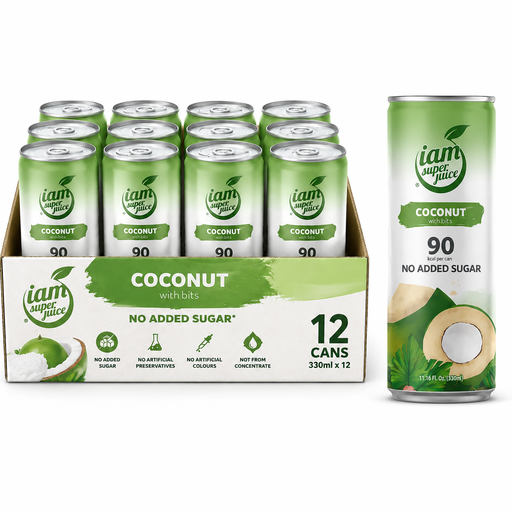
Why this fits the profile: For those who want a stock of tropical drink with coconut water and coconut pieces instead of a standard soft drink.
The product description states 100% coconut water, 2% real coconut pieces and no added sugar. Check the actual packaging on receipt.
12 cans of 330 ml, vegan according to the product information, and can be served chilled.
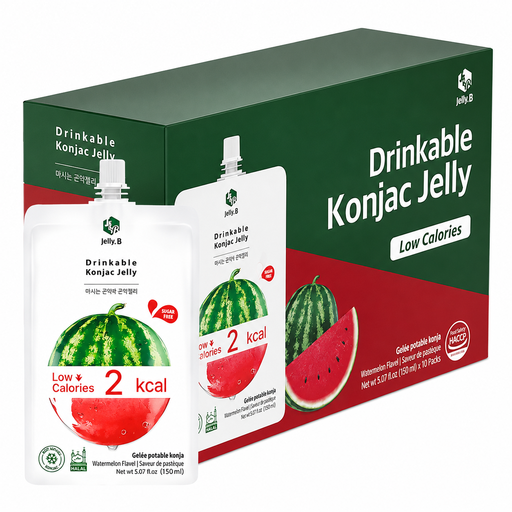
Why this fits the profile: A box of 10 pouches suits regular snack times, office supplies or a household where several flavours are being tried.
The nutritional information is clearly specified: according to the product information, 1.6 kcal and 0 grams of sugar per 100 g. The packaging contains fixed portions.
10 individual sachets, watermelon flavour and origin South Korea according to the product information.
Choose a nata de coco drink if you enjoy chewing on soft coconut pieces. The Tropical Nata de Coco Mango contains 22% nata de coco and 5% mango ingredient from concentrate, according to the product description. Per 100 ml it states 22 kcal and 4.6 grams of sugar.
A Mogu Mogu drink is similar to use, but the flavour and nutritional values differ per variant. The lychee and pineapple variants are served chilled and are available in small bottles or multipacks. For a sweeter snack with firm jelly, you could also look at Yuki & Love Litchi Flavoured Jellies; the product information states 96 kcal and 21 grams of sugar per 100 g.
If you mainly want to buy Asian snacks to share, a large pack like ABC Animal Friends Jelly Straw Jar at 800 g is practical. The sticks are individually wrapped. According to the product information, this product contains 88 kcal and 20 grams of sugar per 100 g.
We’ve put together a full, up-to-date list of products that fully meet these strict selection criteria and current European safety regulations.
Konjac jelly is made with konjac powder and usually has a smooth, elastic texture. Nata de coco consists of fermented coconut gel and is often added as small, firm pieces in a drink. Check the ingredients list if texture matters to you.
Unopened products are generally stored in a cool, dry place away from direct sunlight, unless the label says otherwise. After opening, many drinks belong in the fridge. Use opened jelly products according to the instructions on the packaging; some products have a short storage time.
Not always, but products with erythritol or other sweeteners can have a low energy value. Always look at the nutritional information table per 100 g and per full portion. Also check whether “sugar-free” actually appears on the label and which sweeteners have been used.
