
Vandaag of morgen in huis

Kwaliteit gegarandeerd

Welkomstaanbiedingen ontgrendelen: GRATIS bezorging | Tot 80% korting | Gratis 30 dagen JoyPlus-proefperiode
Download de app
Asian jelly snacks come in many forms: from fruit jelly sticks and konjac jelly in pouches to nata de coco, grass jelly, jelly pudding and popping boba for bubble tea. The difference isn't just about flavour. The amount of sugar, portion size, texture and storage method all determine whether a product suits your needs.
If you only look at a colourful packet or words like “fruit”, you could easily buy a product that isn't ideal for home, school, the office or a dessert recipe. With these practical selection points, you can compare Asian jelly snacks using verifiable product information.
A fruity flavour can come from juice concentrate, flavouring, purée or a combination of these. So always check the ingredients list and the stated amount of fruit juice. With the COZZO Fruit Jelly Sticks, for example, each flavour is made from a jelly base with a limited amount of juice, such as 0.50% mango juice or apple juice and 1.00% lychee juice.
Other products have a different proportion. The SHENG XIANG ZHEN Fruit Jelly Mandarin Orange, for instance, states 5% fruit juice. This makes the flavour and texture experience quite different from a simple jelly sweet made mostly of water, sugar and gelling agent.
Compare nutritional values per 100 grams or 100 millilitres, and also look at the packaging unit. Jelly B Konjac Jelly Lychee states 3 kcal per 100 ml, whereas a COZZO stick weighs 20 grams and contains 104 kcal per 100 grams. So a whole pack or multipack can add up to significantly more than one small portion.
Also pay attention to sweeteners. Some konjac jelly products use erythritol, sucralose or acesulfame-K. That's different from a snack without sweeteners. Read the ingredients and warnings on the label before you order.
A soft jelly stick is handy for on the go, but it's not the same as a chewy fruit jelly with pulp. Nata de coco gives you small, firmer pieces with a coconut-like bite. Grass jelly, on the other hand, is a soft dessert ingredient that you can chill and add to milk tea, fruit drinks or other desserts.
Extra care is sensible with children. Consider the shape and firmness of the jelly and follow any warnings on the packaging. The COZZO product specification also states that colourings E102 and E129 may have an effect on activity and attention in children. That's a note based on the product information, not a general statement about all jelly snacks.
Check whether the product contains milk, fruit concentrate, coconut gel, colourings or multiple gelling agents. Products may be free from the 14 main EU allergens, but that doesn't mean every product is made the same. The Lychee Pudding Nata de Coco, for example, contains milk powder and lists milk as an allergen.
Also look to see whether konjac, carrageenan, gellan gum, agar or other gelling agents are used. These determine the firmness and mouthfeel. With a drinkable jelly, the texture is usually more liquid or easy to take from a pouch; a pudding or jelly cup is more often eaten with a spoon.
For a sweet snack, energy, carbohydrates and sugars are particularly useful points of comparison. COZZO Fruit Jelly Sticks contain 104 kcal and 26 grams of sugar per 100 grams. ABC Fruit Jelly Bars state 340 kcal and 65 grams of sugar per 100 grams. That difference matters when you buy a multipack or have several portions in a day.
Some konjac products contain very little energy according to the label. Jelly B Konjac Jelly Mango and Watermelon state 3 kcal and 1.6 kcal per 100 ml respectively. However, nutritional value isn't the only criterion: flavour, sweeteners, size and texture also count.
Individually wrapped fruit jelly sticks are practical for lunchboxes, travel and parties. A jar or multipack is more convenient for home, desserts or regular use. Always check:
A product like ABC Fruity Jelly Bar Assorted Ice Pops must be stored frozen and should not be refrozen after thawing. That makes it less suitable if you don't have freezer space.
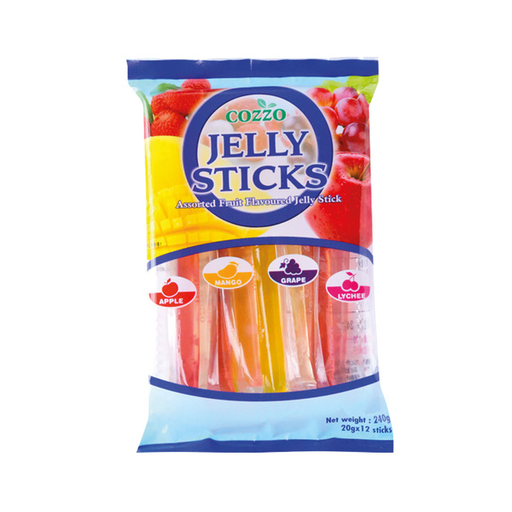
Why this suits the profile: The pack contains 12 individually wrapped sticks of 20 grams in different fruit flavours. That's a straightforward way to start, perfect for a party or a snack on the go.
The portions and nutritional values are clearly stated. You don't have to open a large jar just to try different flavours.
12 individual sticks, four named fruit flavours and 104 kcal per 100 grams according to the product information.
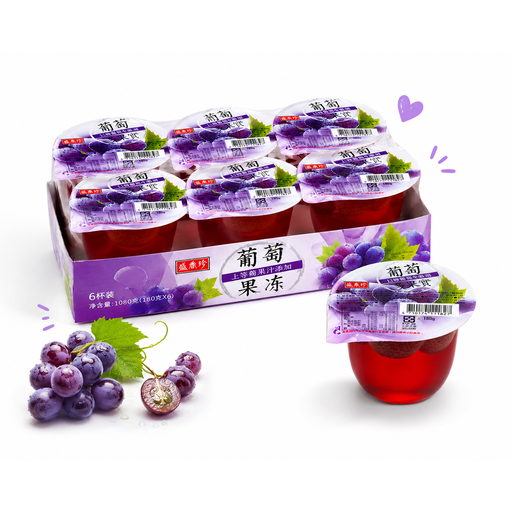
Why this suits the profile: The combination of grape flavour, fruit pulp and a multipack of 6 × 180 grams suits those who enjoy a fuller fruit jelly texture and sharing.
The product description explicitly mentions fruit pulp and the weight per cup. This makes the expected texture clearer than with a generic fruit flavour.
6 individual packs of 180 grams, with fruit pulp and 63.2 kcal per 100 grams according to the label.
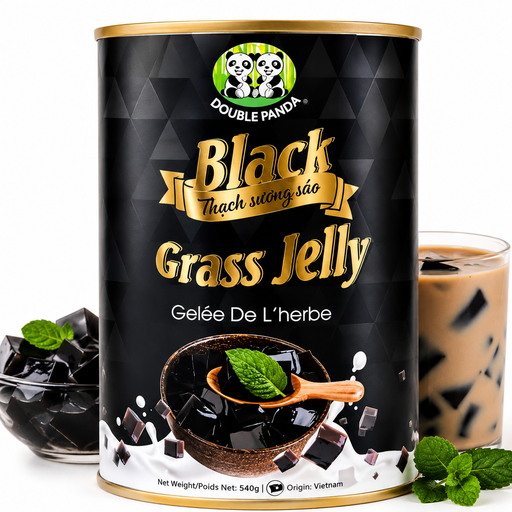
Why this suits the profile: This Vietnamese grass jelly is ready to use and suitable for eating chilled or incorporating into milk tea, fruit drinks and desserts.
You're not buying a snack that's only eaten on its own: the uses are clearly described. This means you can use one pack for multiple recipes.
540 grams, made with Mesona extract and 33 kcal per 100 grams according to the product information.
We've put together a full, up-to-date list of products that fully meet these strict selection criteria and comply with current European safety regulations.
Fruit jelly usually uses a gelling agent such as carrageenan, agar or a similar substance and often has a soft, sweet-like texture. Konjac jelly contains konjac powder and is often sold as a drinkable jelly in a pouch. The texture can be smoother or more elastic. Check the ingredients and nutritional value per product, because the composition and sweeteners vary.
Some varieties can be low in calories according to the label, such as Jelly B Konjac Jelly Lychee with 3 kcal per 100 ml. Other products, especially sweet fruit jelly sticks and jelly bars, contain significantly more sugar and energy. Always look at the portion size and not just the front of the packaging.
That depends on the product. Many packaged jelly snacks should be stored in a cool, dry place and eaten immediately after opening. A nata de coco dessert or pudding usually needs to be chilled after opening. Frozen jelly bars stay in the freezer until you're ready to use them. Always follow the storage and best-before information on the packaging.
