
Vandaag of morgen in huis

Kwaliteit gegarandeerd

Welkomstaanbiedingen ontgrendelen: GRATIS bezorging | Tot 80% korting | Gratis 30 dagen JoyPlus-proefperiode
Download de app
Asian jelly comes in many forms: from drinkable konjac jelly from Korea to Taiwanese jelly cups, Japanese jelly desserts and Vietnamese grass jelly. With such a wide range, making a choice isn’t always straightforward. A colourful packet tells you little about the sugar content, portion size or texture.
Product names can also be confusing. A jelly stick is handy for on the go, but can sometimes contain significantly more sugar than a small konjac pouch. What’s more, a product with fruit on the packaging doesn’t automatically mean it’s packed with fruit. Using these checkpoints, you can compare Asian jelly based on practical, verifiable features.
Fruit jelly, jelly sticks and jelly cups often feature grapes, peaches or mandarins prominently on the packaging. So always check the ingredients list. Look to see whether fruit juice, fruit purée or fruit pieces are actually included, and where these ingredients appear on the list.
According to the product information, the SHENG XIANG ZHEN White Peach Jelly Cups contain 8% white peach, for example. The Mandarin Orange Jelly contains 5% fruit juice. That gives you a much clearer picture than just the flavour name.
A konjac jelly can be low in calories and contain no sugar, but may still use sweeteners. The ingredients lists of various products include erythritol, sucralose and acesulfame K, among others. If you prefer to limit these sweeteners, you’ll need to check the label on each product.
Also pay attention to the reference: nutritional values are usually given per 100 grams or 100 millilitres, whereas a pouch or cup may be larger. A product with 3 kcal per 100 ml will have around 4.5 kcal at 150 ml, provided the stated values apply evenly.
Jelly cups, jelly sticks and drinkable jelly are not interchangeable. A pouch is ideal for a snack on the go, while a multipack of cups is more suited to home or sharing. Some products need to be stored in the fridge or freezer.
Always check the packaging for the best-before date, storage temperature and instructions after opening. Do not use products with a damaged seal. For jelly products with a smooth or firm texture, it’s also wise to read any warnings for young children; some varieties pose a choking hazard.
Start with the full ingredients list. Pay particular attention to:
Some product information states that none of the 14 main EU allergens are present. Always double-check this on the physical label, especially if you have an allergy or intolerance. Only accept claims like “gluten-free”, “vegan” or “halal” when they are clearly stated on the packaging or product information.
For an informed choice, don’t just look at the words low-calorie jelly or sugar-free konjac jelly; also check the portion size. A konjac pouch of 150 ml may contain just a few kilocalories. A sweet jelly dessert cup of 180 grams, according to the product information, contains 75 kcal per 100 grams and 13 grams of sugar per 100 grams.
With regular fruit jelly and jelly sticks, the sugar content is often higher. The ABC Fruit Jelly Sticks list 65 grams of sugar per 100 grams. That makes them more suitable as a sweet treat than as a low-calorie snack.
Konjac jelly usually has a soft, slightly elastic texture and is often eaten or drunk from a pouch. Fruit jelly with pulp offers a different experience, with pieces of fruit or a thicker consistency. Vietnamese grass jelly, also known as Vietnamese grass jelly or Suong Sao Den, is often eaten chilled or used in desserts, milk tea and fruit drinks.
Also consider:
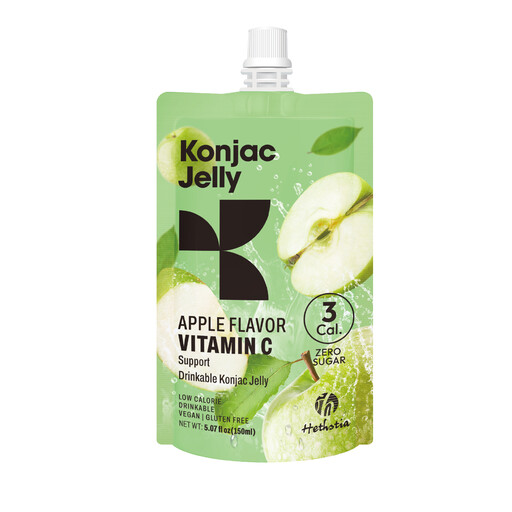
Why this fits the profile: A single 155 g pouch is practical if you want to try konjac jelly first without buying a large multipack straight away.
The product information states 3 kcal per 100 g and 0 g sugar per 100 g. Check the actual packaging for the full nutritional information.
Apple flavour, handy squeeze pouch and 155 g per pouch. According to the product information, the product contains no allergens.
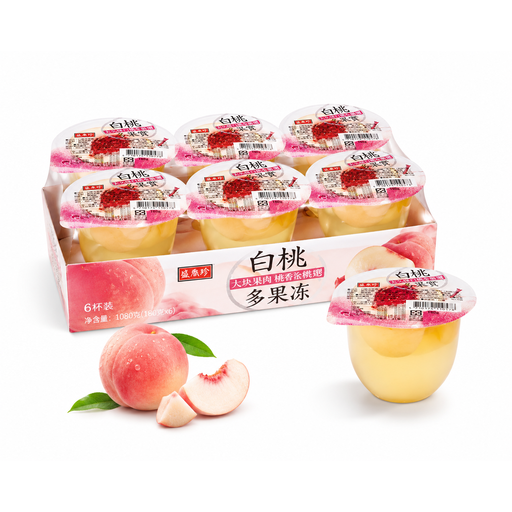
Why this fits the profile: For those looking for a distinctive jelly dessert with fruit pieces, individual portions and a Taiwanese origin.
The stated fruit content is 8% white peach. This makes the fruit content more concrete than a general fruit flavour claim.
6 cups of 180 g, 8% white peach and a stated nutritional value of 75 kcal per 100 g. Chilled serving is recommended.
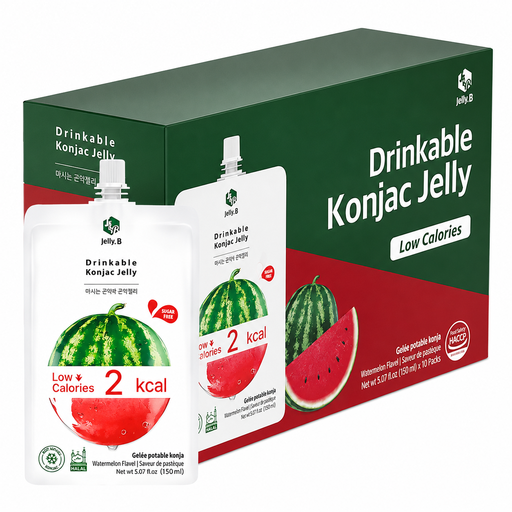
Why this fits the profile: A pack of 10 pouches suits households or snack lovers who regularly want to take a drinkable konjac jelly with them.
The product information states 1.6 kcal per 100 g and 0 g sugar. The sweeteners are listed in the ingredients and are worth noting.
10 portions of 150 ml, watermelon flavour and a konjac gel texture. Originating from South Korea according to the product information.
We’ve put together a full, up-to-date list of products that fully meet these strict selection criteria and comply with current European safety regulations.
No. Konjac jelly uses konjac powder as part of the gelling agent and usually has an elastic, soft texture. Regular fruit jelly often contains sugar and gelling agents such as carrageenan or pectin. Always check the ingredients list, as compositions vary by brand.
That depends on the product. Many shelf-stable jelly cups and pouches can be stored unopened in a cool, dry place. Some fruit bars must be kept frozen. Follow the storage instructions on the packaging and keep an opened product refrigerated if stated.
Several konjac jelly products state they are low in calories per 100 grams, including the Keumkang and Hethstia varieties in this overview. That doesn’t automatically mean every product is suitable for every lifestyle. Also check the sweeteners, portion size, allergens and the current nutritional information table on the label.
