
Vandaag of morgen in huis

Kwaliteit gegarandeerd

Welkomstaanbiedingen ontgrendelen: GRATIS bezorging | Tot 80% korting | Gratis 30 dagen JoyPlus-proefperiode
Download de app
A pack of Asian instant noodles often seems like a simple purchase: pick a flavour, add hot water and you're done. Yet instant ramen, Korean ramen, Chinese instant noodles and Indonesian noodles differ greatly in preparation, spiciness, ingredients and nutritional values.
What's more, the packaging doesn't always tell you everything you need to know at a glance. A product might be labelled as "spicy", for example, while the actual heat isn't measured objectively. Similarly, a large box or multipack may look like good value, but could be less suitable if you haven't tried the flavour yet. With these checkpoints, you can make a choice that better suits your store cupboard and mealtime.
Terms like "hot", "spicy" and "fire" don't follow a fixed European scale. One spicy noodle contains chilli powder and oil, another a concentrated sauce. With Korean ramen such as Buldak ramen, the sauce can also be added separately. This means you can adjust the amount yourself, but you don't always know in advance how intense the final result will be.
So, take a look at the preparation method and seasoning sachets. A product with separate sauce, powder and oil often gives you more control than a fully pre-mixed broth.
A pack of five or ten sachets is handy for students, families and keeping a steady stock. However, do check the weight per sachet. A portion of 60, 70, 80, 102 or 140 grams gives a very different result in a meal. Also compare the price per 100 grams rather than just the total price.
For example: Bai Xiang Classic Spicy Beef Flavor contains five sachets of 102 grams, while Indomie Mi Goreng comes in five sachets of 80 grams. Both are multipacks, but they aren't directly comparable.
The front usually highlights the flavour, origin or speed of preparation. For a safe purchase in the UK, it's the ingredients list, allergens, net weight, nutritional information and best-before date that really matter.
Watch out for gluten, soya, milk, egg, sesame, peanuts and shellfish. Product information can vary by pack or market. Always check the current label before preparing or serving the product.
Wheat noodles form the base of many instant ramen, Korean ramen and Chinese instant noodles. They often have a firm, springy bite. Examples include Bai Xiang, Indomie and Samyang.
Rice noodles suit Thai noodles, Vietnamese dishes and light noodle soup. Farmer Brand Rice Stick Noodle 3 mm is made from rice flour according to the product information. Bamboo Tree Rice Vermicelli Bun Toui contains rice, tapioca, water and salt and is labelled as gluten-free. If you have an allergy or intolerance, always check the packaging, as production environments can vary.
Sweet potato noodles and vermicelli have a smoother, more elastic texture. Sunlee Korean-Style Sweet Potato Noodle is made from sweet potato starch and water. Shiyi Korean Traditional Sweet Potato Vermicelli is made from 100% sweet potato starch. These varieties are suitable for stir-fries, salads and Korean dishes, but they aren't ready-to-eat instant ramen with a seasoning sachet.
Preparation varies from a few minutes of soaking to cooking on the hob. Check:
Indomie Mi Goreng is an example of Indonesian noodles that are drained after soaking and then mixed with oil, sweet soy sauce and seasoning. With a noodle soup, such as some Bai Xiang or MAMA varieties, the cooking liquid remains part of the dish.
Compare the nutritional values per 100 grams and check whether the table refers to dry noodles, the full product or a prepared dish. The salt levels clearly vary in the product information. This makes it worthwhile to compare labels side by side, rather than relying solely on flavour descriptions.
If you're looking for halal noodles, look for an explicit halal mention, such as with Bai Xiang Halal Spicy Beef Noodle Soup or Samyang Buldak Creamy Carbonara. A flavour name alone is not a halal certification. Check the label and any certification information.
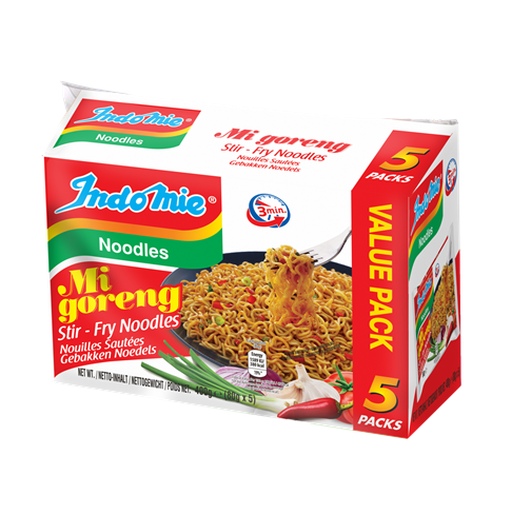
Why this fits the profile: The five portions are practical for a first introduction to Indonesian noodles and suitable as a quick meal or snack.
It's clearly a drained stir-fry variety, so you won't accidentally prepare it as a noodle soup. The weight per sachet is clearly stated.
Five portions of 80 grams, with seasoning, oil, sweet soy sauce and chilli powder individually packed.
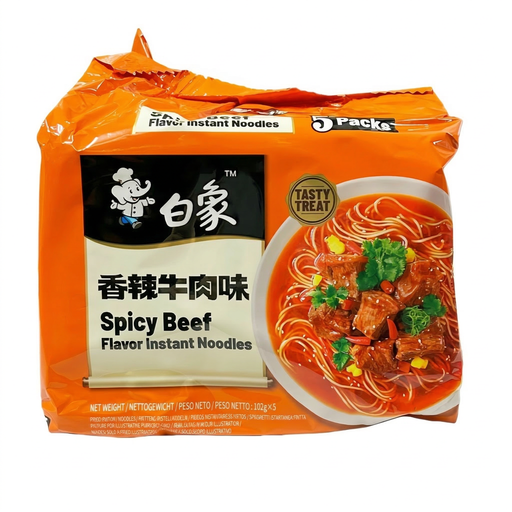
Why this fits the profile: If you're after a full-bodied broth and firm wheat noodles, this Chinese instant noodle variety offers five generous portions.
The product information states a preparation time of 4 to 5 minutes, the net weight and allergens such as wheat, egg and soya.
Non-fried wheat noodles according to the product description and 102 grams per sachet.
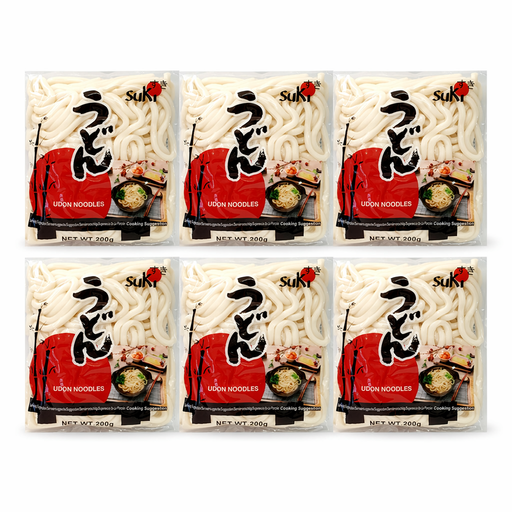
Why this fits the profile: These six packs are intended for home cooks who regularly prepare Japanese udon, stir-fries or hotpot.
It's not a pre-seasoned, ready-to-eat flavour combination: you can add your own broth, vegetables and protein sources. Rinsing before cooking is explicitly recommended.
Six portions of 200 grams with a smooth, firm texture; suitable for soup, stir-frying and hotpot.
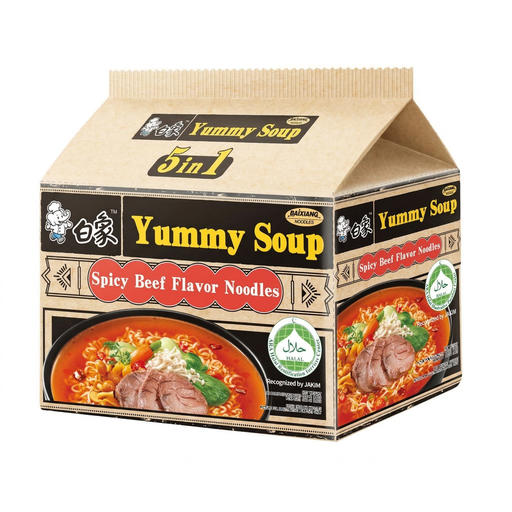
Why this fits the profile: The product name states halal and the five sachets are practical for stocking up on quick noodle soup.
The preparation time of 3 to 4 minutes, the weight per pack and the listed allergens are in the product information. Check the current halal certification on the packaging.
Five portions of approximately 95 grams and a soup preparation with beef flavour and vegetables according to the product description.
We've put together a full, up-to-date list of products that fully meet these strict selection criteria and current European safety regulations.
Follow the preparation time on the packaging and use enough boiling water. Set a timer if it says four or five minutes. If you prefer firmer noodles, drain them a little earlier when the instructions allow. For stir-fry noodles, you usually add the sauce only after draining.
Check the best-before date on the packaging. Store unopened products in a cool, dry place away from direct sunlight. Once opened, seasoning sachets and noodles can absorb moisture more quickly. Eat prepared noodles straight away and don't re-store them if the packaging doesn't recommend it.
That depends on the portion size and your own meal plan. Instant noodles are often intended as a quick meal or snack. You can supplement them with vegetables, egg, tofu or other ingredients. If you have dietary requirements, always check the ingredients list, allergens and nutritional information of the specific product.
