
Vandaag of morgen in huis

Kwaliteit gegarandeerd

Welkomstaanbiedingen ontgrendelen: GRATIS bezorging | Tot 80% korting | Gratis 30 dagen JoyPlus-proefperiode
Download de app
Asian instant noodles are handy for a quick meal, a late-night snack, or a store cupboard that takes up minimal space. Yet the difference between instant ramen, Mi Goreng and dried noodles is greater than the packaging sometimes suggests. A striking flavour name, for example, tells you little about the spiciness, portion size or ingredients.
So watch out for three common pitfalls:
Broadly speaking, there are three practical categories:
Always check how much water is needed and whether you need to drain them. Samyang Buldak Carbonara, for instance, requires boiling in around 550 ml of water, then draining while leaving a small amount of water behind, and briefly mixing in the sauce. That’s a different method from a bowl of instant ramen where you just add hot water.
A sachet of 55 or 60 g is suitable as a light snack. Portions of 70 to 135 g are often more filling, depending on the rest of your meal. A multipack of five is handy if you eat them regularly without having to visit an Asian supermarket each time. A bulk pack of 1.816 kg of dried noodles is best suited to families, cooking enthusiasts or those who want to control the sauce themselves.
Also check the best-before date on the packaging. Store dried noodles in a cool, dry place, away from moisture and direct sunlight. Do not use any packaging that is damaged.
Asian instant noodles often contain wheat and therefore gluten. Depending on the flavour, soya, sesame, milk, celery, peanuts, fish or shellfish may also be present. If you have an allergy, always read the label on the packaging you receive; product information can change.
Nutritional values vary widely. The product information for Samyang Buldak Carbonara states per 100 g 430 kcal, 15 g fat and 1,300 mg sodium. For Indomie Mi Goreng Original, the label shows 380 kcal and 2.0 g salt per 100 g. These are product-specific figures, not general values for all Asian noodles. So compare the table per 100 g and per portion.
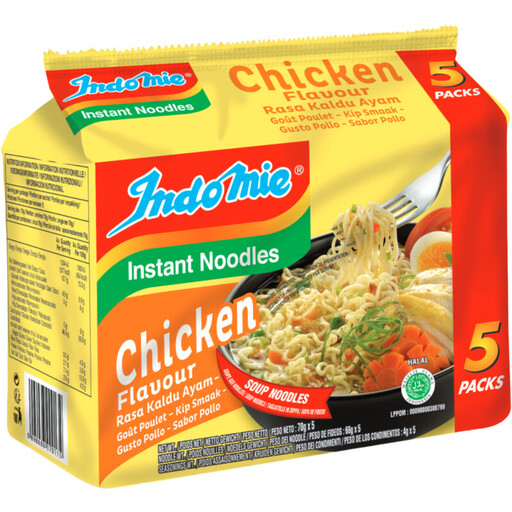
Why this suits the profile: These five individual portions are clearly priced and simple to prepare. A practical introduction to Indonesian noodles without committing to a large stock straight away.
The packaging states five portions of 70 g, so you can estimate the quantity in advance. The ingredients and allergens are listed per product.
Five individual sachets, chicken variant, prepared as a quick meal or snack and suitable for adding egg or vegetables.
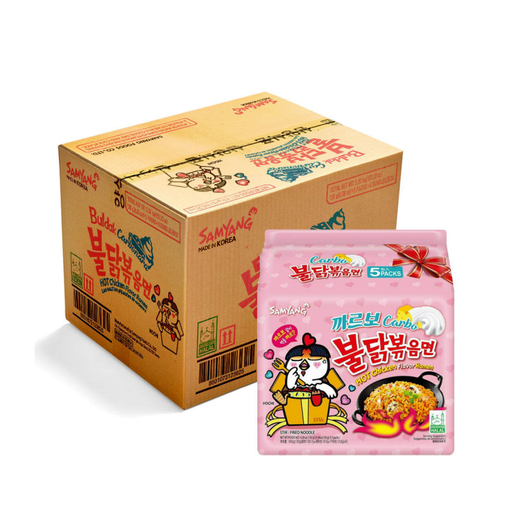
Why this suits the profile: The combination of a creamy carbonara sauce and a spicy chicken base appeals to fans of Korean ramen who deliberately choose a distinctive flavour.
The product information states the 130 g portion, the five-minute cooking time and the required amount of water. So you know in advance that this isn’t an ordinary soup noodle.
130 g per portion, firm wheat noodles, separate sauce and powder sachets, and a bulk pack of 40 packets.
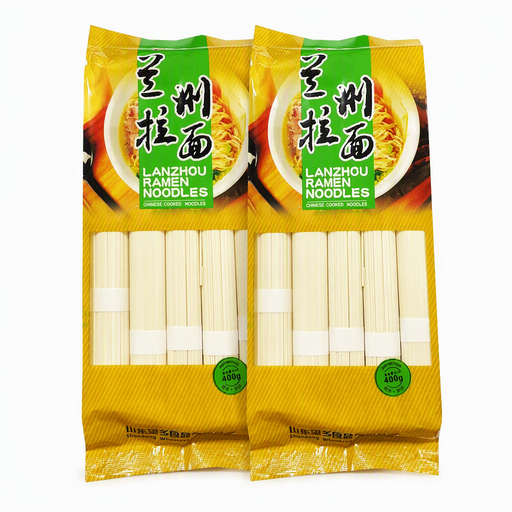
Why this suits the profile: These Chinese dried noodles are intended for those who want to assemble their own bowl of noodle soup or stir-fry and don’t want to rely on pre-determined seasoning sachets.
The ingredients are limited to wheat flour, water and salt. This means you choose your own stock, sauce and toppings, and avoid a flavour that doesn’t suit your dish.
800 g total, cooking time of around four to six minutes, and suitable for soup, stir-fries or hotpot.
We’ve put together a full, up-to-date list of products that fully meet these strict selection criteria and comply with current European safety regulations.
Follow the cooking time on the packaging and use the stated amount of water. Drain stir-fry noodles in good time. With some spicy noodles, such as Buldak, a small amount of cooking water is needed to mix the sauce properly. Add toppings such as egg, spring onion or vegetables at the right moment.
Check the date on the packaging and store the product in a dry, cool place away from direct sunlight. An opened packet should be sealed tightly. The exact shelf life varies by product and packaging.
No. Indonesian chicken noodles and classic Mi Goreng are often milder than Samyang Buldak, Chinese Sichuan noodles or Thai instant noodles with chilli. Check the flavour variant, ingredients list and cooking instructions before you order.
