
Vandaag of morgen in huis

Kwaliteit gegarandeerd

Welkomstaanbiedingen ontgrendelen: GRATIS bezorging | Tot 80% korting | Gratis 30 dagen JoyPlus-proefperiode
Download de app
Asian instant noodles are handy for a quick meal, a late-night snack, or a store cupboard that needs minimal preparation. Yet the range often seems more straightforward than it really is. A sachet with a striking flavour name might be a soup noodle, while another variety is meant to be mixed dry with sauce. Portion sizes, salt content, allergens and cooking times also vary from product to product.
As a Joybuy Product Recommendation Officer, I therefore focus on verifiable points: weight, preparation method, ingredients, allergens, origin and pack size. This way, you avoid relying solely on brand name, packaging or a spicy image.
“Chicken”, “shrimp”, “ramen” or “hot and spicy” doesn’t always describe the same experience. Some products contain a stock powder, others a sauce, oil or paste. With Indomie Mi Goreng noodles, for example, the noodle is drained after soaking and mixed with sweet soy sauce, oil and spices. That’s quite different from a bowl of Korean ramen with broth.
So check whether you’re buying a soup noodle, stir-fry noodle, cold noodle or ready-to-mix variety.
A multipack of instant noodles can be handy for students, families or heavy users, but first check the number of portions and the weight per portion. A box of 20 sachets looks big, but an individual portion can range from 55 to 140 grams.
Compare the price based on price per portion or price per 100 grams, not just on the number of packs.
Many Asian noodles contain wheat and therefore gluten. In addition, soya, sesame, peanut, milk, egg, fish and shellfish are common. With products that include multiple sachets – such as sauce, oil and spices – allergens can be present in different components.
Always check the actual packaging. The product information on a website may differ from the pack; the label remains the definitive source.
Not all instant noodles are prepared the same way.
Also check whether you need a pan, kettle, colander or microwave-safe bowl. That makes a difference in a student room or at the office.
A sachet of 55 or 60 grams is best suited as a light meal or snack. Varieties of 70 to 80 grams are common with Indomie instant noodles. Larger portions of 127 to 140 grams typically contain multiple seasoning or sauce components and can be more substantial as a meal.
Look beyond the weight at the composition. A pack with separate sauce, oil and vegetable sachets offers more scope to adjust the flavour, but also requires a little more preparation.
With spicy instant noodles, the chilli can often be added separately. That’s practical if you want to control the intensity yourself. With other varieties, the spicy flavour is already in the broth or sauce.
On the label, compare salt, energy, fat and allergens per 100 grams and per portion. The values vary widely. For example, the product information for Indomie Mi Goreng states 2.0 grams of salt per 100 grams for an EU pack, while some other instant noodles are significantly higher. Use these figures as a comparison point and always follow the actual packaging.
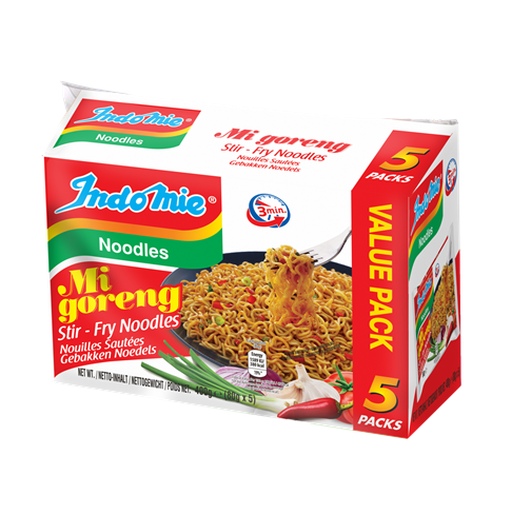
Why this fits the profile: The pack contains five portions of 80 grams. The dry preparation method is simple and suitable for anyone ordering Asian noodles online for the first time.
The product information clearly states that the noodles are drained and then mixed with oil, spices, sweet soy sauce and chilli. So you’re not buying a broth variety without knowing it.
Five individual portions, a preparation method with no complicated steps, and a complete mix with sauce and spices. Contains wheat and soya.
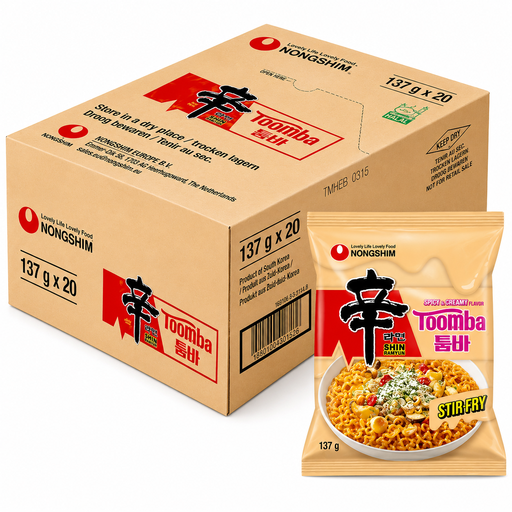
Why this fits the profile: If you want a generous stock of Korean ramen and appreciate multiple components in one meal, this gives you 20 individual portions of 137 grams.
The preparation information specifies 550 ml of water and 4 to 5 minutes of boiling. The allergens present are also listed in detail; always re-check this on the packaging.
Large multipack of 20 portions, Korean origin and separate soup and seasoning components. Contains, among others, wheat, soya, mustard and nuts according to the product information.
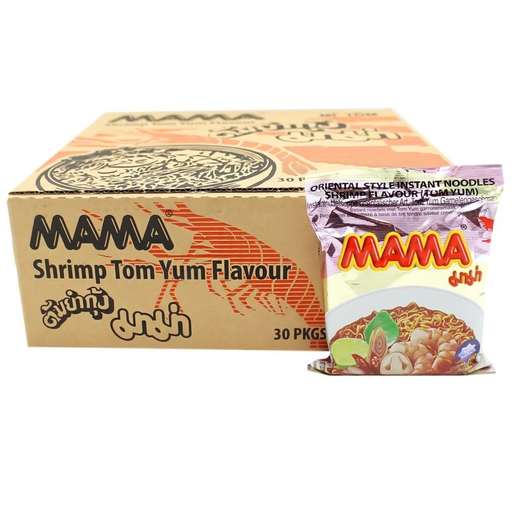
Why this fits the profile: These Thai instant noodles come in a box of 30 portions of 60 grams, ideal for households or locations where a small portion is prepared regularly.
The box size and portion weight are clear upfront. According to the product information, preparation takes 3 to 4 minutes with hot water.
30 individual portions, Thai origin as stated on the brand, and a shrimp and creamy flavour combination. Contains wheat, soya, milk and shellfish.
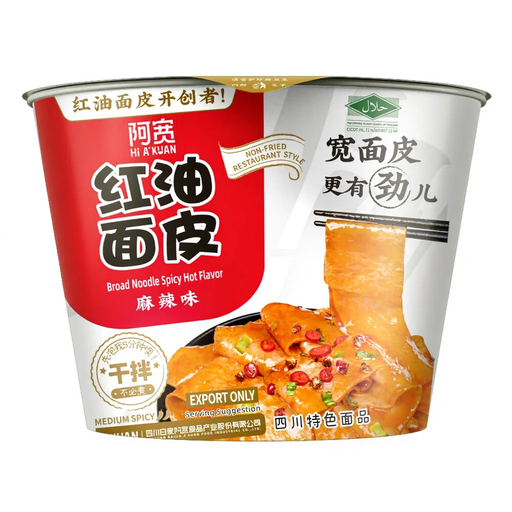
Why this fits the profile: These wide Chinese noodles are designed for those seeking a firm texture and a pronounced Sichuan-style kick with chilli oil and pepper.
The product description states that the noodles are not fried and that after 5 to 6 minutes of soaking, you must drain the water completely. The preparation method is therefore clear.
Wide, springy noodles and separate sachets of oil, spices, vinegar and vegetables. Contains wheat, soya, sesame and mustard.
We’ve put together a full, up-to-date list of products that fully meet these strict selection criteria and comply with current European safety regulations.
That depends on the portion size and your own meal choice. A sachet of 55 or 60 grams is often a light portion. Larger varieties of 127 grams or more can be more filling. You can also add vegetables, egg or another topping.
Mi Goreng noodles are usually prepared as dry stir-fry noodles: boil or soak, drain and mix with sauce and spices. Korean ramen is typically eaten with the cooking water and a stock or seasoning mix. Always check the preparation instructions for the specific product.
The best-before date is on the packaging. Store the products according to the recommended advice, usually in a cool, dry place. Do not use any packaging that is damaged, and read the current ingredient and allergen information before preparation.
