
Vandaag of morgen in huis

Kwaliteit gegarandeerd

Welkomstaanbiedingen ontgrendelen: GRATIS bezorging | Tot 80% korting | Gratis 30 dagen JoyPlus-proefperiode
Download de app
Asian instant noodles are handy for a quick meal, a late-night snack or a store-cupboard staple. But not every pack is right for every occasion. A cup that just needs hot water works well in the office, while udon noodles require a bit more preparation. Portion sizes, salt content and allergens can also vary a great deal.
If you only go by a flashy packet or a spicy-sounding name, you’re likely to run into three common pitfalls:
Broadly speaking, there are three formats:
Also note the difference between soup and stir-fry. Nissin Soba Teriyaki and Nissin Yakisoba, according to the product description, are mixed with sauce after soaking or cooking, not eaten as a broth. That makes them suitable if you don’t want soup noodles.
Most instant ramen and Japanese noodles in this selection contain wheat and gluten. Other common allergens include soya, sesame, milk, peanuts, mustard, fish and shellfish. Always check the current label, especially if you have an allergy or intolerance.
A flavour name doesn’t automatically mean there are large pieces of chicken or beef inside. Some products contain chicken flavouring, chicken powder or a small amount of dried ingredients. Nissin Soba Yakitori Chicken, for example, states 1.1% chicken pieces in the product information. Use the ingredients list as your guide, not just the picture on the packet.
Compare nutritional values per 100g and per pack. KOMEYA Spicy Beef-Flavored Noodles, for instance, lists 5.1g of salt per 100g, while a Mamee Monster Chicken snack pack of 25g contains 0.9g of salt per portion according to the product data supplied. These aren’t direct comparisons between the same preparation methods, but they show why portion size matters.
For a household or shared store cupboard, multipacks are practical. A product like KOMEYA with 24 packs is particularly interesting if you eat noodles regularly. For variety, smaller sets such as Yum Yum Chicken Bami Noodles with five sachets are easier to manage. Store dry products in a cool, dry place and follow the instructions on the pack after opening.
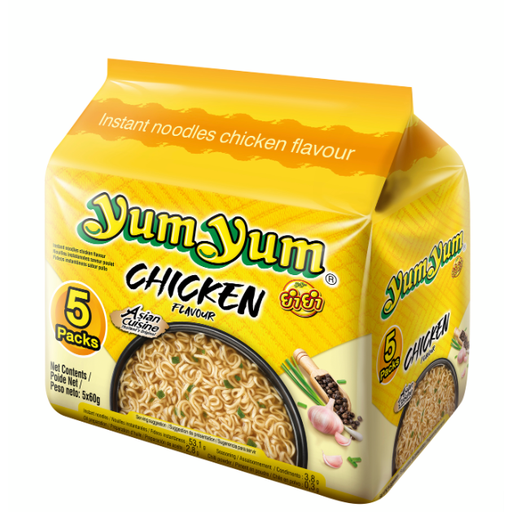
Why this fits the profile: A five-pack with 60g sachets is an easy way to try chicken noodles. The sachets are ideal for stocking a student room or for a quick meal at home.
The pack clearly states five separate portions and includes preparation information. This makes the storage quantity clearer than a large, unspecified bag.
Five portions, chicken flavour and a dry storage method. Please note: this product contains wheat and soya and may contain traces of several allergens.
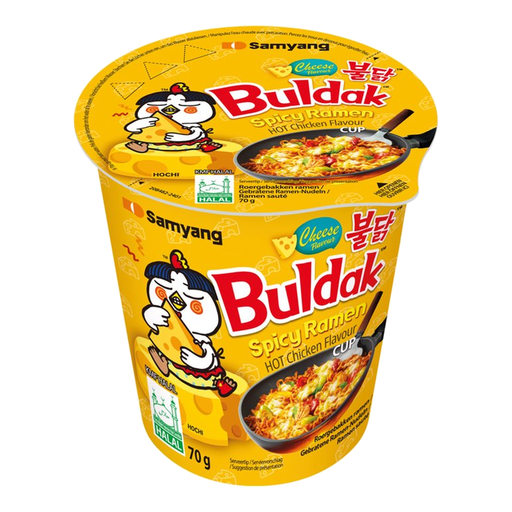
Why this fits the profile: The combination of spicy chicken sauce and cheese powder is aimed at fans of Korean ramen with a bold flavour. The cup is practical for lunch, gaming or a late-night snack.
The cup format makes the preparation method clear: add hot water and wait. The ingredients list also mentions wheat, milk and soya as allergens.
Cup format, cheese powder and a stated nutritional value of 1,200mg sodium per 100g according to the product information.
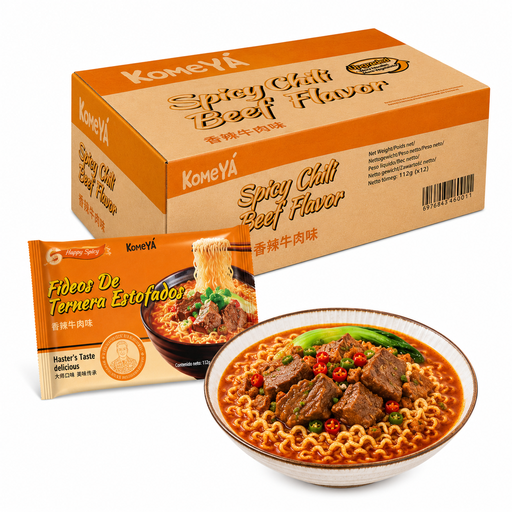
Why this fits the profile: The box of 24 packs is aimed at frequent users, shared households and fans of spicy noodles. You can choose between soaking with hot water or boiling in a pan.
The box states the number of packs and contains separate sachets for powder, sauce and vegetables. This means you can adjust the flavour dosage.
24 portions, three flavour components and a preparation time of around 3–4 minutes boiling or 5 minutes soaking. Contains wheat, soya and sesame.
We’ve put together a full, up-to-date list of products that fully meet these strict selection criteria and comply with current European safety regulations.
Choose a cup noodle or a product labelled “ready to eat”. With cup noodles, add boiling water up to the indicated line and follow the waiting time on the pack. Ready-to-eat snacks, such as some Asian snacks, don’t need heating. Udon noodles and other products marked “cooking required” aren’t suitable without a cooking facility.
The exact best-before date is on the pack. Store unopened dry noodles in a cool, dry place away from direct sunlight. Once opened, use an individual portion straight away. An opened product with fresh or moist noodles, such as some udon varieties, may have additional instructions, including refrigeration and quick consumption.
That depends on the format and preparation method. A multipack can lower the price per portion, while cup noodles mainly offer convenience. So compare the price per portion, the net weight and the number of sachets. If you want to buy noodles online, it’s also worth factoring in delivery costs and your total basket.
