
Vandaag of morgen in huis

Kwaliteit gegarandeerd

Welkomstaanbiedingen ontgrendelen: GRATIS bezorging | Tot 80% korting | Gratis 30 dagen JoyPlus-proefperiode
Download de app
A pack of Asian fruit jelly often looks appealing: tropical fruit flavours, colourful jelly cups and handy jelly sticks. However, eye-catching packaging tells you little about what is inside. If you focus only on the flavour or size, you could end up with a product that is too sweet, awkward to open or unsuitable for how you plan to use it.
With these practical selection tips, you can compare fruit jelly snacks, konjac jelly, Japanese jelly, Korean jelly and Thai jelly clearly and confidently.
Lychee, mango, grape or peach on the front often refers to the flavour. The percentage of juice or fruit can vary from one product to another. For example, according to the product information, SHENG XIANG ZHEN White Peach Jelly contains 8% white peach, while other varieties consist mainly of water, sugar, thickeners and flavourings.
Therefore, always check:
A konjac jelly may contain little energy and sugar per 100 ml, but that does not automatically make it suitable for every dietary preference. Some varieties use sweeteners such as sucralose or acesulfame-K. Other jelly sweets, on the other hand, contain considerably more sugar.
Compare the values on the label. For example, Jelly B Konjac Jelly Blueberry lists 10 kcal, 2 grams of sugar and 5 grams of carbohydrates in the stated nutritional information. Orion Lychee Kernels Jelly lists 70 kcal and 15 grams of sugar per 67-gram serving. That is a clear difference in composition and suitability for different occasions.
A multipack is useful for families, a kitchen cupboard or sharing at a party. Individual portions are usually easier to take with you when you are out and about. For jelly cups, check whether spoons are included, how the packaging is sealed and whether refrigeration is required after opening. With jelly sticks, the individual packaging is particularly important.
Read the warnings carefully when buying products for young children. Due to their shape and texture, some jelly products are not suitable for children under three because of the risk of choking.
The pack size determines how easy the jelly is to take with you and portion out.
A large pack such as 1.08 kg containing six cups may work out cheaper per portion, but it will require more storage space at home.
Texture varies significantly between products. Konjac jelly usually has a smooth, elastic consistency. Other varieties contain carrageenan, agar or several different thickeners. Fruit purée, nata de coco or pieces of lychee add extra bite.
Choose according to your preference:
“Double texture” and “with pulp” are product features, but they say nothing about nutritional quality. For that, check the ingredients list and nutrition table.
Look at the nutritional values per 100 grams. The figures vary considerably across the range. For example, ABC Fruit Jelly Sticks lists 65 grams of sugar per 100 grams, while some Jelly B Konjac Jelly varieties state 0 grams of sugar per 100 ml according to the product information and contain sweeteners.
Also check for:
The current packaging is the definitive source of information. Online product details may change and do not replace the label.

Why it suits this profile: A compact lychee-flavoured pouch is an easy introduction for anyone trying Korean konjac jelly for the first time, whether at home or on the go.
The 150 ml portion means you do not have to buy a large supply straight away. The product information states 0 grams of sugar per 100 ml; always check this on the packaging.
150 ml pouch, lychee flavour, konjac base and, according to the product information, 3 kcal per 100 ml.
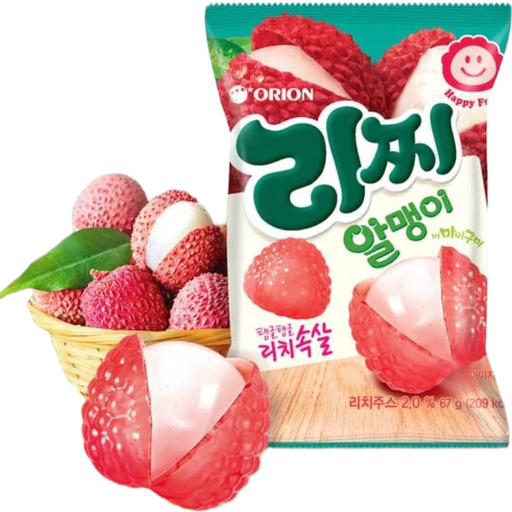
Why it suits this profile: This fruit jelly combines lychee flavour with pieces of lychee for anyone looking for more texture than a smooth jelly snack provides.
The product description specifies lychee kernel pieces, so the added texture is not just marketing language. The portion is clearly defined as 67 grams.
Pieces of lychee, a soft, chewy texture and individual packaging for enjoying at home, at work or on the go.
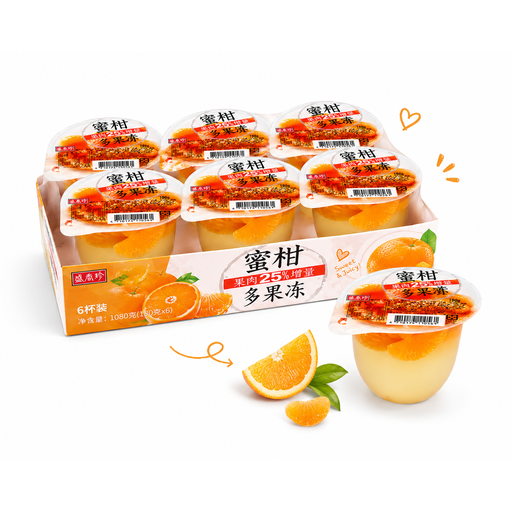
Why it suits this profile: Six individual 180-gram cups are ideal for families, offices or regular snack occasions where sharing is important.
The packaging states both the number of cups and the total weight. This makes it easier to assess the portion size and quantity than with a loose, unclear pack.
6 × 180 grams, mandarin flavour with pulp and, according to the product information, 5% fruit juice.
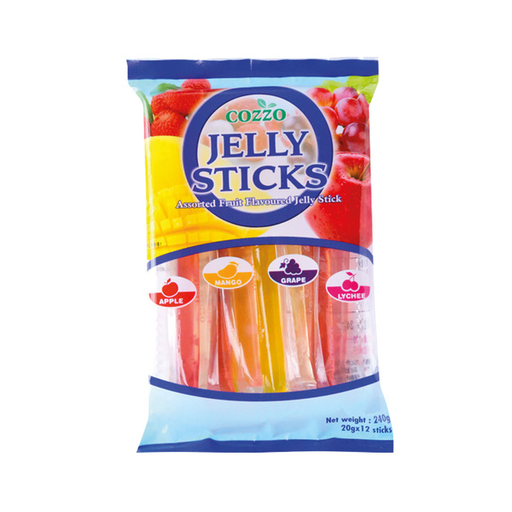
Why it suits this profile: The mix of mango, lychee, apple and grape flavours offers an easy introduction to a range of Asian snacks.
The 12 individually wrapped 20-gram sticks make the portion clear and reduce waste after opening.
240 grams in total, four fruit flavours and a convenient size for lunchboxes, parties or travelling.
We have put together a complete, up-to-date list of products that fully meet these strict selection criteria and the applicable European safety regulations.
No. Konjac jelly uses konjac powder as part of its gelling base and often has an elastic texture. Ordinary fruit jelly may contain carrageenan, agar or other thickeners. Check the ingredients list if texture is important to you.
Store unopened products according to the label, usually in a cool, dry place away from direct sunlight. According to the product information, an opened jelly cup or pudding often needs to be refrigerated and eaten within the stated time period. Do not use a product if the seal is damaged.
A 150 ml pouch, such as Jelly B Konjac Jelly, is easy to take with you. Jelly sticks are practical too, as they are individually wrapped. For a dessert at the office or at home, jelly cups with a fixed portion and, if included, a small spoon are more convenient. In warm weather, check the storage instructions before taking a product with you for an extended period.
