
Vandaag of morgen in huis

Kwaliteit gegarandeerd

Welkomstaanbiedingen ontgrendelen: GRATIS bezorging | Tot 80% korting | Gratis 30 dagen JoyPlus-proefperiode
Download de app
An Asian fruit drink with nata de coco combines a sweet fruit flavour with soft, chewy pieces of coconut jelly. This makes it different from ordinary fizzy drinks. However, not every bottle is the same. Flavour, sugar content, amount of nata de coco and pack size can vary considerably.
If you are searching online for Mogu Mogu drinks, KATO fruit drinks or another nata de coco drink, it is therefore better to pay attention to the label rather than just the image. Below, you will find the main points to consider, along with some popular options for different situations.
Mango, lychee, peach and watermelon sound clear enough, but the fruit flavour does not automatically indicate how much fruit or fruit juice the drink contains. Some products use juice concentrate, purée, flavouring or a combination of these. So check the ingredients list and any stated percentages.
For example, KATO Peach Juice lists white grape juice among its ingredients, alongside peach flavouring. KATO Mango Juice lists mango juice concentrate. This difference can affect the taste experience.
A multipack of six bottles is convenient for home or a small group. A case of 24 320 ml bottles makes more sense for a party, office, catering business or regular consumption. Check carefully whether the product title states “320 ml”, “6 x 320 ml” or “320 ml x 24”.
The total volume varies considerably:
Nata de coco is a gelled coconut component with a soft, chewy texture. It is not fruit pulp in the traditional sense. If you are mainly looking for a smooth tropical fruit drink, you may find the pieces unexpected. If you are specifically looking for the characteristic “chewy” experience, check that nata de coco is actually listed among the ingredients and see how much is included.
The percentage provides a useful indication of the amount of coconut jelly. Mogu Mogu Blackcurrant lists 25% nata de coco. KATO Blackcurrant lists 15% nata de coco. Other varieties may contain a different percentage, or the percentage may not be shown on the online product page.
So compare not only the brand name, but also the product information for the specific flavour. A mango drink with nata de coco may differ in composition from a lychee or peach variety.
Many fruit drinks contain sugar, fructose or sweeteners. Nutritional values are usually shown per 100 ml, while a bottle contains 320 ml. Multiply the value per 100 ml by 3.2 to get a rough estimate per bottle.
Examples from the available product information:
These are product specifications, not health assessments. Always check the current label, as packaging and recipes may change.
Read the full ingredients list before buying. Pay particular attention to:
The product information for many Sagiko drinks states that they contain none of the 14 main EU allergens. This does not automatically apply to every drink in this category. KATO Watermelon, for example, states that the product may contain traces of coconut. The information on the packaging takes precedence.
Unopened bottles should generally be stored in a cool, dry place, away from direct sunlight and high temperatures. Once opened, the bottle should be kept in the fridge and consumed according to the instructions on the label.
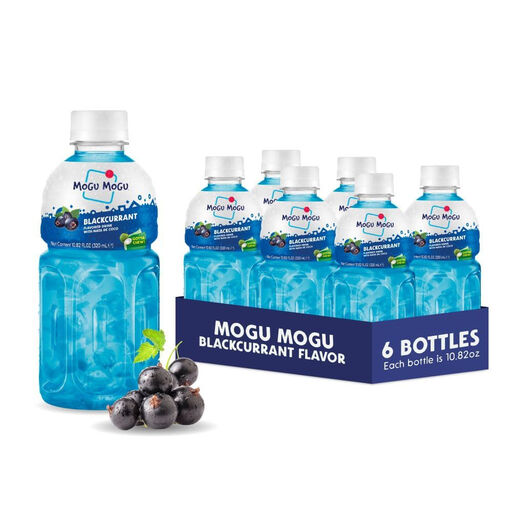
Why it suits this profile: A pack of six bottles reduces the risk of buying a large case straight away. The blackcurrant flavour offers an alternative to tropical flavours such as mango or lychee.
The product information states 25% nata de coco, so the texture does not have to be inferred from a general flavour claim alone.
Six 320 ml bottles; 25% nata de coco; nutritional values and ingredients are listed on the product page.
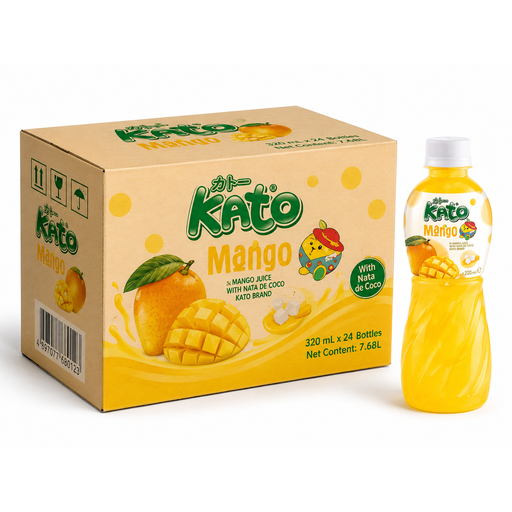
Why it suits this profile: The case of 24 bottles is suitable for anyone who wants to keep a regular supply and compare the ingredients and nutritional values in advance.
The packaging clearly states 24 bottles of 320 ml. This makes the total quantity clear in advance.
Mango flavour; 24 x 320 ml; 49 kcal and 11.2 g of sugars per 100 ml according to the stated nutritional information.
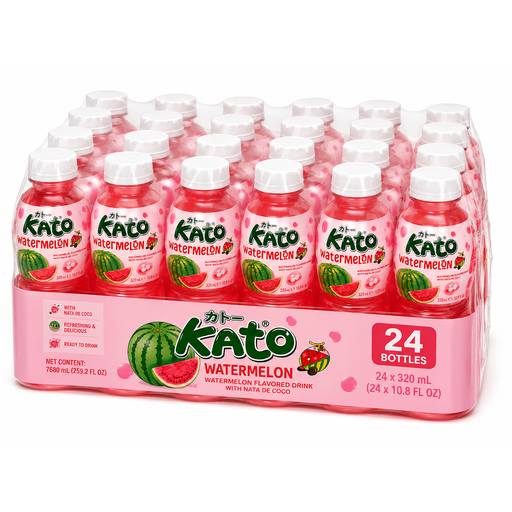
Why it suits this profile: A large multipack is ideal for parties, catering businesses or households where an Asian soft drink is served regularly.
The product page states both the bottle size and the case contents. However, check the label when the product arrives, as online information may differ from the packaging.
Watermelon flavour; 24 bottles of 320 ml; nata de coco is mentioned in the product name and description.
We have compiled a complete, up-to-date list of products that fully meet these strict selection criteria and the applicable European safety regulations.
Nata de coco is a gelled coconut component with a soft, slightly elastic texture. In a fruit drink, it creates chewy pieces alongside the liquid. The exact amount varies by brand and flavour. So check the ingredients list and the stated percentage.
Not exactly. Mogu Mogu drinks and KATO fruit drinks can both contain nata de coco, but the flavours, ingredients, percentages and packaging vary by product. Mogu Mogu is often sold in multipacks of six bottles. KATO is also available in cases of 24 bottles. So compare the specific variety rather than just the brand.
Store unopened bottles according to the instructions on the packaging, usually in a cool, dry place away from direct sunlight. Once opened, keep the drink chilled and consume it within the stated period. Before use, check the seal, best-before date and any storage instructions on the current label.
