
Vandaag of morgen in huis

Kwaliteit gegarandeerd

Welkomstaanbiedingen ontgrendelen: GRATIS bezorging | Tot 80% korting | Gratis 30 dagen JoyPlus-proefperiode
Download de app
Buying an Asian fruit drink seems straightforward until you start comparing labels. A bottle showing mango, lychee or guava on the front may actually contain mostly water, sugar, sweeteners or fruit juice concentrate. Size also makes a difference: a multipack is handy for a family or party, but less suitable when you want to try an unfamiliar flavour first.
Bear these three common pitfalls in mind:
Not every Asian fruit juice is the same. Look out for the difference between:
Check the fruit percentage stated on the label. According to the product information, Vitasoy Mango Drink contains at least 13% mango purée. VITA Guava Juice states 5% guava purée. These are verifiable details that help you compare products more fairly.
Always compare the nutritional values per 100 ml, rather than only per bottle or can. A 1-litre bottle contains five times as much as the value stated per 200 ml. Look out for terms such as sugar, fructose syrup, glucose-fructose syrup and high-fructose syrup.
A fruit drink with no added sugar can still contain natural fruit sugars. According to the product description, g’woon Grape Juice is made from grape juice without added sugar or artificial flavourings, but it does state 15 grams of carbohydrates and sugars per 100 grams. That is therefore different from a sugar-free drink.
Products containing sweeteners also deserve careful attention. g’woon Mango Passion Fruit Juice states 0 grams of added sugars, but contains cyclamate, sucralose and acesulfame-K, among other ingredients. If you are looking for a sweetener-free option, you should therefore check the ingredients list separately.
For a household, a 1- or 1.5-litre bottle is often practical. The Cooling Hydration Huiyuan Peach Juice 1L contains peach pulp and concentrated peach juice, according to the product information. The drink is ready to serve and is best enjoyed chilled. After opening, the bottle should be refrigerated and consumed within 3 to 5 days, according to the description.
Smaller packs are more convenient for lunch, travel or a party. Options include 250 ml, 320 ml, 380 ml, 400 ml or 410 ml. For cans and bottles, check the total volume of a multipack and calculate the price per litre. For imported products, also check the Dutch- or other-language labelling, allergen information and the responsible economic operator in the European Union.
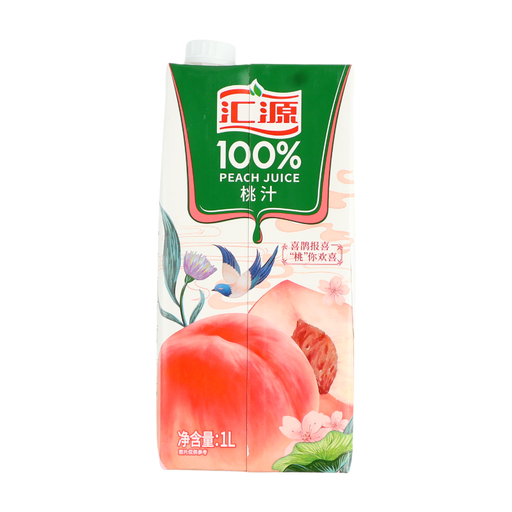
Why it suits this profile: A 1-litre bottle is suitable for sharing at home or pouring several glasses without having to buy a multipack straight away.
The product information specifically mentions peach pulp and concentrated peach juice. However, check the current packaging and nutritional values before buying.
1-litre capacity; ready to drink; 43 kcal per 100 ml according to the product information.
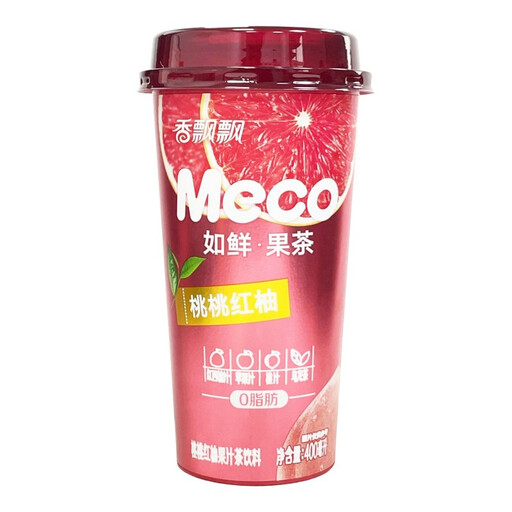
Why it suits this profile: Ideal if you appreciate tea flavours alongside fruit and want a compact bottle for enjoying chilled.
The ingredients list peach, apple and grapefruit concentrates separately, along with oolong tea. This makes the flavour profile easy to verify.
400 ml; 15.5% peach concentrate; oolong tea; 41 kcal per 100 ml according to the product information.
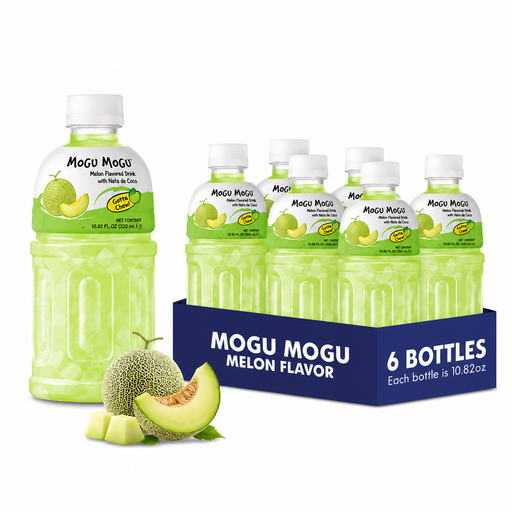
Why it suits this profile: A multipack for fans of a distinctive drinking experience, students, parties or keeping a supply at home.
The packaging and product information clearly state that nata de coco pieces are part of the drink. This helps you choose more confidently if you are looking for a smooth fruit drink.
Six 320 ml bottles; melon flavour; 15% nata de coco according to the product information; best served chilled.
We have put together a complete, up-to-date list of products that fully meet these strict selection criteria and the applicable European safety regulations.
Fruit juice generally contains a higher proportion of juice, while a fruit drink often combines water, juice concentrate, sugar, sweeteners and flavourings. The exact composition varies from product to product. Check the ingredients and nutritional values rather than relying on the product name alone.
Always follow the instructions on the packaging. Many products need to be refrigerated after opening and consumed within a few days. With a small pack, such as 250 or 320 ml, you can reduce waste because the bottle will usually be finished in one go.
Mango, peach and lychee are approachable choices if you enjoy sweet, fruity flavours. A Chinese fruit drink with hawthorn often has a sweet-and-sour profile. If you would like to try something different, choose guava juice or Mogu Mogu with nata de coco. Compare the volume, fruit content and nutritional values before ordering a multipack.
