
Same-day & Next-day Delivery

Quality Guaranteed

Unlock Your Welcome Offers: FREE Delivery | Up to 80% OFF | Free 30-day JoyPlus trial
Download the APP
Asian frozen food is handy for quick meals, snacks and recipes when fresh ingredients aren’t always available. However, an appealing product photo doesn’t tell you much about what you’ll actually receive. Pay particular attention to the contents, cooking instructions, allergens and storage requirements.
Online shoppers often run into three problems:
With a few simple checks, you can compare Asian frozen food by practical features instead of relying on the brand name or packaging alone.
This is one of the most important differences to check when shopping online. Raw fish, raw prawns and uncooked dumplings must be heated thoroughly according to the instructions. A product that only needs defrosting requires a different approach.
For example:
Look out for terms such as raw, cooked, ready to eat and cooking required. Don’t rely solely on a photo that shows the product already cooked.
A 400g pack isn’t automatically better value than a 300g pack. For breaded snacks, it’s useful to check how much of the weight comes from the main ingredient. For example, Japanese ebi fry contains 40% prawn meat, along with ingredients such as wheat flour, water and starch.
For dumplings, these details are particularly useful:
A 600g pack of 30 gyoza is handy for a larger household. A 300g bag is better suited to a small meal or as an addition to ramen, rice or stir-fried vegetables.
The 14 major EU allergens must be clearly listed in the ingredients information. Asian frozen food often contains wheat, soya, sesame, egg, milk, peanuts, fish and crustaceans.
Check the difference between:
A product information page is no substitute for the packaging. Always check the label when your order arrives, as the packaging carries the most up-to-date information.
Most products in this category need to be stored at -18 °C or below. Once defrosted, a product usually needs to be kept chilled and used within the stated time. Don’t refreeze it unless the packaging expressly says you can.
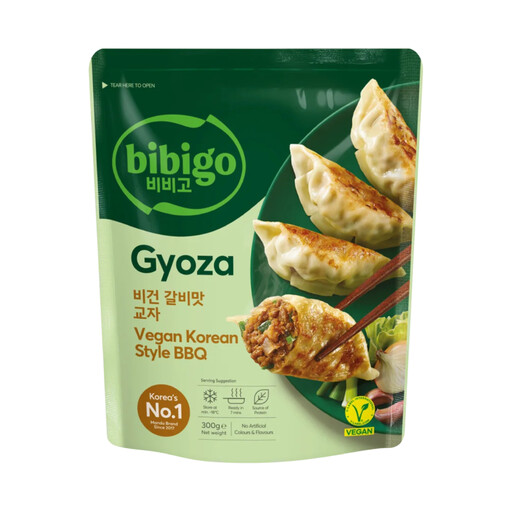
Why it suits this profile: A compact pack for anyone trying Korean gyoza for the first time. These dumplings are vegan and can be steamed or pan-fried.
The cooking instructions give clear timings: around 7 minutes in a pan or 8 minutes in a steamer. So you know exactly what “ready quickly” means.
Vegan recipe, 300g pack and two clear cooking options.
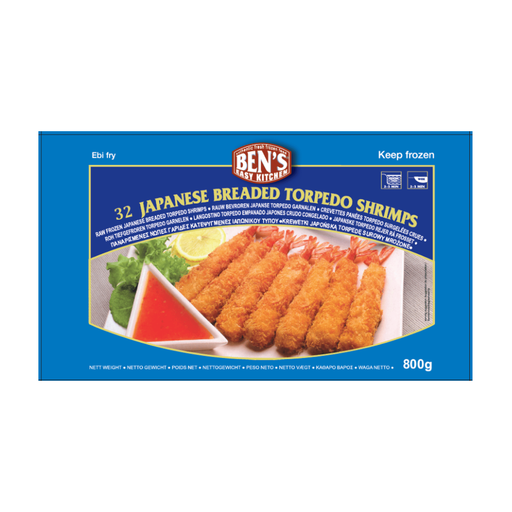
Why it suits this profile: A good choice if you’re looking for a larger quantity of breaded prawns for dinner, drinks with friends or a Japanese-inspired meal.
The product information states that it contains 40% prawn meat and lists gluten and crustaceans as allergens. This makes it easier to compare with other products than relying on the name “ebi fry” alone.
800g pack, 137 kcal per 100g according to the product information, and a clearly stated crustacean allergen.
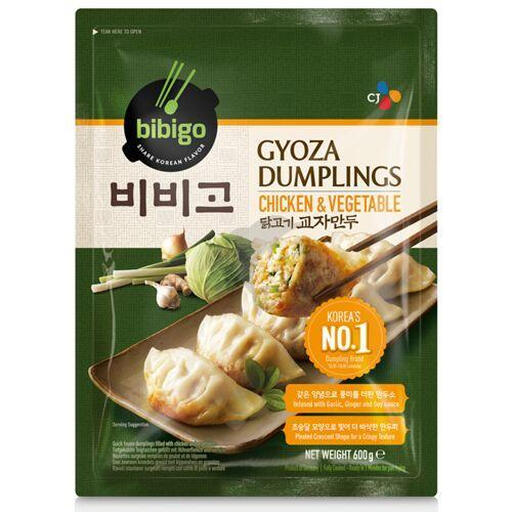
Why it suits this profile: A 600g pack of 30 pieces is a practical option for families, meal prep or regular noodle and rice dishes.
The number of pieces and total weight are clear from the outset. The ingredients include 26% chicken meat and skin, as well as vegetables and wheat flour.
30 pieces, 600g and a combination of chicken, cabbage, onion and spring onion.
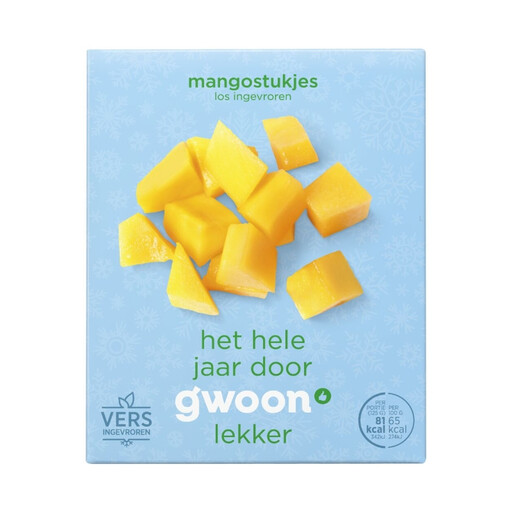
Why it suits this profile: Handy for smoothies, desserts or a cold fruit snack, without needing to use a large amount of fresh fruit at once.
The ingredients list states that it’s made from 100% mango. Storage is simple: keep frozen until use and don’t refreeze after defrosting.
250g pack, 100% mango and, according to the product information, none of the 14 major EU allergens.
We’ve put together a complete, up-to-date list of products that meet these strict selection criteria and the applicable European safety requirements.
If you’re looking to buy gyoza, you can choose from chicken, pork, vegetable or vegan fillings. Check the cooking instructions: some dumplings can go straight from the freezer into a pan, while others are best steamed.
For snacks, mini spring rolls and Japanese snacks are handy for sharing or packing in a lunchbox. If you’re buying composite snacks, check carefully for peanuts, soya, egg and gluten.
Seafood products have a range of uses. Frozen prawns work well in curries, noodle dishes and stir-fries. Asian fish may be sold raw, cooked, filleted or whole. A whole mackerel, for example, needs more preparation than a portion of fillet.
Frozen fruit is worth considering too. Mango is ideal for smoothies and desserts, while durian pulp is a distinctive ingredient for fans of South-East Asian desserts. Always check whether the fruit contains stones and whether it can be used straight after defrosting.
The exact shelf life is shown on the packaging. Store products at the stated temperature, usually -18 °C or below, and avoid temperature fluctuations. The date applies when the packaging has been kept properly frozen.
It depends on the instructions. Many gyoza and dumplings can be steamed or fried straight from frozen. Don’t defrost them first unless the packaging says to. Check in particular whether the filling needs to be piping hot all the way through.
Compare net weight, number of pieces, ingredients, allergens, origin, cooking instructions and storage temperature. When your order arrives, check that the packaging is still properly frozen. If in doubt, always follow the label.
