
Vandaag of morgen in huis

Kwaliteit gegarandeerd

Welkomstaanbiedingen ontgrendelen: GRATIS bezorging | Tot 80% korting | Gratis 30 dagen JoyPlus-proefperiode
Download de app
A bag of Asian fish snacks might seem straightforward to pick at first glance. Yet products vary greatly in fish content, flavour, salt levels, packaging and texture. A dried fish snack can be firm and savoury, whereas fish chips are mostly based on potato, tapioca or rice. If you rely solely on eye-catching packaging or words like “premium”, you could end up paying for flavourings rather than fish.
This guide will help you choose a suitable anchovy snack, spicy fish snack or other seafood snack for home, work, school, on the go or to enjoy with a drink.
With fish chips and crackers, the stated flavour can come mainly from spices, flavourings or powders. So always check the ingredients list. If fish, anchovy, squid or prawn appears near the top, that’s usually a clearer indicator than a product name that only says “seafood flavour”.
For example: Zen Zen Salmon Fish Chips contains tapioca starch and a salmon seasoning which, according to the product information, includes 5% salmon. That makes it more of a crispy chip-style snack with salmon flavour than a dried fish snack with a high fish content.
Individual sachets are handy for a lunchbox or snack on the go, but compare the number of portions with the total weight. A 240g pack might contain 20 sachets of 12g each. That’s practical for portion control and sharing, but the price per 100g could work out differently than with a single 110g bag.
Also pay attention to the instructions after opening. Many dry products need to be eaten straight away to maintain their texture and freshness.
A spicy fish snack can contain chilli, Sichuan pepper, garlic, lime or sweet soy sauce. With a Chinese fish snack, the flavour is often aromatic, savoury or slightly sweet. A Thai fish snack, on the other hand, may have sour and fragrant notes, for example from Namprik, lemongrass or kaffir lime leaves.
Check the ingredients to avoid disappointment. Also look at the allergens: fish, soya, wheat, sesame, crustaceans and molluscs are common.
The fish percentage is one of the most useful points of comparison. Product information states, for example:
A higher fish percentage doesn’t automatically mean you’ll prefer the taste. It does, however, help you distinguish a fish-rich snack from fish chips or crackers where starch forms the base.
Always compare the same unit. A small 20g bag may contain few calories per pack, while the figure per 100g looks high. Alongside energy, also look at protein, fat, carbohydrates and salt.
The Jin Zai Sauce Flavor 110g pack, for example, states 27g of protein per 100g. The 240g Braised Flavor pack states 31.8g of protein per 100g. Salt levels also vary by recipe. A BENTO snack in a 20g sachet may, due to the combination of spices, fish and sauce, show relatively high sodium per 100g.
So use “high-protein snack” as a search term, but base your choice on the nutritional information table. It’s not a reason to eat a product without limit.
For on the go, sachets of 8 to 12g are practical. They stay sealed until you’re ready to eat them and are easy to take to the office, school or a picnic. A larger pack is more interesting if you want to buy multiple portions.
Also check:
The product information and packaging are your guide. If you have allergies, always check the current label, as recipes or packaging can change.
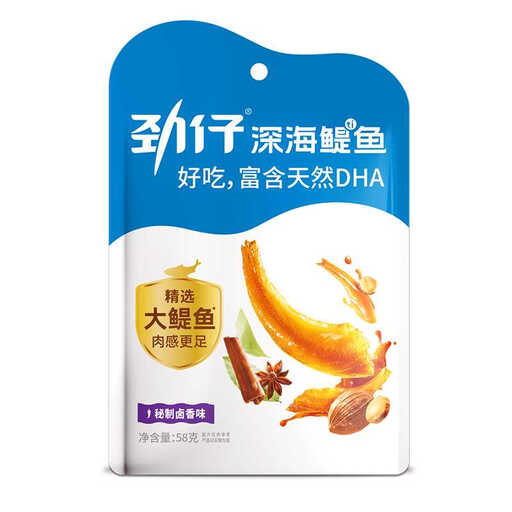
Why this fits the profile: The 58g pack contains five small sachets. That makes it easy to try a Chinese fish snack without committing to a large quantity straight away.
The fish ingredient is clearly stated and the portions are individually wrapped. That way, a large opened bag doesn’t sit around unnecessarily.
58g total weight, five individual packs and 26.8g of protein per 100g according to the product information.
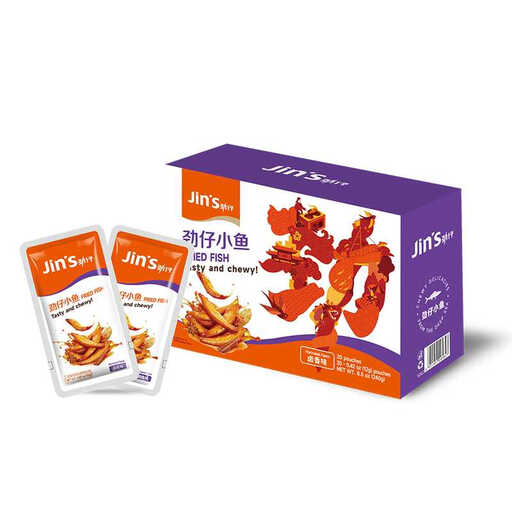
Why this fits the profile: If you’re after a fish-rich anchovy snack with multiple portions, you get a pack of 20 sachets with a clearly stated anchovy percentage.
The product states 69% wild anchovy and 12g per sachet. This makes the fish content and portion size easier to assess than with general flavour claims.
240g total, 20 individual portions and 31.8g of protein per 100g according to the stated nutritional values.
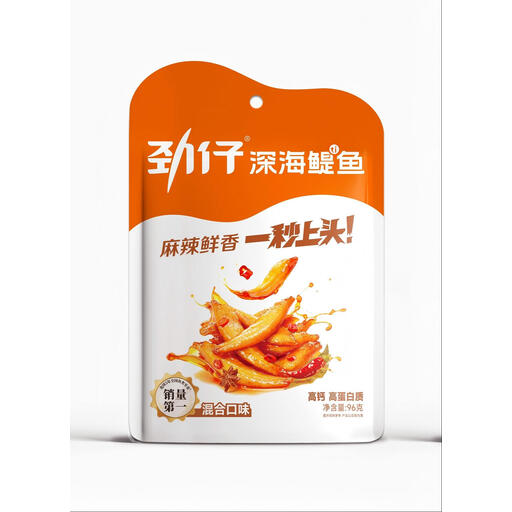
Why this fits the profile: The mix of spicy, spicy & numbing and sauce flavour is ideal if you want to alternate between several Chinese fish snack flavours.
The three flavour variants are individually named. So you know in advance that “spicy & numbing” contains Sichuan pepper and tastes different from plain chilli.
12 portions of 8g, anchovy content of at least 69% and multiple flavour profiles within one pack.
We’ve put together a full, up-to-date list of products that fully meet these strict selection criteria and comply with current European safety regulations.
Yes, especially products with individual sachets of 8 to 12g are practical for work, school or travel. Store them in a cool, dry place and, once opened, eat the sachet straight away as per the instructions on the packaging.
That varies by recipe. The product information for several Jin Zai variants states approximately 26.8 to 31.8g of protein per 100g. Always check the current nutritional information table; fish chips based on potato, tapioca or rice generally have a different protein content.
The exact shelf life is stated on the packaging. Unopened, dry products can often be stored for a longer period, but always follow the date and storage conditions given by the manufacturer. After opening, the texture can change quickly. Seal a pack tightly or choose individually wrapped portions.
