
Vandaag of morgen in huis

Kwaliteit gegarandeerd

Welkomstaanbiedingen ontgrendelen: GRATIS bezorging | Tot 80% korting | Gratis 30 dagen JoyPlus-proefperiode
Download de app
When you buy Asian drinks online, you’ll quickly notice striking flavours, colourful packaging and large value packs. That makes choosing fun, but not always straightforward. A fruit drink with fruit pieces can taste very different from a regular soft drink. Likewise, terms like “natural”, “fruit” or “no added sugar” don’t automatically tell you the total sugar content or the amount of fruit ingredients.
With this buying guide from the Joybuy Product Recommendation Officer, you can compare Korean drinks, Asian fruit drinks and bubble drinks based on verifiable information on the product label.
Mango, lychee, peach and hallabong sound appealing, but always check the ingredients list. A product may consist mainly of water, sugar, flavourings and a small amount of purée or concentrate. For example, Haitai Bong Bong Peach 340ml states it contains 5% peach pulp and 0.5% peach concentrate. That makes it a drink with a distinct texture, but not the same as pure peach juice.
With Taksi Tropical Fruit Drink, it states that no sugar has been added. The drink does contain naturally occurring sugars from ingredients and is sweetened with sucralose. So always look at the nutritional values per 100 ml and also at the content of the whole bottle. A serving of 300 or 350 ml can differ significantly from the value per 100 ml.
A box of 24 cans is practical for a party, office or catering range, but less suitable if you want to try different flavours first. Also pay attention to the best-before date, storage space and the amount of sugar per can. For home use, individual bottles or a small set can sometimes be more convenient.
Check whether the drink contains milk, soya, coconut or other allergens. LOTTE Milkis Melon Korean Cream Soda 250ml, for example, contains milk and soya and, according to the product information, may contain traces of egg, gluten, peanuts, sulphites and nuts. That’s relevant if you’re serving the drink at a gathering.
If in doubt, the label on the physical packaging is the deciding factor. Product information can change and packaging may contain more details than an online product page.
Don’t just compare the flavour name, but also:
The Korean Smile Apple Mango 340ml contains, according to the stated nutritional information, 8.5 grams of sugars per 100 ml. With Haitai Bong Bong Peach, that’s 19 grams per 100 ml. Both fall under fruity Korean soft drinks, but the nutritional values are clearly different.
A nata de coco drink contains soft pieces of coconut jelly. That gives a different drinking experience to a clear Asian soft drink. With Mogu Mogu Lychee Flavoured Drink with Nata De Coco, nata de coco is part of the product concept. Only shake the bottle according to the instructions on the packaging and drink slowly, especially when there are pieces in the drink.
For on the go, 190 to 250 ml is practical. For a meal or party, 320 to 350 ml works better. A 1.5-litre bottle, such as G’woon Clear Lemon, is best for sharing.
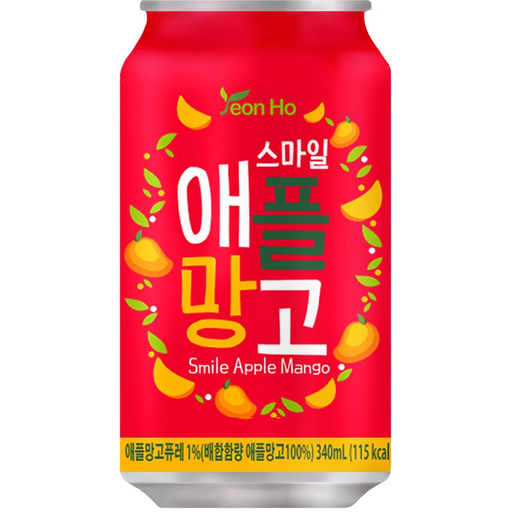
Why This Fits Their Persona: An accessible introduction to Korean juice drinks for anyone who wants to try a single bottle without committing to a large multipack.
The product information lists apple and mango purée separately, so you can compare the ingredients rather than relying solely on the flavour name.
340 ml content; 33 kcal and 8.5 g sugar per 100 ml according to the stated nutritional information; from South Korea.
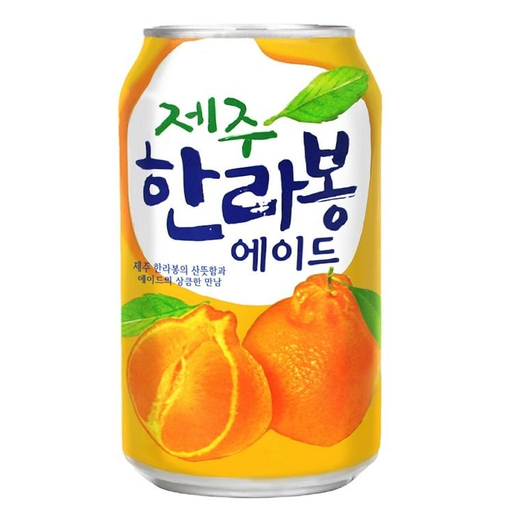
Why This Fits Their Persona: For lovers of a refined citrus direction and a light carbonated fizz with a meal or a drink.
The label states 0.9% hallabong juice concentrate. This means you know the citrus base isn’t the same as pure juice.
350 ml bottle; carbonated; 50 kcal and 12.2 g sugar per 100 ml according to the product data.
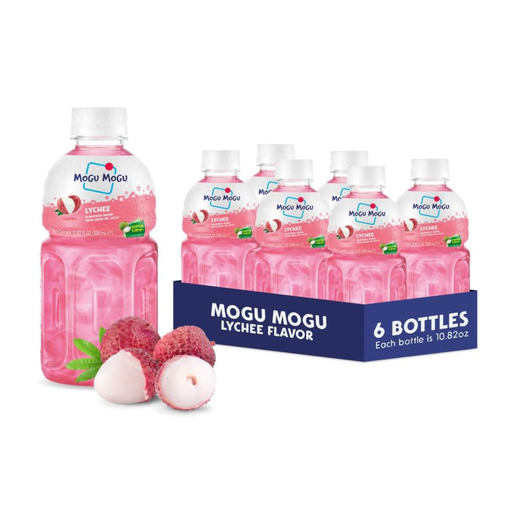
Why This Fits Their Persona: Suitable for anyone looking for bubble drinks and a snack-like drinking experience, at home or during a casual get-together.
The presence of nata de coco is central to the product description. This prevents you from expecting a clear lychee drink.
Set of 6; 320 ml per bottle; lychee flavour with nata de coco according to the product information.
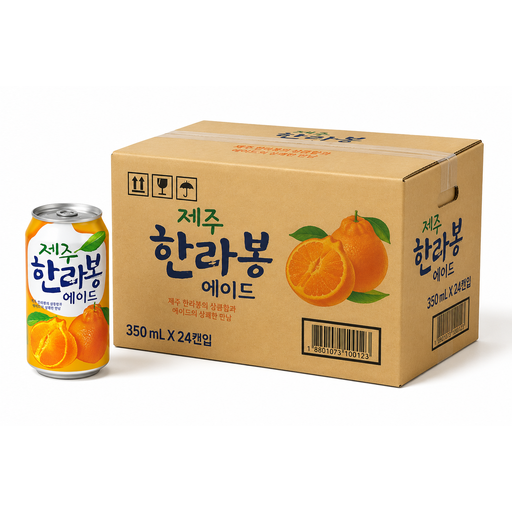
Why This Fits Their Persona: A large format for catering, offices, events or households that regularly serve Korean soft drinks.
The multipack choice makes the price per can and stock planning clearer, while each can has a fixed portion of 350 ml.
24 cans; from South Korea; carbonated citrus drink with 50 kcal per 100 ml according to the product data.
Browse a current selection of Korean drinks in different flavours, sizes and packaging. Always check the label before buying for ingredients, allergens, nutritional values and storage advice.
For a tropical fruit drink, Sagiko Mango Juice 320ml, Sagiko Lychee Drink 320ml and FOCO Mango Passion Fruit Drink 350ml are logical points of comparison. FOCO states 10% mango juice and 5% passion fruit juice. With Sagiko, the emphasis according to the product information is on purée, sugar, water and flavourings.
If you prefer carbonation and a larger size, you could look at Ka Pineapple Soft Drink 500 ml or G’woon Clear Lemon Sparkling Drink 1.5 L. With the latter, note the difference between a large sharing pack and an individual bottle.
Bubble drinks are drinks with pieces or pearls that you taste as you drink. Examples in the range include nata de coco drinks and fruit drinks with fruit pieces. Check the ingredients and texture before you order, because not every Asian fruit drink contains pieces.
Store unopened drinks according to the label, usually in a cool, dry place out of direct sunlight. Once opened, a drink should generally be kept in the fridge and consumed within the stated period. Milkis and other dairy-containing drinks require extra attention to the storage advice.
That depends on the size, delivery costs and the amount you use. A multipack can be practical for catering or a party, while individual bottles are more suitable for comparing flavours. Work out the price per 100 ml or per bottle and check the best-before date before ordering a large stock.
