
Vandaag of morgen in huis

Kwaliteit gegarandeerd

Welkomstaanbiedingen ontgrendelen: GRATIS bezorging | Tot 80% korting | Gratis 30 dagen JoyPlus-proefperiode
Download de app
You've surely seen them on social media: colorful, uniquely shaped, and even peelable candies from Asia. The world of Asian candy is vast and filled with surprising flavors and textures. But with its surging popularity, driven largely by TikTok candy trends, it's hard to know what's genuinely worth trying.
As a Product Recommendation Officer at Joybuy, I see a lot of products come and go. I'm here to help you see through the marketing hype and make a choice you won't regret. Many people fall into two common traps:
Making an informed choice helps you avoid these disappointments and truly enjoy the innovative flavors that Japanese candy and Korean candies have to offer.
To avoid a disappointing purchase, it's helpful to pay attention to a few key specifications. These details determine the final flavor and eating experience.
Texture is perhaps the most defining characteristic of Asian candy. Unlike the standard gummies common in the West, there is a wide spectrum of structures.
An authentic fruit flavor doesn't come from a lab. Pay attention to the ingredients list and look for terms like concentrated fruit juice. Manufacturers who are proud of their product often state the percentage of juice used. This is a good indicator of a richer, more natural fruit-flavored candy. Popular flavors like peach, grape, mango, and lychee are showcased much more effectively this way.
Many Asian candy brands, particularly from Japan and Korea, pay close attention to the overall experience. Think of Sanrio candies with cute packaging featuring characters like My Melody, or candies in unique 3D shapes. This adds an extra layer of enjoyment to the product that goes beyond just the taste.
Based on these criteria, we've highlighted several popular choices that cater to different preferences.
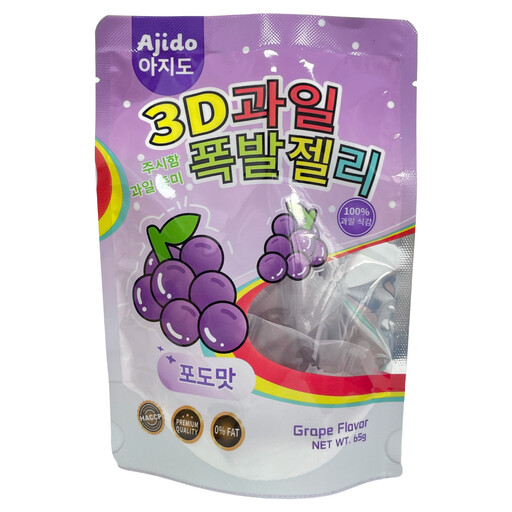
Why This Fits Their Persona: Perfect for those who want to try the viral 'peelable candy' trend for themselves. The interactive peeling element makes this a fun snack to share and is ideal for social media content.
This product delivers exactly what it promises: a peelable experience. It's not a vague gimmick but the core feature of the product. The flavor is backed by a significant amount of concentrated grape juice.
Unique 3D design and a distinct grape flavor thanks to concentrated grape juice (>28%). The texture is soft and 'bouncy'.
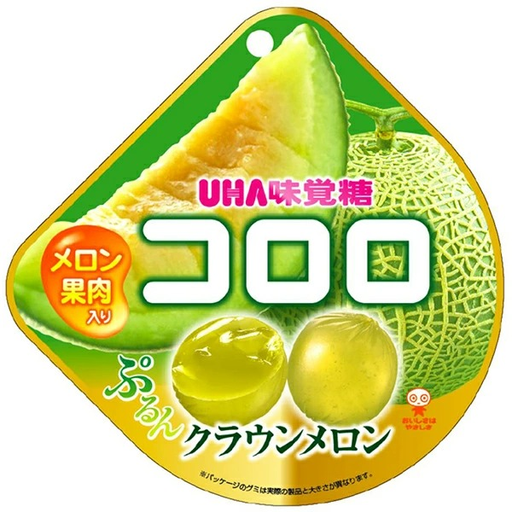
Why This Fits Their Persona: For those seeking an authentic and refined flavor experience. This isn't your average candy, but a premium product that focuses on the pure taste of high-quality fruit.
This product avoids the vague fruit flavor trap by including actual pieces of melon pulp. The focus is entirely on the quality of the ingredients, not on a gimmick.
A unique, soft texture that the manufacturer claims mimics the experience of eating real fruit. Contains pieces of cantaloupe melon and concentrated fruit juice for a deep, authentic flavor.
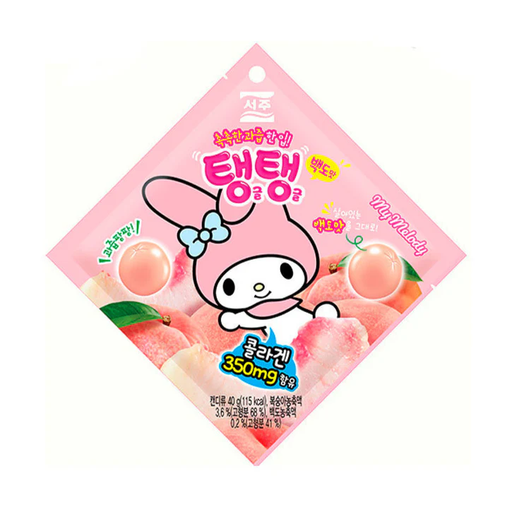
Why This Fits Their Persona: Combines a popular peach flavor with adorable My Melody packaging. This is a prime example of how Korean candies blend taste and pop culture.
While the packaging plays a major role, the flavor is not an afterthought. The product is made with white peach juice concentrate, ensuring a quality taste that matches its appearance.
Appealing Sanrio packaging. The candies have a soft, 'chewy' texture and a distinct white peach flavor.
We have compiled a complete, up-to-date list of products that fully meet these strict selection criteria and EU regulations.
Yes, both the 'peel' and the inside of peelable candy are made from edible ingredients like gelatin, pectin, and sugar syrup. It is designed to be eaten in its entirety; the peeling is purely an interactive and fun element.
While there is a lot of overlap, there are some general differences. Japanese candy, such as UHA Kororo, often focuses on refined, subtle flavors and unique textures that mimic the experience of eating real fruit. Korean candies, on the other hand, are often known for their bold flavors, bright colors, and integration of pop culture, as seen with Sanrio candies.
Some Asian candies contain food colorings (like E102, E110, E129) that require a specific declaration in the European Union. EU regulations state that for these colorings, the warning "may have an adverse effect on activity and attention in children" must be displayed on the label. This is a standard requirement to fully inform consumers.
