Choose the input method you plan to use at the tournament, then check that the exact model works with both your home platform and the tournament platform. A joystick arcade stick uses a joystick to move; a leverless controller uses separate buttons for directions, and you should also check its SOCD setting. Desk space, operating noise and event rules may also influence your choice, but none of these controllers guarantees better combos.
Which controller is right for you?
Tournament player using two platforms
You may practise at home on a different system from the one you use to play. Check that the exact model is compatible with both systems; Nacon and 8BitDo list different platforms for different models. Evo France lists PS5 as the platform for Street Fighter 6.
Combo player switching between input methods
You’re deliberately choosing between joystick movements and separate direction buttons. With a leverless controller, it’s also important to understand which SOCD mode is active; Razer lists adjustable modes for the Kitsune, while Hit Box Arcade explains how simultaneous opposing directions are handled.
Player in a shared home office
You have limited desk or storage space, or you want to consider how noisy the controls are. Razer describes the Kitsune as having a slim profile; Qanba describes some Q8 Silent components as quiet, but this doesn’t provide a comparable noise measurement for the complete controller.
What should you consider when choosing?
Start with the input method you want to practise, then check platform compatibility and tournament rules. Finally, consider whether the controller’s build and controls suit your setup.
| What to consider |
What should you check? |
Who might prioritise this? |
| Compatibility |
Compare the full model name and version with your home platform, game and tournament platform. Check any adapter and firmware requirements for that specific model. |
If I practise at home on one system and play on another, I want to know in advance whether my exact controller works with both. Around 33% of consumers prioritise platform compatibility. |
| Joystick or direction buttons |
Choose the movement layout you want to train with. For leverless controllers, check which SOCD modes are available and whether they’re permitted at the event. |
If I’m used to a particular type of movement input, I want to practise my combos using the same controls. Around 27% of consumers consider input method the deciding factor. |
| Space and noise |
Measure the available desk and storage space. Check noise claims for the exact model; a description such as ‘quiet’ isn’t a noise measurement for the complete controller. |
If I share my workspace or have limited room, I want to know how the controller will fit and how noisy it will be in that space. Around 20% of consumers prioritise workspace and noise. |
| Maintenance and tournament rules |
Check whether the components are accessible and which features can be disabled. Compare programmable features with the rules for the specific game and event. |
If I want to maintain or customise components, I also want to avoid practising with a feature that isn’t allowed at the tournament. Around 20% of consumers prioritise maintenance and rule-compliant controls. |
Buying pitfalls
-
Assuming every model in a product range is interchangeable
Manufacturers list platform compatibility and connection requirements for each model. A version for one console family won’t automatically work with another.
Before buying, check the full model name, your console, the game and the required connection. Check separately whether you need an adapter or specific firmware.
-
Assuming a tournament lock means the controller is approved for every event
A tournament lock doesn’t prove that every setting or programmable feature complies with the rules of your event.
Check the rules for the specific game and event, and practise with permitted settings. Evo’s published rules prohibit hardware macros and rapid-fire, among other things; other events may have their own rules.
-
Assuming ‘silent’ means the whole controller is silent
Qanba describes some Q8 Silent components as quiet, but that doesn’t tell you how noisy the complete controller will be in your workspace.
If noise matters, assess the exact model in the space where you plan to use it before making a decision.
Brands and relevant models
Nacon
The Daija PlayStation is a joystick arcade stick for anyone looking for a model compatible with PS5, PS4 and PC.
- Nacon lists Sanwa joystick and buttons, a lock function and an included 3-metre cable.
- Check that you’re looking at the PlayStation version; this model’s compatibility doesn’t automatically apply to every Daija version.
HORI
The Fighting Stick α is a joystick arcade stick for PlayStation 5, PlayStation 4 and Windows 11/10.
- HORI lists a Hayabusa joystick and buttons, a housing that opens for maintenance, and software profiles.
- The manufacturer’s product page covers a US version; check the specifications of the version you’re planning to buy.
Qanba
The Obsidian 2 and Q8 Silent are different options: a joystick arcade stick with stated PS5, PS4 and PC compatibility, and a PC option with components described as quiet, respectively.
- For the Obsidian 2, Qanba lists a Sanwa joystick, Sanwa buttons and a tournament lock. For the Q8 Silent, Qanba describes the joystick and buttons as quiet.
- The Q8’s quiet description isn’t a comparative noise measurement. Don’t assume the Obsidian 2’s PS5 support also applies to the Q8.
Razer
The Kitsune is for anyone who wants to practise on PS5 or PC using four direction buttons instead of a joystick.
- Razer lists a slim profile, detachable USB-C cable, tournament lock and four SOCD modes.
- The permitted SOCD setting depends on the event rules. Manufacturer claims about input aren’t independent performance tests.
8BitDo
The Arcade Stick for Xbox is a joystick arcade stick for Xbox Series X|S, Xbox One and Windows.
- 8BitDo lists wireless 2.4GHz and wired USB-C connections, button mapping and replaceable components.
- This Xbox version isn’t a confirmed PS5 solution; consider it separately from the brand’s other arcade sticks.
Mayflash
The F500 Elite is a joystick arcade stick; the F500 FLAT Elite is a separate leverless version.
- Mayflash lists Sanwa components and PC support for the F500 Elite. For the F500 FLAT Elite, the manufacturer details connection requirements for PS5, among other things.
- For PS5 use with the F500 Elite, Mayflash specifies adapter and firmware requirements. Check these for the exact model, and make sure turbo and macro functions comply with event rules.
Joybuy product selection
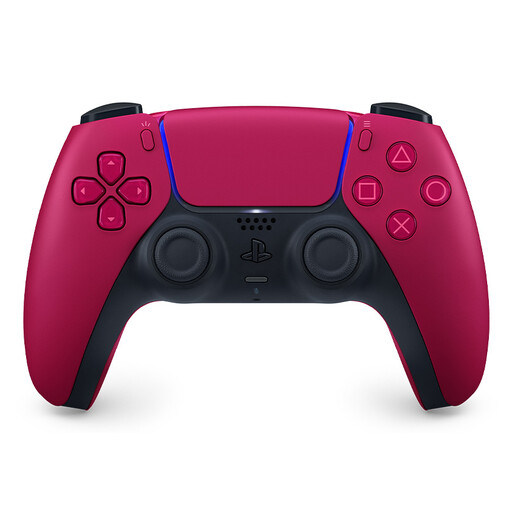
This Joybuy selection is for practising combos with an existing gamepad on PS5; it isn’t a joystick arcade stick or a leverless controller with direction buttons.
 No image available
PS5 DualSense™ Wireless Controller V3 - Cosmic Red
A gamepad option for anyone who wants to practise combos on PS5 using gamepad controls; it isn’t an arcade stick.
PS5 version, wireless, Cosmic Red colour variant.
View at Joybuy
Frequently asked questions
Is every arcade stick with the word ‘tournament’ automatically allowed?
No. Evo’s published general rules prohibit hardware macros and rapid-fire, among other things; macros from the in-game menu are allowed. Check the rules for your specific event and game: Evo’s rules aren’t Dutch law and don’t automatically apply to other tournaments.
How do I connect a Mayflash F500 Elite if I want to practise on PS5?
For PS5 use, Mayflash describes a suitable adapter and publishes firmware information for connecting with MagicBoots-S5. Before buying, check the exact stick version, firmware, adapter and game; the F500 FLAT Elite is a different model.
Can I replace buttons or change profiles?
It depends on the model. HORI describes the Fighting Stick α’s opening housing, which gives you access to its components; Nacon lists software profiles for the Daija PlayStation. Check the instructions for the exact model before opening the housing or using settings in a tournament.
What are my rights when buying online in the Netherlands?
When you buy online from a business, you’ll generally have 14 days to change your mind, according to the Dutch government; purchases from private sellers aren’t covered by the same distance-selling rules. You’re also entitled to a product that meets reasonable expectations when buying as a consumer. The Dutch government states that the Netherlands doesn’t have a fixed statutory guarantee period and that the seller must provide a solution if a product is faulty.


