
For making smoothies when entertaining
You want to serve several glasses without having to blend more batches than necessary. Pay particular attention to the usable capacity and the stated maximum fill level.


For several glasses at once, a standard jug blender is a sensible place to start: compare the usable capacity with the amount you want to make, not just the jug’s total capacity. For one small portion, a personal blender may be more convenient. If you often use frozen fruit or ice, check the intended functions and independent blending results, as wattage alone won’t tell you how well it performs. Always remove the stones from apricots before blending: the Netherlands Nutrition Centre warns that crushed fruit stones in a smoothie can be dangerous.
You want to serve several glasses without having to blend more batches than necessary. Pay particular attention to the usable capacity and the stated maximum fill level.
If you also want to blend frozen fruit or ice, check that the blender is designed for the job and look for blending results for that specific task. The Dutch Consumers’ Association highlights differences between blenders when crushing ice.
A small blending cup or a set with separate drinking cups can be handy for individual smoothies. Remember to consider how you’ll clean and store the extra parts.
If you’re entertaining, start with the amount you want to make in one go. Then consider the ingredients, cleaning and the size of blender you want to store at home.
Choose this if: you want to make several glasses at once and the jug’s usable capacity suits the amount you need.
Trade-off: a jug takes up more storage space than a small personal blender cup.
Choose this if: you usually make one small portion or want to drink straight from the blending cup.
Trade-off: a small cup may mean making several batches when you have guests.
Choose this if: you want to make smoothies for guests as well as smaller portions for yourself.
Trade-off: extra cups give you more options, but you’ll also have more parts to store and clean.
| What to consider | What should you look for? | Who is this important for? |
|---|---|---|
| Capacity for entertaining | Compare the amount you want to make with the stated maximum fill level and usable capacity; these may differ from the jug’s total capacity. | If I want to serve several guests at once, I need to know whether the usable capacity will be enough; around 42% of consumers say portion size is their main concern when buying. |
| Frozen fruit or ice | Check whether the manufacturer lists this use and look at independent blending results if you’ll be doing it often. | If you regularly want to use frozen fruit or ice, you’ll want reassurance that the blender can handle that specific task; around 25% of consumers say frozen ingredients are their main concern when buying. |
| Cleaning | Check whether each part is removable and dishwasher-safe. Unplug the blender before removing or cleaning the blades. | After serving, I want to be able to clean the separate parts without any hassle; around 17% of consumers say ease of cleaning is their main concern when buying. |
| Size and accessories | Decide whether you’ll mainly be blending for guests or making individual portions, and check which cups come with the exact model. | If I’m mainly looking for the right size and don’t want lots of extra parts, I’ll focus on what I’ll actually use; around 16% of consumers say size or a simple set-up is their main concern when buying. |
A jug’s total capacity may be greater than the amount you can safely prepare in one go. For example, Tefal lists a 2-litre jug capacity and a usable capacity of 1.5 litres for the PerfectMix+ BL871D31.
Check the fill markings or the stated usable capacity for the exact model before measuring out your ingredients.
The Dutch Consumers’ Association highlights differences between blenders when crushing ice, so the motor’s power alone won’t tell you how well a model performs this task.
If you often use ice or frozen fruit, check the stated uses and compare independent results for the task where these are available.
The Netherlands Nutrition Centre warns that crushed fruit stones in a smoothie can be dangerous.
Remove the apricot stones before putting the fruit in the blender.
For the VitaPower Serie 4 MMB6141B, Bosch lists a 1.5-litre Tritan jug and 1200 W of power. This may be worth considering if you’re looking for a jug model for several portions.
For the PerfectMix+ BL871D31, Tefal lists a glass jug and programmes for smoothies, ice and cleaning.
Braun describes the PowerBlend 3 JB3150 as a jug blender with a glass jug and 800 W of power.
According to the manufacturer, the SmartSense 1500 Combo NBF550DG combines a jug with two drinking cups.
These Joybuy products include jug blenders and combinations suited to making smoothies for guests, with options for ice or smaller individual portions.
 No image available
This jug model is designed for smoothies in several portions; the product name also lists an ice-crushing function.
The product name lists a 1.5 l jug, four Black Titanium blades and two speeds.
 No image available
The stated usable capacity of 1.5 litres and smoothie programme make it suitable for preparing several portions.
The product description also lists an ice-crushing and cleaning programme, a pulse function and a dishwasher-safe jug.
 No image available
The product description mentions smoothies and a working capacity of 1.5 litres, making it suitable for preparing a batch for a group.
The description lists three speeds, a pulse function, removable blades and removable dishwasher-safe parts.
 No image available
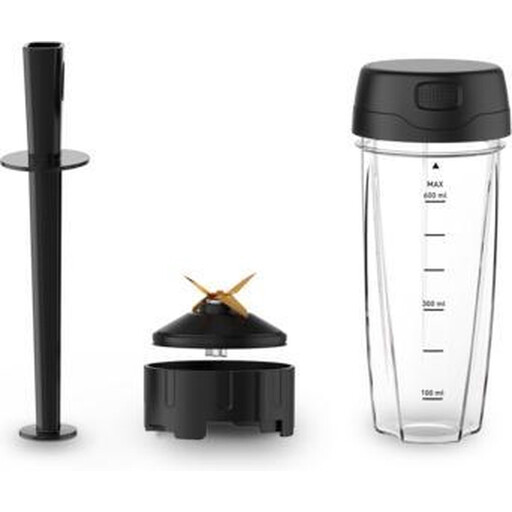
The product description mentions a jug for larger portions and a separate drinking cup for smaller smoothies.
The product name lists a 1.75 l Tritan jug and 1600 W of power; the description also mentions five automatic programmes and a 600 ml drinking cup.
 No image available
The combination of a jug and a separate cup may suit you if you want to make smoothies for guests as well as smaller portions.
The product description lists a 2.1-litre jug, a 700 ml cup, a smoothie programme and an ice-crushing function.
Yes: remove the stones and don’t blend them. The Netherlands Nutrition Centre warns against crushed fruit stones in smoothies and recommends washing raw fruit under running water.
No, stick to the stated maximum fill level. Check the usable capacity for the exact model: Tefal lists a usable capacity of 1.5 litres for the PerfectMix+ BL871D31, despite its total jug capacity of 2 litres.
Check the manual to see which parts are dishwasher-safe. Unplug the blender before removing the blades or jug; don’t put the motor housing in the dishwasher.
No, wattage alone doesn’t show how well a blender handles ice. The Dutch Consumers’ Association reports differences between models, so check the stated use and compare independent blending results for ice if you use that function often.
In the Netherlands, electrical equipment with a rated AC voltage of 50 to 1,000 V falls under the low-voltage regulations described by the Netherlands Food and Consumer Product Safety Authority (NVWA). Products covered by the Commodities Act Decree on Electrical Equipment must carry a CE marking; according to the European Commission, this marking is the manufacturer’s declaration, not an independent quality mark.