Start by working out how many apple turnovers you need ready before your coffee morning. Compare the usable baking tray space and the number of suitable shelf positions, not just the oven’s capacity in litres. If you have a suitable housing unit, a built-in fan oven that lets you bake on several levels could be an option. If not, a freestanding model may be more suitable, provided you follow the model’s instructions for positioning and connection. Also check that the oven supports the setting specified in your recipe and find out which baking trays are included.
Who is this buying guide for?
Baking in several batches
If you want to bake plenty of apple turnovers before your coffee morning, compare the usable tray space and the number of batches you’ll need. The Consumers’ Association recommends checking the internal dimensions of a built-in oven; Bosch and Siemens specify that some models can bake on several levels using fan heat.
Baking without a built-in housing unit
If you don’t have a suitable housing unit, a freestanding oven could be an option. Measure the space available and follow the positioning instructions to allow heat to escape; the Netherlands Fire Service highlights the importance of ventilation for electrical appliances.
Baking with limited oven space
If you bake smaller quantities or can spread the batches out, choose a size that suits what you usually prepare. Milieu Centraal recommends choosing an oven that is no larger than you need.
What should you look for when choosing?
Start with your baking plans and kitchen space, then choose the settings and features that suit your recipe and how you’ll use the oven.
| What to consider |
What to look for |
Who is this most relevant to? |
| Baking capacity |
Check how many apple turnovers you can fit, with space between them, on a suitable baking tray; find out whether you can use several levels at once. |
I want enough apple turnovers ready before we start, and to know how many will fit in each batch. About 36% of consumers put sufficient baking capacity first. |
| Positioning |
For a built-in oven, measure the housing unit according to the installation diagram. For a freestanding model, check its external dimensions, ventilation clearance and connection requirements. |
If I don’t have a suitable built-in housing unit, I want to be sure there’s a suitable place where heat can escape. About 29% of consumers give positioning top priority. |
| Oven setting |
Check that the model supports the temperature and oven setting in your recipe; settings vary from recipe to recipe. |
I want to follow the oven setting in my puff pastry recipe rather than rely on a general setting. About 21% of consumers prioritise the oven setting and results. |
| Use and care |
Compare energy-use figures on a like-for-like basis, and check which trays are included and what cleaning function the model has. |
I want to know what I’ll need to clean after baking and whether the included trays will be enough. About 14% of consumers prioritise running costs and aftercare. |
Common buying mistakes
-
Assuming the capacity in litres tells you how many apple turnovers fit in each batch
The stated capacity doesn’t tell you how many apple turnovers will fit on the included baking tray. The Consumers’ Association recommends checking the usable internal dimensions.
Measure the tray and leave space between the apple turnovers. Then work out how many batches your schedule allows.
Extra batches may mean more baking time; you may need an additional suitable baking tray if the one supplied isn’t enough.
-
Buying a freestanding oven without a suitable place to put it
A freestanding model still needs a spot where heat can escape as instructed and where the electrical connection is suitable.
Measure the space and follow the positioning and connection instructions for the exact model. The Netherlands Fire Service recommends plugging high-power appliances directly into a socket where possible; any cable reel in use should be fully unwound.
-
Letting an energy label or extra feature make the decision for you
The size of the oven and how you bake also affect energy use. The European Commission excludes small and portable ovens from the scope of household oven energy labelling.
First choose a suitable amount of baking space and an appropriate oven setting. Then compare energy-use figures only if they are presented on the same basis.
Oven brands to consider
Bosch
If you have a suitable built-in housing unit and want to compare shelf positions, Bosch lists a capacity of 71 litres and 3D Hot Air on up to three levels for the HBA534BB3.
- Bosch lists rotary controls and a cleaning assistance function for this model.
- The stated shelf positions haven’t been tested for baking apple turnovers. Also check whether the included roasting tray will be enough for your plans.
Inventum
According to Inventum, the OV607B is a 60-litre freestanding fan oven with top and bottom heat and an included baking tray.
- Inventum lists timer controls and accessories for this model.
- The capacity doesn’t tell you how many apple turnovers will fit on the tray. Check the tray dimensions and the space available for positioning the oven.
Siemens
For the HB572ABS3, Siemens lists 3D hotAir on up to three levels and a cleaning function.
- Siemens also lists fastPreheat as a model specification.
- These features don’t demonstrate independent time savings or baking performance for apple turnovers. Consider whether they’ll be useful for the other things you cook beyond this coffee morning.
AEG
According to AEG, the BS7700T is a 72-litre built-in oven with fan settings and steam support.
- AEG lists pyrolytic cleaning and built-in dimensions of 590 × 560 × 550 mm.
- Steam support hasn’t been shown to be necessary for a classic apple turnover recipe. Consider whether you’ll use the extra features for other dishes too.
Built-in ovens at Joybuy
The Joybuy products below are built-in ovens with features that may suit baking on several levels or using different oven settings. Before buying, check that the model fits your housing unit and has the features you need.
 No image available
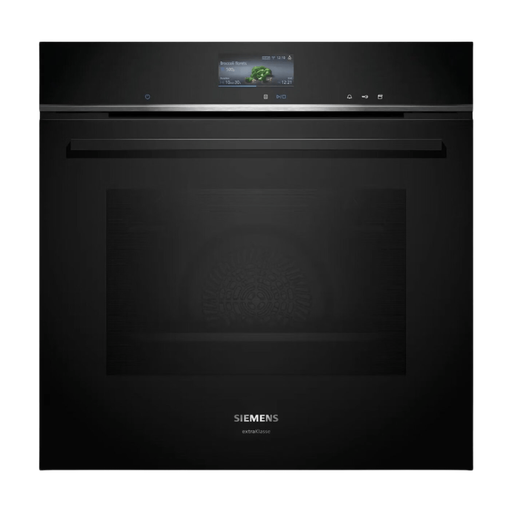
Siemens HS736GDB1 built-in oven, 60 l
An option if you have a suitable built-in housing unit and want to compare ovens with several shelf levels.
The product description lists 4D hot air and baking on four levels. It also mentions top and bottom heat and humidClean Plus. According to the product information, installation by a qualified electrician is required.
View at Joybuy
 No image available
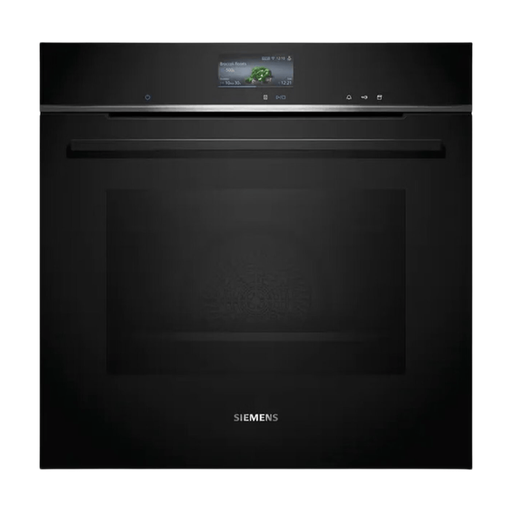
Siemens HS736G3B1 built-in oven, 60 l
This built-in oven could suit you if you’re looking for 4D hot air; check the housing unit and the oven settings you need.
The product description lists 4D hot air, preheating and humidClean Plus. According to the product information, installation by a qualified electrician is required.
View at Joybuy
 No image available
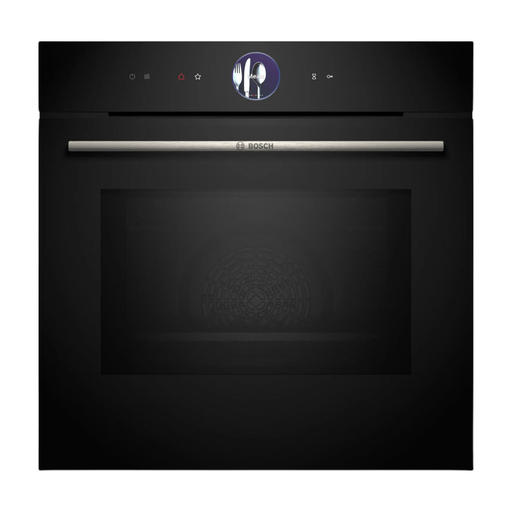
Bosch HMG7361B1 built-in oven, 71 l
An option if you have a suitable housing unit and want to make use of different shelf levels.
The product information lists 3D hot air, five shelf positions, a baking tray and a universal pan. This model needs a suitable built-in housing unit.
View at Joybuy
 No image available
Bosch HBG536EB4 built-in oven, 71 l
This built-in oven could suit you if you’re looking for 3D hot air on several levels and have a suitable housing unit.
The product description lists 3D hot air on up to three levels, an Air Fry function with baking tray and telescopic rails. According to the product information, installation by a qualified electrician is required.
View at Joybuy
 No image available
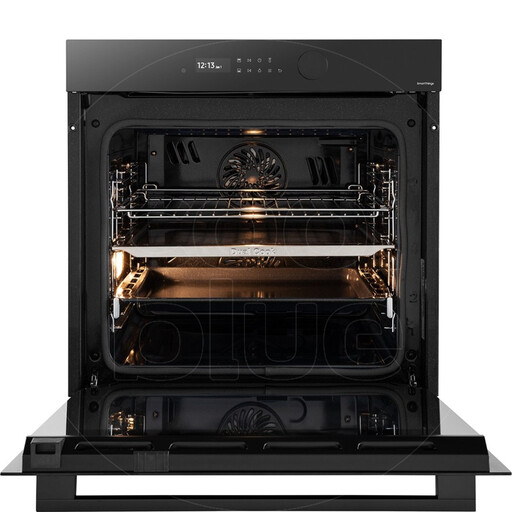
Samsung NV7B5655SCK/U1 built-in oven, 76 l
An option if you’d like to cook two dishes at once as well as baking apple turnovers, and the oven capacity suits the way you cook.
The product description lists Dual Cook, with two separate oven compartments, and 40 automatic programmes. The title also mentions AirFry and pyrolytic cleaning. This model needs a suitable built-in housing unit.
View at Joybuy
Frequently asked questions
Can you tell how many apple turnovers will fit from the capacity in litres?
No, the capacity in litres doesn’t tell you how many apple turnovers will fit on a baking tray. Measure the usable internal space and the tray, then work out how many will fit on one tray with space between them. The Consumers’ Association points out that the usable space may be smaller than the stated oven capacity.
Do you need to preheat the oven for apple turnovers?
Follow the recipe you’re using. Koopmans recommends preheating the oven for its classic apple turnover recipe and specifies 225 °C for a conventional electric oven or 210 °C for a fan oven, with a baking time of 15–20 minutes. These settings apply to that recipe.
How do you position and connect a freestanding oven safely?
Follow the positioning and connection instructions for the exact model, and make sure heat can escape. The Netherlands Fire Service recommends plugging high-power appliances directly into a socket where possible, rather than using a cable reel or extension lead. If you use a cable reel, unwind it completely.
What if the oven breaks down too soon after you buy it?
When you buy as a consumer in the Netherlands, you have a statutory guarantee in addition to any manufacturer’s warranty. If the oven doesn’t perform as you could reasonably expect under normal use, the seller must offer an appropriate solution, according to ACM ConsuWijzer. This doesn’t mean there is a fixed guarantee period for every oven.
What rules apply if we sell the apple turnovers?
Food sold at a market or event must be prepared, sold and stored safely and hygienically; according to the Netherlands Food and Consumer Product Safety Authority, this also applies to private individuals. The NVWA states that anyone who prepares and sells food several times a year must have a HACCP food safety plan. Businesses selling unpackaged food must also tell customers about any allergens it contains. Whether these requirements apply to your coffee morning depends on how the event is organised.


