
Home bakers who make their own pastry
If you want to mix butter and flour for apple turnovers, check which blade comes with the appliance and what the instructions say about making dough for that specific model.


First, choose an appliance that fits in your cupboard with all its parts, then check whether that specific model is suitable for the amount and type of dough in your recipe. A smaller food processor may take up less storage space, but you might need to mix the dough in several batches. A larger machine will take up more room. Manufacturers’ stated bowl capacities and dough quantities are not the result of a comparative test using apple turnover pastry.
If you want to mix butter and flour for apple turnovers, check which blade comes with the appliance and what the instructions say about making dough for that specific model.
If you need to put the machine away after use, remember to allow space for the lid, discs and any separate accessories too.
If you sometimes make more dough at once, distinguish between the bowl capacity and the quantity the manufacturer says the machine can actually process.
First, measure the space available for the appliance and all its accessories. Then check whether the manual for that exact model gives guidance for your recipe and batch size.
| What to consider | What to look for | Who should pay particular attention? |
|---|---|---|
| Mixing dough | Check the blade and recipe instructions for the model. KitchenAid lists a dough blade for the 5KFP0719EBM. Kenwood’s dough example for the FDP22 series is for a specific recipe using flour and water, not a limit for butter-based pastry. | If you want to mix butter and flour for apple turnovers, look for instructions that suit your ingredients. Around 29% of consumers say mixing dough is their main concern when buying. |
| Cupboard space | Measure the appliance and its separate accessories. Bosch Nederland lists the MCM3200W as measuring 375 × 220 × 260 mm and says it comes with a blender jug. Magimix lists the Mini Plus as measuring 370 × 155 × 210 mm and says it has a separate accessory box. | If your cupboard is already full, you’ll want to know where you can store all the separate parts too. Around 36% of consumers say storage space for the appliance and accessories is their top priority. |
| Batch size | Compare the quantity in your recipe with the dough limit for the specific model, rather than looking only at the bowl capacity. Bosch Nederland lists a 2.3 l bowl and a maximum dough quantity of 0.8 kg for the MCM3200W. Magimix lists a total capacity of 1.7 l and a processing capacity of 600 ml for the Mini Plus. | If you want to make a larger batch, you’ll want to know whether it can be processed all at once. Around 21% of consumers say batch size is their main consideration. |
| Cleaning | Check whether the manufacturer says each part is dishwasher-safe. Bosch says the MCM3200W accessories are generally dishwasher-safe; Kenwood lists dishwasher-safe accessories for the FDP22.140GY. | If you want to spend less time washing up after baking, check which parts you’ll use for your recipe. Around 14% of consumers put easy cleaning ahead of extra features or a larger bowl. |
A product range may include versions with different model numbers and accessories. The name alone doesn’t always tell you what’s included.
Before choosing a version, compare the full model number and parts list with the manufacturer’s information.
Bosch lists the MCM3200W’s bowl capacity, maximum dough quantity, appliance dimensions and accessories that can be stored in the bowl.
KitchenAid lists a 1.7 l bowl, a dough blade and a multipurpose blade for the 5KFP0719EBM.
Kenwood describes the MultiPro Go FDP22.140GY as a compact food processor with a 1.3 l bowl and a pulse function.
Magimix describes the Mini Plus as a slim machine with two bowls and a separate accessory box.
Philips lists kneading and storage of the accessories in the bowl among the features of the HR7310/00.
These Joybuy products are designed for mixing or kneading dough. The selection includes both compact food processors and larger stand mixers. Check that each model’s dimensions, accessories and instructions suit your recipe.
 No image available
The product information lists a dough hook for mixing and kneading dough. The stated bowl capacity is 4.5 l and the power rating is 1300 W. It also lists six speeds and a pulse function.
 No image available
According to the product information, this stand mixer has a tilt-head design and a dough hook. The information lists a 5 l bowl, ten speeds and a pulse function.
 No image available
The product information describes automatic kneading and a dough resting function. The stated capacity is 5 l and the maximum dough quantity listed is 2.5 kg.
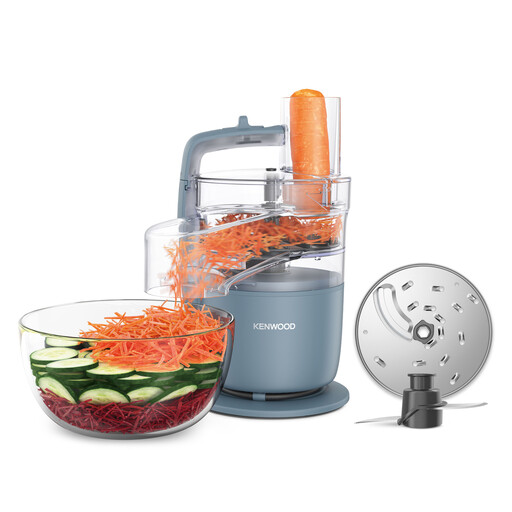 No image available
This compact food processor is designed for mixing and other food preparation tasks. The product information lists a 1.3 l bowl and dishwasher-safe parts. Check the cleaning instructions for each accessory.
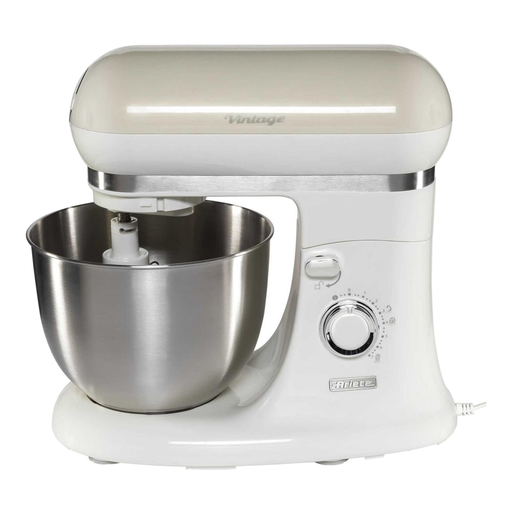 No image available
The product information lists a dough tool and a mixing tool. According to the product name, this version has a 5 l stainless steel mixing bowl and a power rating of 1000 W.
No. Don’t judge by the name or bowl capacity alone. Check the blade, instructions and permitted quantity for the specific model and recipe. Kenwood’s dough example for the FDP22 series uses flour and water; it doesn’t confirm a limit for butter-based pastry.
For the FDP22 series, Kenwood describes using the knife blade with 250 g of flour and 150 g of water for no more than 30 seconds. Hold the handle while doing so, and don’t process the dough for longer, as this could cause overheating. For other ingredients, follow the relevant manual and recipe.
This varies by part and model. Bosch says the MCM3200W accessories are generally dishwasher-safe; check the instructions for each part you use.
That depends on the rules that apply to the specific model. The NVWA states that the Low Voltage Directive applies to electrical equipment with a rated AC voltage of 50–1000 V or a rated DC voltage of 75–1500 V. CE marking is required for products covered by the applicable rules. CE marking alone doesn’t tell you whether the appliance is suitable for your dough.
No. According to the Rijksoverheid, there is no fixed statutory guarantee period. If a product is faulty, the seller must provide a solution.