
Workshop host with a separate workspace
You’re looking for an oven that can be set up near your baking activity without needing a built-in space. Your springform tin needs to fit, and the appliance must sit safely in the space available.


If your workshop doesn’t have a suitable built-in space, a freestanding oven is the obvious choice. Choose a built-in oven if you have a suitable permanent space and baking on multiple levels matters. Measure the interior with the springform tin you’ll be using, and follow the temperature and oven setting in your chosen recipe. Manufacturers’ claims about baking on multiple levels don’t guarantee that different apple pies will bake evenly at the same time.
You’re looking for an oven that can be set up near your baking activity without needing a built-in space. Your springform tin needs to fit, and the appliance must sit safely in the space available.
You’re planning several pies or groups and want to know in advance how many tins and oven levels you can actually use.
You want participants to use a familiar oven setting and straightforward controls, without simply copying settings intended for a different type of oven.
Best for: a workshop space without a suitable built-in recess, for example if one springform tin per batch is enough.
Bear in mind: the oven takes up worktop space, and a stated capacity of 45 litres doesn’t prove that every springform tin will fit.
Best for: a freestanding setup where a larger oven is a better fit for the tin you have and the space available.
Bear in mind: more litres don’t guarantee that several pies will fit or bake evenly at the same time; measure the usable space.
Best for: a workshop kitchen with a suitable built-in space, especially if baking on multiple levels is part of your plan.
Bear in mind: check the recess and the space around your tins. The stated number of baking levels is no independent guarantee that several apple pies will turn out as expected.
| What to consider | What should you check? | Who is this important for? |
|---|---|---|
| Springform tin and workspace | Measure the tin’s diameter and height, then compare them with the usable interior dimensions. Also check the setup instructions for a freestanding model. | If I’m using the oven in a separate workspace, I want to be sure I can get the tin in and out. Around 30% of consumers prioritise fit and workspace. |
| Capacity per batch | Decide how many pies need to go in the oven at once, then check whether your tins fit on the intended levels. | If participants are baking at the same time, I want to match the number of tins to the oven space in advance. Around 30% of consumers choose mainly on capacity per batch. |
| Oven setting and controls | Check whether the model has a convection setting, and follow the temperature and shelf position in your chosen recipe. | If participants are following the recipe themselves, I want them to be able to select the intended oven setting and keep an eye on the baking. Around 30% of consumers give oven settings and controls top priority. |
| Running costs and aftercare | Where an applicable energy label is available, compare energy use per cycle. Also check the installation and warranty terms. | If I’m using the oven outside workshops too, I want to factor in running costs and know who to contact if it develops a fault. Around 10% of consumers prioritise costs and aftercare. |
The stated capacity doesn’t tell you directly whether your springform tin and oven rack will fit. The Consumers’ Association recommends checking the interior dimensions and comparing the largest oven dish or tin you use with the space available.
Measure your tins and check the interior dimensions and planned baking levels before choosing an oven.
An extra batch or a tin that doesn’t fit could disrupt your workshop plans.
An apple pie recipe may give a different temperature for convection than for a conventional electric oven. For example, an Albert Heijn and Koopmans recipe specifies 180 °C for an electric oven and 165 °C for convection. These settings apply to that recipe and don’t automatically work for every apple pie.
Choose the setting specified in the recipe and treat the baking time as a guide for that pie. Keep an eye on the baking during the workshop.
When you buy as a consumer, your statutory guarantee applies alongside any manufacturer’s or retailer’s warranty. According to the Dutch government, there’s no fixed time limit for the statutory guarantee in the Netherlands: the product must meet what you can reasonably expect from it.
Check what additional cover offers, and contact the retailer if the product is faulty. Check the separate terms if the oven is bought for business use.
Additional warranty cover may come at a cost, so consider what extra protection you actually need.
The freestanding OV457B and OV607B are two options for a workspace without a built-in recess.
Model 112754 is a freestanding oven with a stated capacity of 45 litres.
The HBA534BB3 is a built-in model for a kitchen with a suitable recess.
This selection includes freestanding and built-in ovens for different workshop setups. Check each model’s convection setting, space for your tins and installation requirements against your baking plans.
 Image unavailable
Worth considering if you’re looking for a freestanding oven with several rack positions. Check that your tin and planned baking levels will fit.
The product description lists a capacity of 35 litres, four rack positions, an integrated thermometer and an LED display.
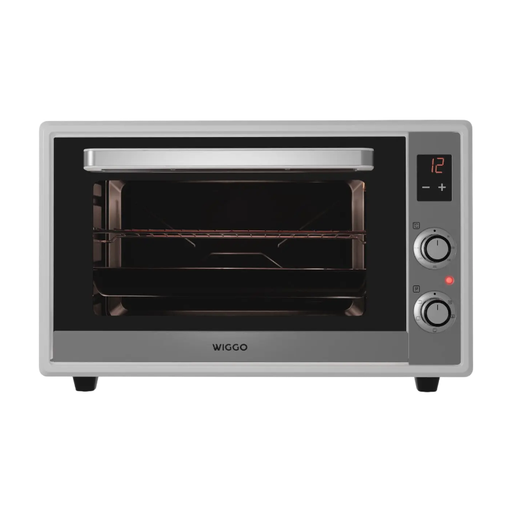 Image unavailable
A freestanding model to compare if you don’t have a built-in recess. Check the space for your tin and whether the available oven setting suits your recipe.
The product description lists four rack positions, a 90-minute timer and an optional turbo fan. Check whether the fan is available and suitable for your baking plans.
 Image unavailable
This is a freestanding gas oven; don’t assume it has the convection setting specified in your recipe. Check which oven settings are available before choosing it for your workshop.
According to the product information, installation and connection to the gas supply must be carried out by a professional technician, and good ventilation is required.
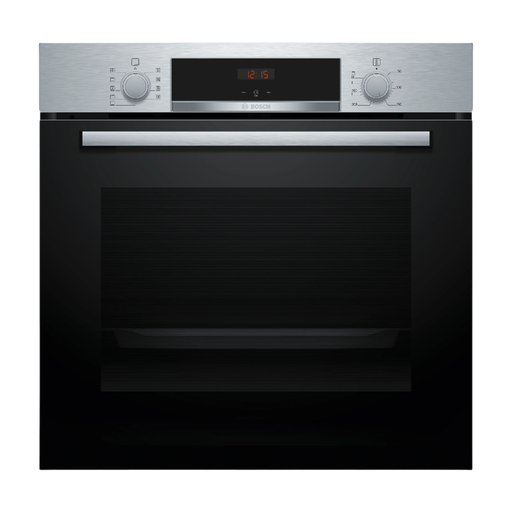 Image unavailable
A built-in option for a workshop kitchen with a suitable recess. Check the space and your chosen baking plan before relying on multiple levels.
The product description lists convection baking on up to three levels and a capacity of 71 litres. As a built-in model, this oven needs a suitable recess.
 Image unavailable
A built-in option for a permanent workshop kitchen. Check that the recess fits and that your planned tins have enough room.
Bosch lists 3D Hotair on up to three baking levels and a capacity of 71 litres for this model. The stated baking levels don’t guarantee that several apple pies will bake evenly.
Check the recipe before setting the temperature. An Albert Heijn and Koopmans recipe specifies 180 °C for an electric oven and 165 °C for convection, with the rack just below the middle. These settings apply to that recipe and aren’t a fixed rule for every apple pie.
Measure the tin and compare its dimensions with the usable interior measurements and the space on the rack. The Consumers’ Association points out that the usable oven space may be smaller than you’d expect from the capacity in litres.
That depends on the product category and the scope of the rules. The European Commission lists small and portable ovens as being outside the scope of oven energy labelling rules. Check the classification of the specific model; the absence of a label alone doesn’t prove that it’s being sold unlawfully.
In the Netherlands, the statutory guarantee applies alongside any additional manufacturer’s or retailer’s warranty. According to the Dutch government, there’s no fixed statutory warranty period: the oven must meet what you can reasonably expect from it. Contact the retailer if there’s a problem, and check the separate terms if the oven is bought for business use.
According to the Netherlands Food and Consumer Product Safety Authority, food sold to consumers must meet food safety requirements. Whether those rules apply to your activity depends on what the organiser does; simply hosting a workshop doesn’t in itself mean that food is being sold.