
Baking a whole pie for a picnic
You want to use a springform tin in one go, so check the oven’s internal dimensions and settings, not just its capacity in litres. Koopmans lists springform tins measuring Ø24, Ø26 and Ø28 cm for an apple pie recipe.


First, choose an oven that fits your springform tin and has the setting specified in your recipe: Koopmans’ basic recipe calls for conventional heat from above and below. A built-in oven needs a suitable housing unit; a freestanding model needs an appropriate spot and power connection. Also compare energy consumption and plan how you’ll keep the pie chilled during transport.
You want to use a springform tin in one go, so check the oven’s internal dimensions and settings, not just its capacity in litres. Koopmans lists springform tins measuring Ø24, Ø26 and Ø28 cm for an apple pie recipe.
You need a freestanding oven and must weigh up the space required for your tin against the room available on your worktop. Also check the installation instructions for the specific model.
You want to choose an oven that suits the amount you usually bake and compare its energy consumption, rather than looking only at its capacity or energy label. Milieu Centraal recommends choosing an oven that’s no larger than necessary.
Suitable for: a kitchen with a suitable built-in housing unit.
Consider: the housing unit and installation must suit the model you choose.
Suitable for: a kitchen without a suitable built-in space, but with room for a standalone appliance.
Consider: the appliance takes up worktop space; follow the model’s installation instructions.
Suitable for: anyone considering a combination microwave and wanting to use its oven function for this pie.
Bear in mind: according to the Consumentenbond, combination microwaves often don’t have bottom heat and sometimes have limited shelf positions; check the exact model.
For its basic recipe, Koopmans recommends 180 °C with conventional heat from above and below for 60–70 minutes, or 160 °C with fan-assisted heat. Check the settings on the oven you’re considering. These recipe settings don’t guarantee the same baking results in every oven.
| What to consider | What to look for when buying | Who is this important for? |
|---|---|---|
| Will your springform tin fit? | Measure the diameter and height of your tin and compare them with the internal dimensions, shelf and available clearance. The Consumentenbond recommends checking the internal dimensions; capacity in litres alone won’t tell you whether the tin will fit. | If I want to bake the pie in my springform tin in one go, I need to know whether the tin and shelf will fit. Around 36% of consumers put fit ahead of other buying considerations. |
| Does the oven have the right setting? | Check that the exact model has conventional heat from above and below and the temperature setting you need. Also check that the timer can be set for long enough for your recipe. | If you mainly want an oven setting that matches the basic recipe, you’ll want to follow its instructions without relying on extra features. Around 29% of consumers prioritise this setting. |
| Will the oven fit in the space? | For a built-in oven, check the housing unit dimensions and power connection. For a freestanding model, compare the external dimensions and follow the installation instructions in the manual. | If my kitchen only has room for a suitably sized housing unit, or only for a standalone appliance, the oven needs to fit that space. Around 21% of consumers make installation their main buying consideration. |
| How much electricity does the oven use? | Compare energy consumption figures on a like-for-like basis and don’t choose a larger oven than you need for the things you bake. Milieu Centraal points out that larger ovens use more energy. | If you’re choosing an oven mainly for the amount you usually bake, you’ll want to avoid unnecessary capacity and energy use. Around 14% of consumers put energy consumption ahead of other considerations. |
The usable space may be smaller than the stated capacity. This means your cake tin might not fit, even if the oven looks spacious enough on paper.
Measure your tin and compare its dimensions with the internal space and shelf position before choosing an oven.
If the tin doesn’t fit, you may need a different tin or appliance.
According to the Consumentenbond, combination microwaves often don’t have bottom heat, while Koopmans specifies this setting for the basic recipe reviewed.
Check the settings and shelf positions on the exact model and compare them with your recipe instructions.
Milieu Centraal recommends choosing a size that suits your needs and comparing energy consumption on a like-for-like basis.
First make sure your tin will fit, then compare the models’ energy consumption figures on the same basis.
The specifications for the HBF133BA1 describe a built-in oven with conventional heat from above and below and a capacity of 66 l.
The OM165ZT is a built-in oven for which ETNA lists conventional heat from above and below, as well as turbo fan-assisted heat.
The freestanding OV457B is listed with a capacity of 45 l, conventional heat from above and below, and a timer.
The TO 2058 is a freestanding baking and toast oven with a stated capacity of 42 l.
These built-in ovens are options for anyone with a suitable housing unit who wants to compare the available space, oven settings and product specifications with their own springform tin.
 Image unavailable
A built-in option for anyone looking for an oven with conventional heat from above and below. Check that the housing unit and internal space suit your kitchen and springform tin.
The product information lists a timer and energy consumption per cycle of 0,98 kWh in conventional mode and 0,79 kWh in fan-assisted mode. Check the CE marking and product documentation for the model on offer.
 Image unavailable
A built-in oven to compare if you’re considering a 71 l model. Measure your tin and check the usable internal space before making a decision.
The product information lists convection, a grill and seven cooking programmes, plus a temperature range of 50–275 °C. Check that it has the setting you need for your recipe, and review the CE marking and product documentation for the model on offer.
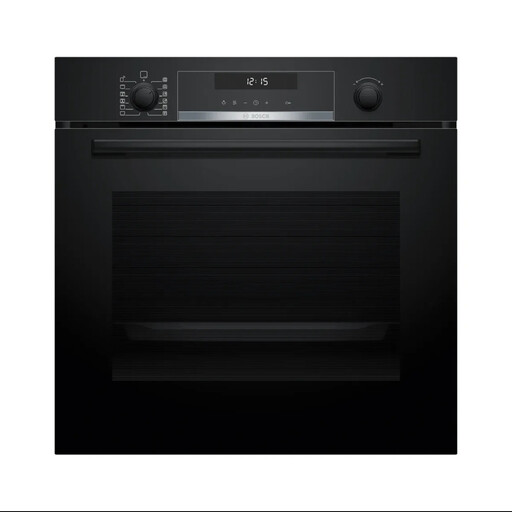 Image unavailable
This built-in option lists conventional heat from above and below. Compare the internal space with your springform tin and check the stated housing unit dimensions for your kitchen.
The product information lists an oven cavity measuring 357 × 480 × 415 mm and housing unit dimensions of 585 × 560 × 550 mm. It also gives a temperature range of 30–275 °C. Check the CE marking and product documentation for the model on offer.
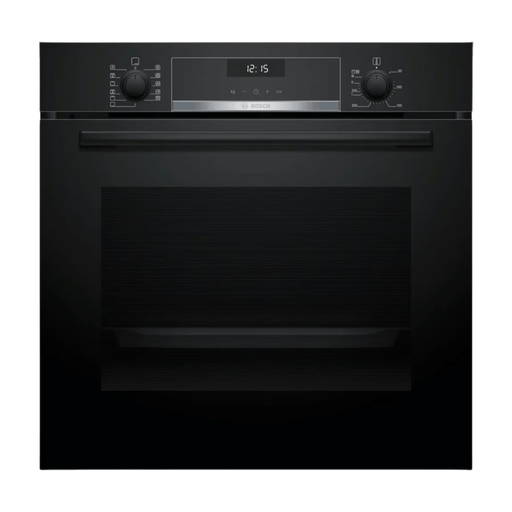 Image unavailable
A 71 l built-in model to compare with your kitchen dimensions and the space your springform tin needs.
The product information lists 3D fan-assisted heat for baking on up to three levels at once. Check that the oven settings suit your recipe, and review the CE marking and product documentation for the model on offer.
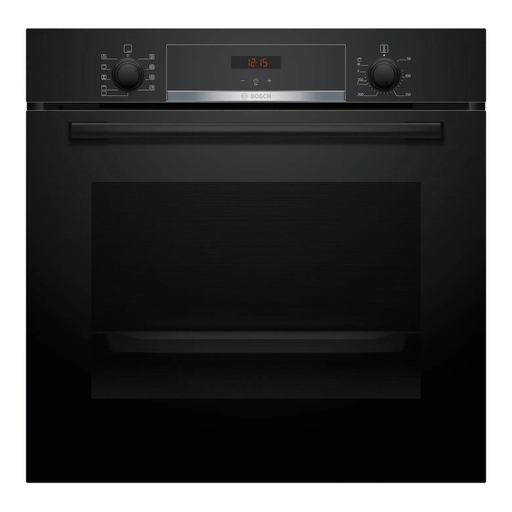 Image unavailable
An oven to consider for baking apple pie in a built-in kitchen. Check the space for your tin and the setting available on the exact model.
The product information lists convection, a grill function and seven cooking programmes. Check the CE marking and product documentation for the model on offer.
Koopmans recommends 180 °C with conventional heat from above and below for 60–70 minutes, or 160 °C with fan-assisted heat. Follow the instructions for any other recipe; baking results can vary from one oven to another.
No. Check the internal dimensions against your tin and shelf. The Consumentenbond distinguishes between an oven’s stated capacity and its usable space.
Follow the manual for the exact model for installation and connection. Brandweer Nederland recommends plugging high-power appliances directly into a socket rather than using a cable reel or extension block; check the manual for instructions specific to your model.
The Netherlands Nutrition Centre recommends storing cakes and pastries in the fridge and gives apple pie a fridge life of three days. This advice doesn’t specify how long it can be kept unrefrigerated during transport, so plan to keep it chilled, especially if it contains perishable ingredients.
CE marking is required for electric ovens covered by the applicable Dutch regulations for electrical products, according to the Netherlands Food and Consumer Product Safety Authority. Check the marking and product documentation for the model on offer; CE marking isn’t an independent test of baking performance.