
Baker without a built-in oven space
You want to bake a whole apple pie but only have room for a freestanding appliance. Measure your springform tin and the available space; the capacity in litres alone won’t tell you whether the tin will fit.


First, choose an oven that fits your springform tin and can be positioned or built into your kitchen safely. Then check that its cooking settings suit your recipe, and allow time for preparation and cooling too. A larger oven won’t make the pie ready any sooner.
You want to bake a whole apple pie but only have room for a freestanding appliance. Measure your springform tin and the available space; the capacity in litres alone won’t tell you whether the tin will fit.
You have a built-in oven space and want to compare cooking settings before choosing a model. Measure the space carefully, and check the oven’s connection and installation instructions too.
You want to know whether preparation, baking and cooling will fit in before lunch together. Plan backwards from when you want to serve the pie.
When making apple pie, the main things to weigh up are whether your springform tin will fit, the cooking setting and how much time you have.
Choose this option if: you don’t have a suitable built-in oven space and can clear a safe place for a freestanding appliance.
Consider: the oven takes up space; check the model’s installation and connection instructions.
Choose this option if: you have a suitable built-in oven space and want a permanent place to bake.
Consider: measure the space and check the connection; a listed cooking setting isn’t a specific test of how your apple pie will turn out.
Choose this option if: you also need a microwave and the oven space and cooking settings suit your recipe.
Consider: the Consumers’ Association says combi microwaves often don’t have bottom heat and may have fewer shelf positions than combi ovens designed primarily for oven cooking; check each model.
| Buying concern | What should you check? | Who will find this important? |
|---|---|---|
| Will my springform tin fit? | Compare your tin’s diameter and height with the oven’s internal dimensions, shelf position and available installation space. | I want to know before buying whether my springform tin will fit on the shelf. Around 36% of consumers give fit the highest priority. |
| Cooking settings and temperature | Check that the model offers the cooking setting and temperature in your own recipe, including separate top and bottom heat if needed. | I want to be able to select the setting and temperature in my recipe. Around 29% of consumers prioritise temperature control. |
| Ready in time for lunch | The Koopmans recipe calls for 40 minutes of preparation, 65–75 minutes of baking and around one hour to cool before removing the springform tin. Add time for preheating and your own schedule. | I want to know whether preparation, baking and cooling will fit in before lunch. Around 21% of consumers prioritise planning around mealtimes. |
| Use after purchase | Where possible, compare energy use per cycle on a like-for-like basis and check the cleaning instructions. Milieu Centraal recommends comparing ovens by their energy use per use or per year. | I also want to know how much attention energy use and cleaning will require. Around 14% of consumers give energy use and maintenance the highest priority. |
The stated capacity won’t tell you directly whether your springform tin will fit on the shelf or how much space there is around the appliance.
Measure your tin and check the internal and external dimensions, as well as the installation instructions for the exact model.
The Koopmans recipe gives different temperatures for fan-assisted and conventional electric baking, so the settings aren’t necessarily interchangeable.
Follow the temperature your own recipe specifies for the selected oven setting, and check the pie as it bakes.
A built-in oven can only be installed if the space dimensions and connection are suitable for the exact model.
Measure the space and confirm in advance what installation and connection are required.
According to the Consumers’ Association, combi microwaves often don’t have bottom heat and may have fewer shelf positions than combi ovens designed primarily for oven cooking.
Check each model for space for your springform tin, the available oven settings and the shelf positions.
Inventum describes the OV457B as a freestanding fan oven with a net capacity of 45 litres.
Bosch lists a capacity of 71 litres, 3D hot air and top and bottom heat for its HBA514BB3 built-in oven.
AEG describes the NBU5P40SK as a built-in fan oven with a capacity of 72 litres, bottom heat, conventional heat and pyrolytic cleaning.
The products below are built-in fan ovens, including one model with a microwave function. Check that each oven’s space, cooking settings, installation dimensions and connection suit your needs.
 Image unavailable
An option if you have a suitable built-in oven space and need a fan setting for your recipe; check that your springform tin will fit in the oven.
The product name lists 60 cm, 70 L, 3 kW, a timer, grill and pizza functions, and AquaClean steam cleaning.
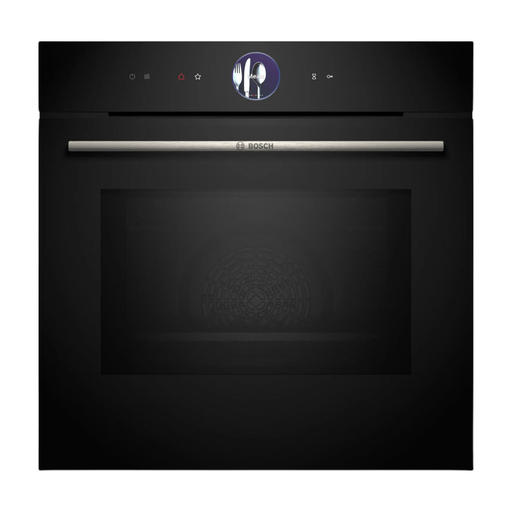 Image unavailable
Consider this model if you want a microwave function as well as an oven; check that its oven settings suit your recipe.
The product name lists 71 L, 3D hot air, pyrolytic cleaning and Home Connect.
 Image unavailable
Worth considering if you want to choose between fan-assisted and top and bottom heat for your recipe; check that your springform tin and the built-in space will fit.
The product name lists 66 L, five programmes and ecoClean self-cleaning.
 Image unavailable
An option if you’re looking for a built-in model with fan-assisted and top and bottom heat; measure the space and check your preferred shelf position.
The product name lists 71 L, 3D hot air and EcoClean Direct.
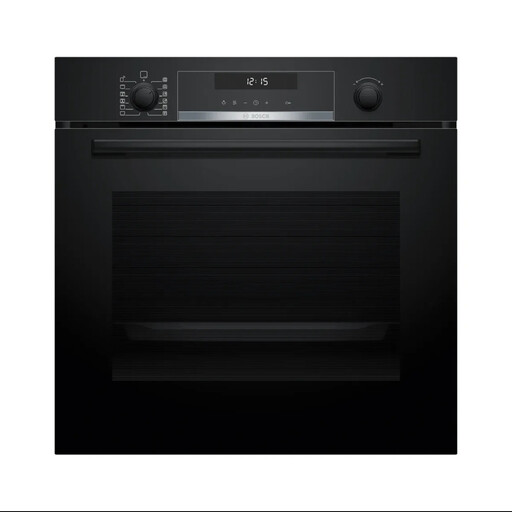 Image unavailable
Consider this model if you’re looking for a built-in oven with fan-assisted and top and bottom heat; check the settings and dimensions for your springform tin.
The product name lists 71 L, an air-fry function, Home Connect and pyrolytic cleaning.
Follow the settings in your own recipe and your oven’s instructions. The Koopmans recipe we consulted uses 165 °C fan-assisted heat, a baking time of 65–75 minutes and around one hour to cool before removing the tin. These settings aren’t right for every apple pie.
For a built-in oven, measure the space and check the installation manual and connection requirements for the exact model. Make sure you have a suitable electrical connection too: the Netherlands Fire Service advises plugging high-power appliances directly into a socket, rather than using a cable reel or extension block.
Where available, compare energy use per cycle in kWh on a like-for-like basis; Milieu Centraal recommends comparing ovens by their energy use per use or per year. The European Commission excludes small ovens and appliances with microwave heating from the rules discussed for domestic ovens, so don’t assume every appliance has the same oven energy label.
The Dutch government says that electrical appliances covered by the applicable EU product rules must meet safety requirements and carry a CE mark. This general requirement doesn’t in itself show whether an individual model complies; check the product information and marking on the exact appliance.
Keep the apple pie in the fridge if you make it in advance. The Netherlands Nutrition Centre recommends keeping opened apple pie for three days; for packaged products, follow the storage advice on the packaging too.