
Vandaag of morgen in huis

Kwaliteit gegarandeerd

Welkomstaanbiedingen ontgrendelen: GRATIS bezorging | Tot 80% korting | Gratis 30 dagen JoyPlus-proefperiode
Download de app
Buying apple juice sounds simple until you look at the shelves or browse the online selection. The terms juice, drink, ade and soft drink are often used interchangeably, even though the ingredients and nutritional values can vary considerably. And a large pack isn’t always good value if you end up throwing some of it away.
When comparing products, look out for these three common pitfalls:
Start with the ingredients list. If apple juice from concentrate is listed first, for example, the product is made mainly from fruit juice. In a fruit drink, water, sugar or sweeteners are often listed higher up.
Here are a few clear differences:
If you’re looking for apple juice with no added sugar, don’t rely on the front of the pack alone. Check the ingredients list for sweeteners, sugar or glucose-fructose syrup too.
The nutrition table makes it easy to compare products. Look at sugar per 100 ml, not just the amount in a bottle or can. For example, a 1-litre bottle containing 9.8 grams of sugar per 100 ml has much more sugar in total than a 200 ml serving.
Examples from the range:
Remember to check the serving size too. A 125 ml can or small carton can be handy on the go, while 1 litre of apple juice is better suited to breakfast or serving at the table.
A multipack is handy for a family, a party or the cupboard. Small packs are easy to take with you and help reduce waste after opening. Glass bottles can be suitable for serving, but take up more space and need to be handled carefully.
Check the following whenever you buy:
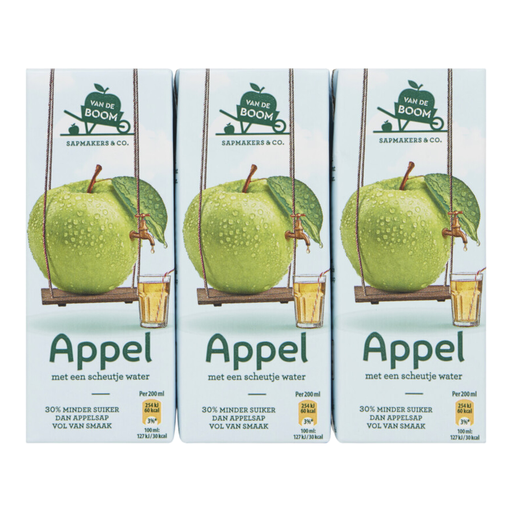
Why it suits this profile: The 1.2-litre pack is suitable for everyday use, and the product information states that it contains 70% fruit and has 0% added sugar.
The product information gives the fruit percentage and 6.7 grams of sugar per 100 ml, so you don’t have to rely on the name alone.
1.2 litres, 70% fruit according to the product description, and no added sugar.
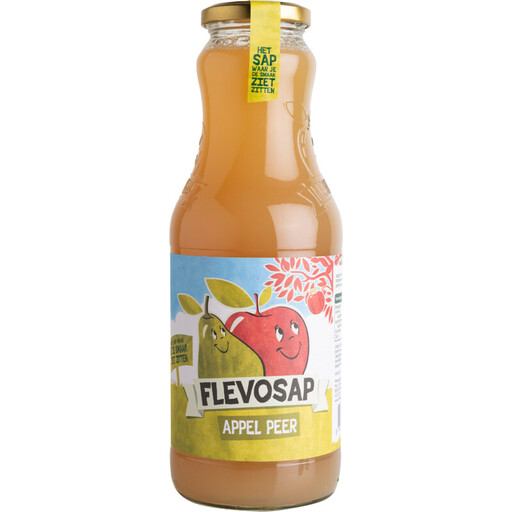
Why it suits this profile: According to the product description, this apple and pear juice combines 50% apple juice and 50% pear juice. It’s intended for anyone looking for pure juice with no added ingredients.
The proportion of each fruit juice is stated clearly, so you can see that this isn’t an apple soft drink with only a small amount of fruit.
1 litre, 50% apple juice and 50% pear juice according to the ingredients information, with no added ingredients listed.
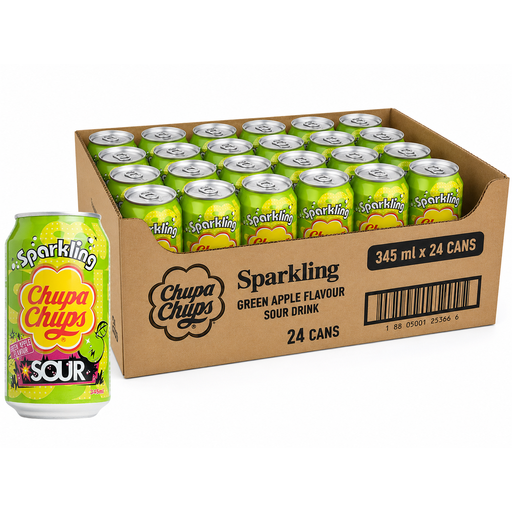
Why it suits this profile: The case of 24 cans, each containing 345 ml, is practical for gatherings, hospitality-style stock or a household that regularly serves chilled soft drinks.
The product information clearly lists carbonated water, 1% apple juice and 11 grams of sugar per 100 ml. So you know it’s a soft drink, not pure fruit juice.
24 cans of 345 ml, carbonation and a clearly stated apple juice percentage.
We’ve put together a complete, up-to-date list of products that meet these strict selection criteria and current European safety regulations.
No. Apple juice with no added sugar can still contain naturally occurring sugars from apples. Check the ingredients list and nutritional values per 100 ml. A drink made with sweeteners may state that it contains 0 grams of sugar, but that doesn’t make it fruit juice.
It varies by product. Always follow the storage instructions on the pack. Many cartons and bottles need to be refrigerated after opening and consumed within the stated period. Small single-serve packs are handy if you don’t often open a large bottle.
That depends on the price per litre or per can, and how much you’ll use. Divide the total price by the number of litres before you order. Also check your storage space, the best-before date and whether you’re buying juice, an apple drink or a carbonated soft drink. That way, you can avoid a low price per item leading to a purchase that isn’t right for your household.
