
Vandaag of morgen in huis

Kwaliteit gegarandeerd

Welkomstaanbiedingen ontgrendelen: GRATIS bezorging | Tot 80% korting | Gratis 30 dagen JoyPlus-proefperiode
Download de app
As a Joybuy Product Recommendation Officer, I see the vast number of choices available in the world of 3D printing every day. Finding the right Anycubic resin for your project can be overwhelming. Is water-washable resin worth it? Do you need an extra-strong resin, or will a standard 3D printer resin suffice?
This article is designed to help you. We'll cut through the marketing jargon and focus on the specifications that truly matter. This way, you can make an informed choice that suits your printer and project, whether you're printing detailed miniatures or functional prototypes.
Before we get to the product recommendations, here are a few practical tips to help you in your search for the perfect resin for your 3D printer.
Not all resins are created equal. The most important question is: what are you going to print?
ABS-like resin is a popular choice. These resins offer higher toughness and impact resistance compared to standard resins.resin for miniatures, detail and a smooth finish are crucial. Both standard and water-washable resins can deliver excellent results here.standard 3D printer resin is often the most economical and reliable option.Printing is only half the battle. Post-processing can make a significant difference in your workflow.
Most consumer LCD/DLP/SLA printers, including the popular Anycubic Photon series, work with 405nm UV resin. This is the industry standard, so most resins from major brands are compatible. However, it's always wise to check the manufacturer's recommended exposure times and settings for your specific printer model. This prevents failed prints and ensures optimal results.
Based on product specifications and applications, we have selected a few popular Anycubic resins that excel in different categories.
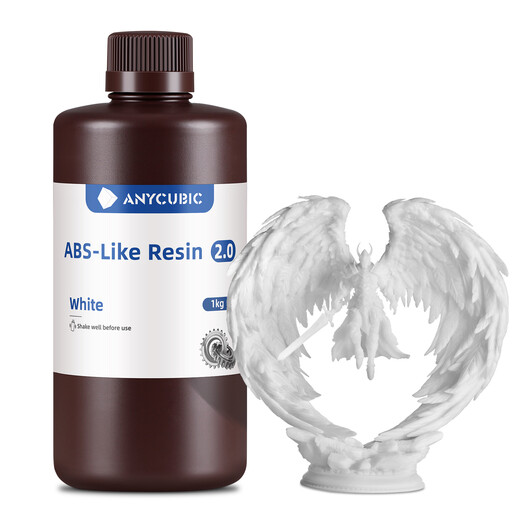
Why It Stands Out This resin is engineered for projects that demand more durability and resilience than standard resins can offer. According to Anycubic's specifications, it combines high toughness (Izod Impact Strength of 109 J/m) with good tensile strength, making it less brittle. This makes it an excellent high-strength resin for parts subjected to mechanical stress.
Pros
Who Is It For? Ideal for engineers, designers, and hobbyists printing functional prototypes, mechanical parts, or tools that require a degree of flexibility and impact resistance.
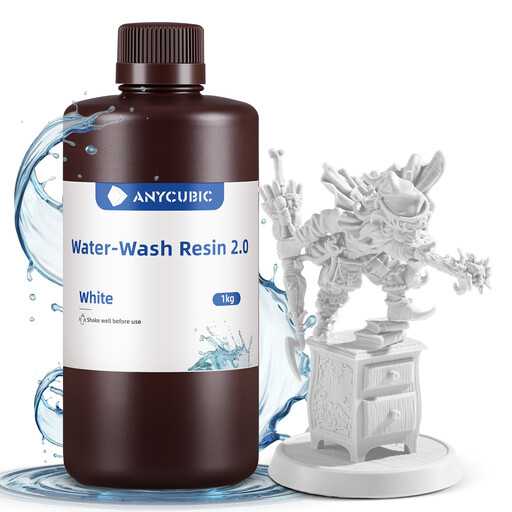
Why It Stands Out Its biggest advantage is ease of use. It eliminates the need for IPA, making the post-processing workflow simpler, safer, and more affordable. According to the manufacturer, this water-washable resin has a low viscosity (190–230 mPa·s), which can contribute to faster printing speeds and a high success rate.
Pros
resin for miniatures.Who Is It For? Perfect for beginners, hobbyists printing in an apartment or shared space, and anyone who prefers a simpler, less odorous workflow without sacrificing detail.
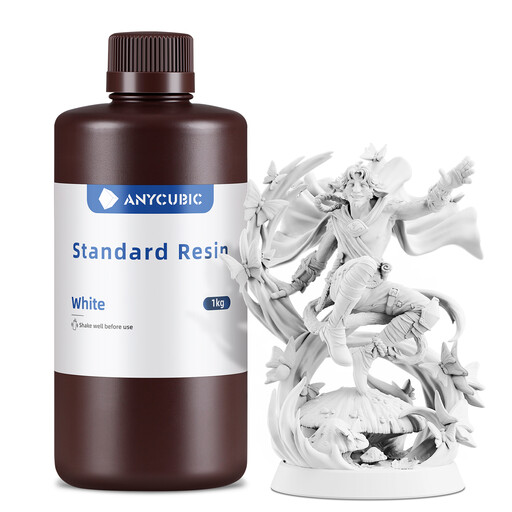
Why It Stands Out This is the reliable all-rounder. Anycubic's standard 3D printer resin offers a balanced mix of speed, precision, and ease of use. It's designed for consistent performance and a smooth finish. Its good adhesion to the build plate and the fact that models are easy to remove after printing contribute to a high success rate.
Pros
Who Is It For? An excellent choice for virtually any 3D printing enthusiast. It's suitable for printing display models, cosmetic prototypes, and miniatures where extreme strength is not a priority.
The world of 3D printing is vast, and there are always more materials and accessories to discover. If the options above aren't exactly what you're looking for, or if you're curious about other colours and materials, take a look at our broader category.
? View more options in the White Printer category
1. What is the difference between standard resin and ABS-like resin? The main difference lies in their mechanical properties. Standard resin is relatively hard and brittle, ideal for detailed models that won't be under heavy stress. ABS-like resin is formulated to be tougher and more impact-resistant, similar to ABS plastic. This makes it more suitable for functional parts that may need to bend or withstand an impact.
2. Can I use Anycubic resin on a non-Anycubic printer? Yes, in most cases. The majority of LCD and DLP printers on the market use a UV light source with a wavelength of 405nm. Since Anycubic Photon resin and the brand's other resins are optimised for this wavelength, they are compatible with printers from brands like Elegoo, Creality, Phrozen, and more. It is, however, advisable to look up the recommended printer settings for your specific model.
3. How do I safely clean water-washable resin? Although you can use water, the wastewater should not be poured directly down the drain. The liquid resin particles in the water are harmful to the environment. The recommended method is to collect the rinse water in a transparent container and leave it in the sun. The UV light will cure the remaining resin, which can then be disposed of as solid waste. The clean water can then be safely discarded.
