
Vandaag of morgen in huis

Kwaliteit gegarandeerd

Welkomstaanbiedingen ontgrendelen: GRATIS bezorging | Tot 80% korting | Gratis 30 dagen JoyPlus-proefperiode
Download de app
If you own a 3D printer, you know that the quality of your filament is the difference between a perfect model and a failed print. When searching for Anycubic PLA filament, you'll encounter many options, but not every spool is created equal. Common pitfalls, such as inconsistent thickness or poor packaging, can lead to frustration and wasted material. This guide will help you see through the marketing hype and make the right choices for your projects.
Before you consider buying PLA filament, it's crucial to recognise the most common issues that can sabotage even the best project.
3D print material is useless if the spool is poorly wound. A tangle or overlap in the filament will stop the feed to your printer, often resulting in an "air print" and a completely failed model, especially during long print sessions.To avoid these problems, focus on a few objective specifications. These determine the reliability and quality of your FDM filament.
PLA filament 1.75mm is made from pure raw materials without unnecessary additives that can affect performance. This not only ensures better layer adhesion and strength but also vibrant and consistent colours throughout the entire 1kg PLA spool.Anycubic filament 1kg spool should be professionally wound, vacuum-sealed, and delivered with a sachet of desiccant. This guarantees the filament is dry and ready to use right out of the box.Not every project has the same requirements. Below are a few choices from the Anycubic PLA range, tailored to different user profiles.
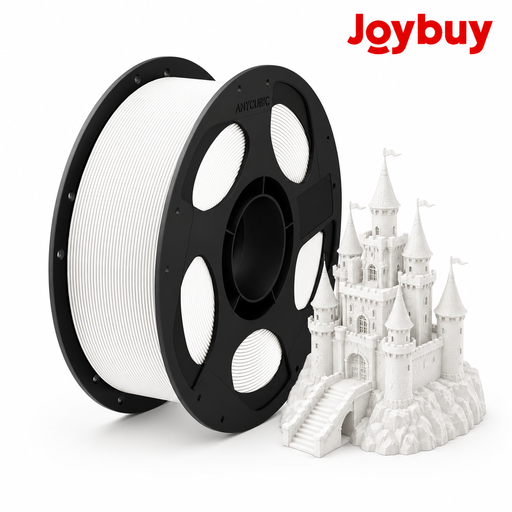
Why This Fits Their Persona: White is an excellent starting colour. It makes print imperfections highly visible, allowing beginners to easily calibrate their printer settings and master the basics of 3D printing.
The strict ±0.02mm tolerance prevents the frustration of clogs (pitfall 1). The vacuum-sealed packaging with desiccant protects against moisture (pitfall 3), so you can start printing immediately.
User-friendly with a low tendency to warp. Excellent layer adhesion for strong, reliable prints.
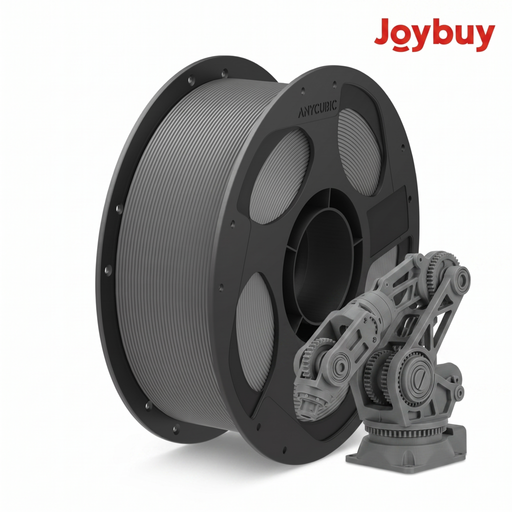
Why This Fits Their Persona: The neutral, textured grey colour is ideal for functional parts and prototypes. Details and form are clearly visible without distraction, which is essential for evaluating a design.
The consistent ±0.02mm diameter ensures dimensionally accurate parts, which is crucial for prototypes that need to fit together. This avoids the "tolerance lie" (pitfall 1) and guarantees precision.
Professional, matte finish that hides imperfections. High dimensional accuracy for functional prints.
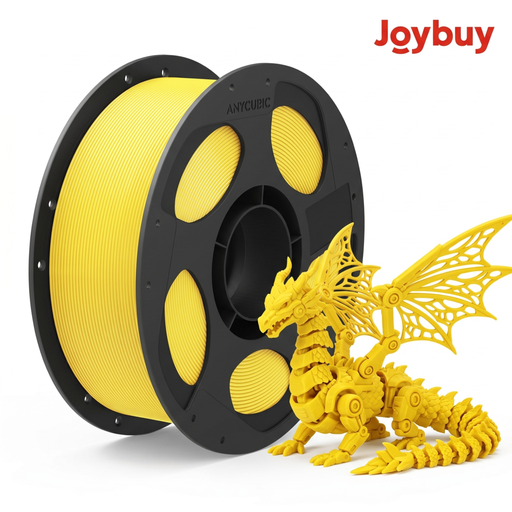
Why This Fits Their Persona: For hobbyists and artists who want their creations to stand out. The bright, vibrant yellow colour is perfect for decorative objects, toys, and artistic models that radiate personality.
The pure material composition ensures a deep and consistent colour throughout the entire spool, without the blotches or colour variations seen in lower-quality filament.
Vibrant and consistent colour reproduction. Produces a smooth, slightly glossy finish that looks great.
We have compiled a complete, real-time list of products that fully satisfy these strict selection criteria and UK safety regulations.
Always store your 3D printer filament in a cool, dry place. To maximise its lifespan, it's best to keep the spool in a resealable bag or an airtight container, along with the included silica gel packets. This prevents the material from absorbing moisture, which can degrade print quality.
While the ideal settings can vary between 3D printers, a good starting point for Anycubic PLA is a nozzle temperature between 190-220°C. A heated print bed isn't always necessary, but a temperature of 50-60°C can improve first-layer adhesion and reduce warping. Start with these values and print a calibration model to fine-tune the settings for your specific machine.
PLA is a relatively strong and rigid material, making it suitable for many functional applications, such as prototypes, enclosures, and custom tools. However, it's important to note that PLA has low temperature resistance and can be brittle. For parts exposed to temperatures above 60°C or to heavy impacts, materials like PETG or ABS may be a better choice.
