For close-ups without changing lenses, a compact camera with a macro mode is one option. With a mirrorless camera and a suitable macro lens, you can choose the lens and working distance separately. Whichever you choose, check that there’s enough room on your table for both the camera and the lighting, and that you can frame the whole brooch as well as its smallest details.
Who is this camera guide for?
Detail documenter
You want to capture small features on brooches, such as settings and hallmarks, clearly. Pay particular attention to magnification and focusing. Sony UK and Canon UK explain how magnification and the reduced depth of field when focusing at close range affect your shots.
Brooch seller
You want to take consistent photos of the whole brooch while keeping colours and details clear. A fixed lighting setup, careful white balance and enough room to control reflections are all practical considerations. Nikon UK and Adobe explain the importance of consistent white balance and soft light.
Photographer with limited table space
You want to take close-ups without the camera and lighting getting in each other’s way. A compact setup may appeal, but also check how much working space your chosen lens needs. OM SYSTEM describes the macro modes on the Tough TG-7.
What should you look for when choosing?
Compact camera with macro mode
Choose this option if: you want to take close-ups on a small table without having to choose a separate lens.
Bear in mind: the fixed lens limits your choice of working distance. Also check that the camera and lighting will fit together in your setup.
Mirrorless camera with macro lens
Choose this option if: you want to match the lens and magnification to both the whole brooch and its smaller details.
Bear in mind: the camera body alone isn’t a complete macro setup. Check the lens mount, working distance and space for lighting.
When choosing a camera for photographing antique brooches on a small table, it helps to decide on your main buying priority.
| What to consider |
What to look for |
Who is it important for? |
| Small details |
Check the magnification of the exact lens or the camera’s macro modes, and try out the framing you want. |
If I want to capture hallmarks or settings clearly, I pay particular attention to how large the detail appears in the frame. Around 36% of consumers put small details first. |
| Reflections and colour |
Check the white balance and exposure settings, and leave room for soft, consistent lighting. |
If I want to photograph shiny parts and reproduce colours consistently, I look at the lighting and white balance. Around 29% of consumers put lighting and colour first. |
| Working space |
Check the working distance and compare what’s included in the set on offer. |
On a small table, I want enough room for the camera and lighting without an unnecessarily complicated setup. Around 21% of consumers put working space and simplicity first. |
| Depth of field |
Check whether the exact model offers focus stacking or focus bracketing, and whether you’ll need stable support. |
If I want more of the brooch to appear in focus, I pay attention to depth of field and repeatable shots. Around 14% of consumers put this first. |
Common buying mistakes
-
Focusing only on the word ‘macro’
Magnification and working distance both help determine whether a small detail fits clearly in the frame and how much room is left for lighting.
Compare these details for the exact camera and lens combination, and try framing both the whole brooch and its smallest relevant detail.
-
Assuming a camera body is already a macro setup
A camera body isn’t always supplied with a lens. The features of a separate macro lens don’t automatically come with the body.
Check what’s in the box and whether the lens is compatible with the camera before choosing a set.
-
Trying to fix focus problems simply by buying another camera
Depth of field decreases when you get close to your subject. Focus stacking may also require a stable setup.
Start with a stable setup, then decide whether focus stacking is necessary for the brooch you want to photograph.
Camera brands and macro lens options to consider
OM SYSTEM
The Tough TG-7 is a compact camera option for close-ups without a separate lens.
- OM SYSTEM lists microscope and focus stacking modes for this model.
- The fixed lens limits your choice of working distance. Assess the lighting in your own tabletop setup.
Canon
An EOS R body with a compatible RF macro lens lets you choose the body and lens separately.
- Canon lists a maximum magnification of 1:2 for the RF 35mm F1.8 IS Macro STM and says it is compatible with the EOS R50.
- The EOS R50 is also available as a body only, so check what’s included in the specific set.
Nikon
A Nikon Z mirrorless camera with a compatible Z macro lens is one option for detailed shots.
- Nikon lists a minimum focus distance of 0.16 m for the NIKKOR Z MC 50mm f/2.8, with around 5 cm of clearance in front of the lens at that distance.
- Check whether there’s enough room for lighting in your setup. These lens specifications don’t automatically apply to other Nikon sets.
Sony
The Sony E-mount offers a 50mm macro lens option for compatible full-frame and APS-C cameras.
- Sony specifies a maximum magnification of 1:1 for the FE 50mm F2.8 Macro.
- Check the camera, lens and available working space as one combination. A lens specification doesn’t automatically predict the results with every set.
Panasonic
The LUMIX S 100mm F2.8 MACRO is an L-mount option if you want to compare a different focal length.
- Panasonic specifies a maximum magnification of 1x and a minimum focus distance of 0.204 m for this lens.
- Check compatibility with your chosen camera and the current availability of the version you want.
Cameras at Joybuy
Cameras at Joybuy that are relevant to this topic. Check whether the close-up framing and included accessories suit your setup for each model.
 Image unavailable
Sony ZV-E10 + 16-50mm Zoom Black
The product name specifies a 16–50mm zoom lens. Check whether it can capture the framing you want for both the whole brooch and its smaller details.
View at Joybuy
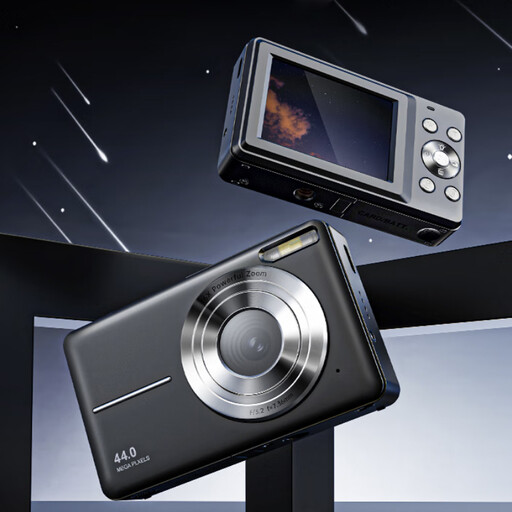 Image unavailable
Songdian Pocket Camera 4K 44MP 16X Zoom
The product name specifies 4K, 44MP and 16X Zoom. Also check the close-up distance and whether you can achieve the framing you want for your brooches.
View at Joybuy
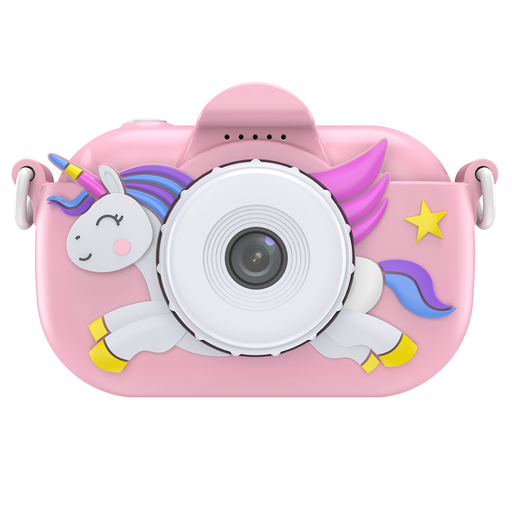 Image unavailable
Songdian Kids Camera with Cartoon Soft Cover, Pink
The product name describes this model as a kids’ camera with a soft cover. Check the controls and the close-up framing you want before choosing it for brooches.
View at Joybuy
Frequently asked questions
Do I need a macro lens to photograph the whole brooch?
Not necessarily: first check whether the whole brooch fits in the frame. For small features, the maximum magnification of your chosen lens or the macro mode is more relevant. Try both types of framing before choosing a camera.
How do I get started with a brooch on a small table?
Keep the brooch still, choose consistent, preferably diffused lighting, and leave space between the lens and the brooch. Take test shots to assess sharpness and white balance. For focus stacking on the TG-7, OM SYSTEM describes the microscope mode and the use of a stable setup.
What should I check when buying a camera body?
Check whether a suitable lens and any support or lighting are included in the set on offer. For consumer purchases in the Netherlands, statutory guarantees are based, according to ACM ConsuWijzer, on what you could reasonably expect from the product under normal use. There is no fixed time limit that applies to all products.
Is there a cooling-off period for online purchases in the Netherlands?
According to ACM ConsuWijzer, online consumer purchases generally come with a statutory 14-day cooling-off period from the day after delivery. Exceptions may apply, so check which rules apply to your purchase.


