
Vandaag of morgen in huis

Kwaliteit gegarandeerd

Welkomstaanbiedingen ontgrendelen: GRATIS bezorging | Tot 80% korting | Gratis 30 dagen JoyPlus-proefperiode
Download de app
An anti-mite vacuum cleaner can help remove dust, dead skin cells, pet hair and other particles from mattresses and upholstered furniture. However, many models look similar, with claims such as UV-C, deep cleaning and 99.9% removal. These claims don’t automatically tell you how easy a model is to use, how long it will last or how well it will work in your home.
Focus instead on specifications you can check. A mattress vacuum cleaner should have enough suction for textiles, be easy to maintain and work safely on the surfaces it’s designed for.
Higher suction power sounds appealing, but it doesn’t tell you everything. The design of the nozzle, the brush, the airflow and the filtration system all affect how much dust is actually picked up. In practice, a powerful motor paired with a filter that clogs quickly may be less pleasant to use.
As well as suction power, consider:
A vacuum cleaner with UV light doesn’t work in the same way as a wash or professional cleaning. UV-C must also be used at the right distance and for long enough to treat the surface. The light won’t reach every part of a thick mattress or deep sofa.
According to the product descriptions from the brands mentioned, UV features are combined with suction, vibration or warm air. So think of UV-C as one part of the system, not the only reason to choose a model. Only use a UV feature as instructed in the manual, and never look directly at the lamp.
A mattress cleaner with hot air can help dry the surface, but it’s no substitute for good ventilation. If a mattress is damp, first address the cause of the moisture. Also, only use an anti-mite vacuum cleaner on dry surfaces unless the manufacturer expressly says otherwise.
Remember to keep up with maintenance, too. Filters often need cleaning and must be completely dry before you put them back. A wet filter can reduce airflow or damage the appliance.
For a vacuum cleaner for mattresses and sofas, suction power and mechanical movement matter more than motor power alone. Vibration or a beating brush can loosen dust and hair from textile fibres, allowing the airflow to pick them up.
The product specifications include figures such as:
These figures are comparable if they’ve been measured in the same way. However, manufacturers don’t always use the same measurement method. Treat them as a technical indication, not a guarantee of a particular cleaning result.
An allergy vacuum cleaner should keep as many fine particles as possible inside the appliance. A multi-stage filtration system can be useful. Check whether the filter is washable, how often it needs cleaning and whether a replacement is available.
A larger container means fewer interruptions. According to the product specifications, the Xiaomi has a 0.5-litre container, the Uwant M300 has a 0.3-litre container and the Lubluelu CM208 has a 650-millilitre container. A larger container often means a slightly bigger or heavier appliance, though.
A UV-C mattress cleaner should have a safety feature that switches off the lamp when the appliance is lifted. This is listed, for example, for Xiaomi, Uwant and ochama models. Never use this safety feature for anything other than its intended purpose.
The warm-air functions on the models mentioned range from 55 to 65 °C. The stated temperature is a product specification; the temperature of the textile itself may vary. Always follow the instructions for use, especially when cleaning delicate fabrics.
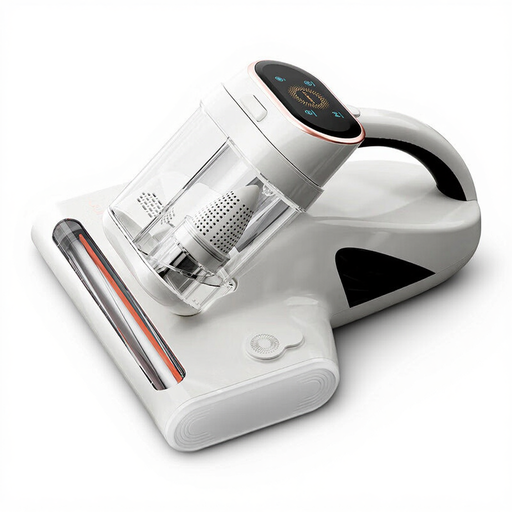
Why it suits this profile: The M300 combines a 4.5-metre cable with an LED display and a compact container. It’s a practical choice if you want to clean a mattress, cushions or sofa from time to time without using a bulky appliance.
The product information lists 13 kPa suction power, 12,000 tapping movements per minute and a five-stage filtration system with a HEPA filter. That gives you more to consider than just the UV feature.
13 kPa suction power, a washable dust container, LED display and automatic UV safety feature when there isn’t enough contact with the surface.
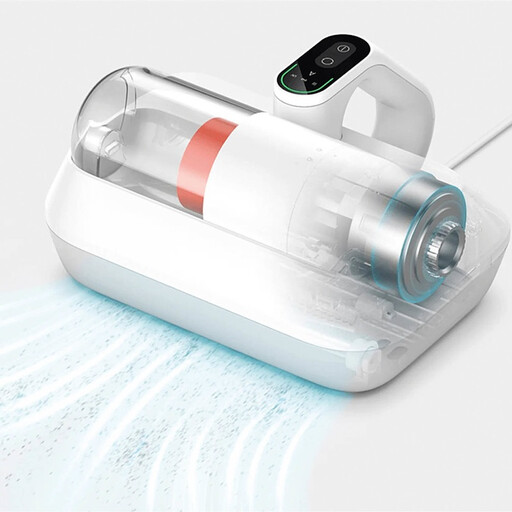
Why it suits this profile: This model is a good fit for households looking for one appliance to use on mattresses, sofas, duvets, cushions and soft furnishings, with settings that adjust automatically.
The four-stage filtration, three settings and Smart mode make the product specifications clear. According to the description, the UV lamp switches off when the appliance is lifted more than 5 cm.
14 kPa suction power, a 0.5-litre container, 55 °C warm air, 48,000 vibrations per minute and a weight of 2.06 kg.
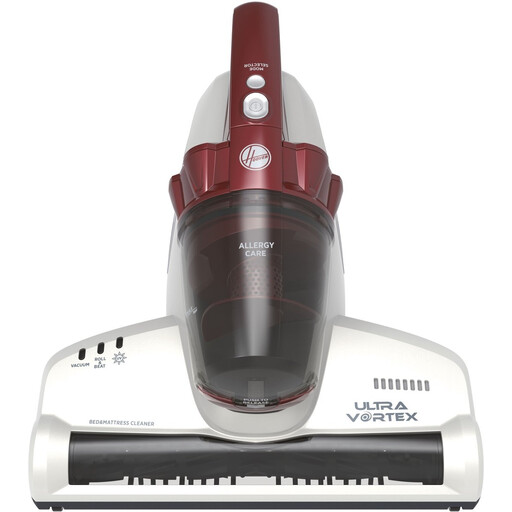
Why it suits this profile: The combination of UV-C, Roll & Beat and 500 W of power makes this a good match for households with pets or for frequent use on mattresses, cushions, sofas and rugs.
The product information mentions not just UV-C, but also a cyclonic system and a Roll & Beat brush. This means it offers mechanical cleaning as well as UV light.
500 W of power, a HEPA filter according to the product specifications, a weight of 2.3 kg and a design made for a range of fabric surfaces.
We’ve put together a complete, up-to-date list of products that meet these strict selection criteria and the applicable European safety regulations.
A bed vacuum cleaner is easiest to use when you first clear the surface of loose items and make sure the mattress is dry. Move the appliance slowly in straight lines. Pay extra attention to seams, edges and areas where pets like to lie.
Afterwards, bear these points in mind:
A filter can wear out over time. The Xiaomi product information recommends replacing the filter every two to three months; for Uwant, the suggested interval is three to six months, depending on use. Always check the specific guidance for your model.
Yes, many models are designed for use on several soft surfaces, including sofas, armchairs, cushions and duvets. Do check that the fabric is suitable for the brush, vibration and any warm-air function. If the upholstery is delicate, test an inconspicuous area first.
It depends on your home, the number of people living there, whether you have pets and how much dust there is. For routine care, occasional cleaning may be enough. If there’s a lot of household dust or pet hair, using it more often may be helpful. Follow the maintenance advice for the filter and brush.
Most models in this selection are mains-powered. The main ongoing costs are replacement filters and, if needed, parts such as a brush. Before buying, check the price of the filters, how often they’re recommended for replacement and the warranty terms.
