
Vandaag of morgen in huis

Kwaliteit gegarandeerd

Welkomstaanbiedingen ontgrendelen: GRATIS bezorging | Tot 80% korting | Gratis 30 dagen JoyPlus-proefperiode
Download de app
A hailstorm can damage young plants, fruit and greenhouse crops in a short time. An anti-hail net can help limit the impact of hail, birds and strong winds, but only if it has the right dimensions, mesh size and fixings.
Many buyers focus mainly on the price or the number of metres on the roll. This can result in a net that is too narrow, shifts easily or isn’t suitable for the intended use. Read on to find out which features to check before buying a hail net for your garden or business.
A 100-metre roll may seem appealing, but the width determines whether you can cover a row of fruit trees, a vegetable bed or a polytunnel completely. So don’t just measure the ground area. Also allow for height, overlap and extra material for fixing the net in place.
A fine-mesh bird net for the vegetable garden is designed mainly to keep birds out. It isn’t automatically suitable for hail. Check the material, construction and product description. A net designed to protect against hail is generally more robust and may have reinforced edges.
For a UV-resistant hail net, UV stabilisation means that, according to the product description, the material is more resistant to sunlight. It doesn’t mean the net will never deteriorate. Prolonged exposure, rubbing branches, strong winds and incorrect storage can all cause wear. Check the net regularly and store it somewhere dry when you’re not using it.
Many anti-hail nets are made from polyethylene, such as HDPE or PE. HDPE stands for high-density polyethylene. It’s a lightweight plastic that may be suitable for outdoor use.
According to TENAX’s product description, various Defender models are made from UV-stabilised polyethylene monofilament and have reinforced sides. These stated features can be checked in the product specifications, but the net’s actual lifespan depends on installation, weather conditions and maintenance.
A mesh size of 7 x 8 mm is used in several Defender anti-hail nets. According to the product information, this open structure allows air, water and light to pass through. This is useful for crops that continue to grow beneath the net.
A finer mesh, such as 5 x 5 mm, may be better suited to fencing or small openings, but it isn’t automatically a hail net. Always check what the product is designed for. A net for a balcony, fence or small animals serves a different purpose from a hail protection net for fruit trees.
Measure the area you want to protect and allow extra material for:
An anti-hail net shouldn’t lie loosely over the plants if this could cause it to rub against them. At the same time, tensioning it too tightly can put extra strain on the structure and material. Don’t use a net as fall protection, and keep it away from naked flames, heat sources and high-voltage power lines.
Why it suits this type of buyer: At 2 x 5 metres, it’s a manageable size for a small vegetable garden, a few plants or a compact fruit bush. You won’t need to buy a large roll if you only want to cover a small area.
The product description lists HDPE, a mesh size of 7 x 8 mm, and UV and tear resistance. Check that 10 square metres will be enough for your installation.
HDPE material; dimensions of 2 x 5 metres; according to the product specifications, suitable for protection against hail, wind, birds and insects.
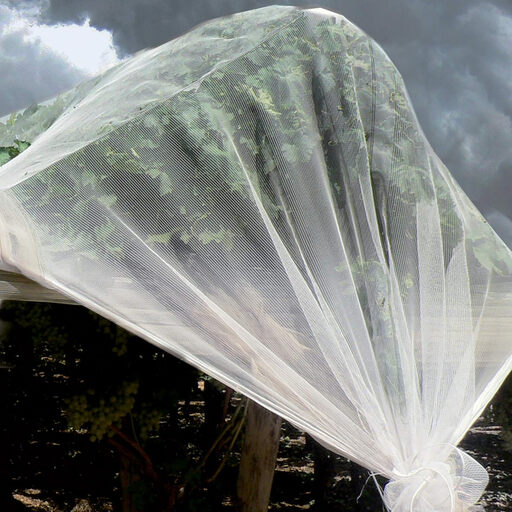
Why it suits this type of buyer: This model is designed for orchards, vineyards and wider planting areas where a broader length of net is useful. The pearl-white finish may suit situations where light distribution is a consideration.
The specifications list HDPE, UV stabilisation, and side and centre hems. Claims about growth, ripening or fruit quality are based on information provided by TENAX and aren’t guaranteed results.
HDPE; 4 x 5 metres; reinforced construction according to the product description; designed for fruit and crops.
Why it suits this type of buyer: The 6 x 100-metre roll is designed for larger vegetable gardens, orchards, tunnels or professional use where a large area needs to be covered at once.
The product description lists UV-stabilised PE monofilament, reinforced sides and installation on existing support structures. Plan enough fixing points in advance for this large roll.
Dimensions: 6 x 100 metres; mesh size: 7 x 8 mm; allows light and air through according to the product information.
We’ve put together a complete, up-to-date list of products that meet these strict selection criteria and the applicable European safety regulations.
A hail net on a roll is handy for larger areas, but needs more planning for transport, unrolling and fixing in place. For just a few plants, a smaller size may be more practical and cost-effective.
According to their product descriptions, some hail protection nets can also be used against birds. How well they work depends on the mesh size, how they’re installed and whether the vulnerable area is fully enclosed. If you only need to keep birds away, a dedicated bird net for fruit trees or a bird net for the vegetable garden may be more suitable.
There’s no one-size-fits-all answer. According to the product specifications, UV stabilisation helps protect the net from damage caused by sunlight, but wear is also affected by wind, hail, tension, branches and storage. Check the material every year and replace the net if the mesh or edges are damaged.
Use several fixing points along the edges and avoid loose loops that could catch the wind. A sturdy support structure is advisable for larger areas. After every severe storm, check that the net is still secure and doesn’t pose a risk to people, animals or traffic.
