
Vandaag of morgen in huis

Kwaliteit gegarandeerd

Welkomstaanbiedingen ontgrendelen: GRATIS bezorging | Tot 80% korting | Gratis 30 dagen JoyPlus-proefperiode
Download de app
Choosing an anti-ageing face cream seems simple, until you’re faced with dozens of jars promising firmer skin, fewer wrinkles and a fresh-looking complexion. But eye-catching packaging tells you little about whether a product is right for your skin. The best choice depends mainly on your skin type, when you use it, its ingredients and sun protection.
Pay attention to marketing claims, too. A brand may refer to results from its own research, but those results won’t necessarily apply to everyone. Check the product description, ingredients list and instructions before you buy.
Phrases such as “fills wrinkles” or “rejuvenates the skin” sound specific, but they may be based on a small user trial, an instrumental measurement or in vitro research. For example, NIVEA’s own research mentions a visible effect within a certain period for some Q10 products. This is information provided by the brand, not a guarantee for every user.
So look at the context behind the claim. Does it say how many people took part? Was it a laboratory test, or did participants use the product every day? Without this information, it’s difficult to assess a percentage.
A face cream with SPF 15 or SPF 30 can be convenient for everyday use, but the level of protection also depends on how much you apply and whether you reapply it. If you’ll be out in the sun for a long time, walking or cycling, a separate sunscreen is often a better choice.
An anti-ageing day cream with SPF combines skincare and UV filters, but it won’t necessarily replace your whole sun protection routine.
A cream with hyaluronic acid can help your skin feel hydrated, while Q10, peptides, bakuchiol and retinol each play a different role in a formula. The overall formulation and texture are just as important. A rich face cream for mature skin may feel comforting if your skin is dry, but may feel heavy on oily or combination skin.
Hyaluronic acid binds moisture in the upper layers of the skin and is often used in creams to help skin feel supple. Q10 and vitamin C are common in formulas designed to leave skin looking less dull. According to NIVEA’s own product information, several Q10 creams also contain creatine.
It’s important to introduce retinol and retinyl palmitate gradually. Retinol can make your skin more sensitive to sunlight. SOME BY MI’s product information therefore advises using it in the evening, carrying out a patch test and applying a broad-spectrum sunscreen during the day. If you’re pregnant or breastfeeding, it’s wise to speak to a healthcare professional.
Bakuchiol is a plant-based ingredient often chosen by people looking for an alternative to retinol. The effects of bakuchiol products vary depending on the formula and concentration, so always check the full ingredients list.
An anti-wrinkle night cream doesn’t need to contain SPF and is often a little richer. Day creams tend to focus more on a lightweight finish, hydration and protection against UV rays. Use products as directed on the label, and don’t start using several potent active ingredients at once if your skin isn’t used to them.
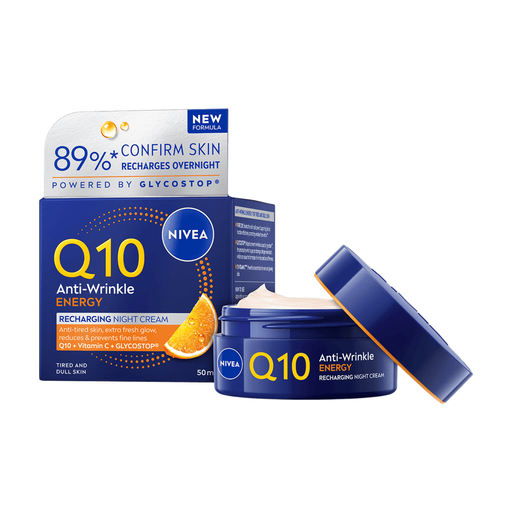
Why it suits this profile: This night cream is designed for all skin types and is an accessible option if you want to start with a simple evening routine.
The product description lists Q10, vitamins C and E, glycerine and panthenol. This means you can assess it based on its ingredients, rather than just its anti-wrinkle claim.
For night-time use, 50 ml, with Q10 in the formula and dermatologically approved skin compatibility, according to the product information.
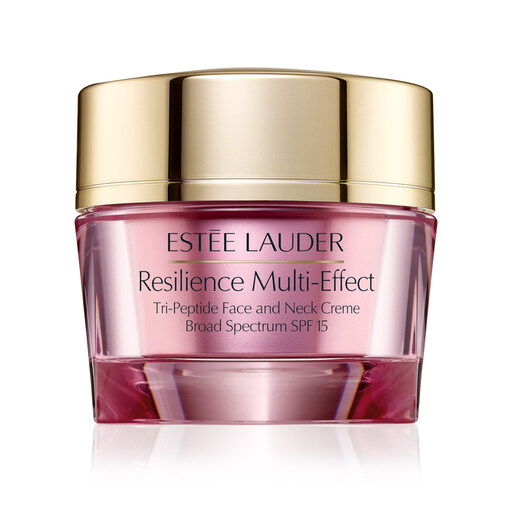
Why it suits this profile: A good choice if you’re looking for a face and neck cream with a nourishing texture and SPF 15.
The product details specify normal/combination skin and SPF 15. This makes it easier to assess than a general promise for all skin types.
Tri-peptide formula according to the product name, SPF 15 and a 50 ml size.
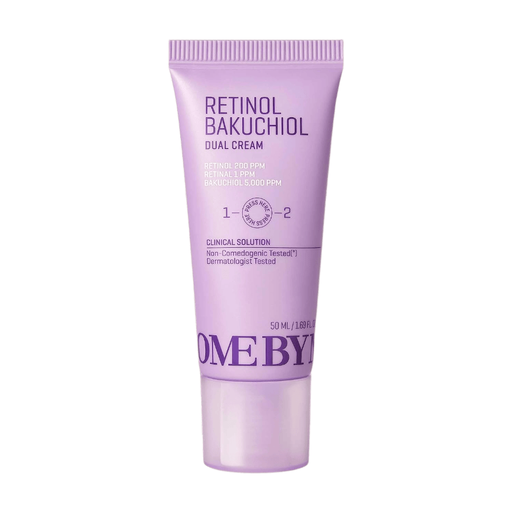
Why it suits this profile: This cream is a good match if you’re specifically looking for retinol and bakuchiol in an evening product, and are prepared to let your skin adjust gradually.
The directions advise starting with use every other evening, carrying out a patch test and using sun protection every day. This gives you clearer guidance than simply starting to use it daily.
Contains retinol, retinal, bakuchiol, niacinamide and ceramide NP according to the ingredients list; designed for evening use.
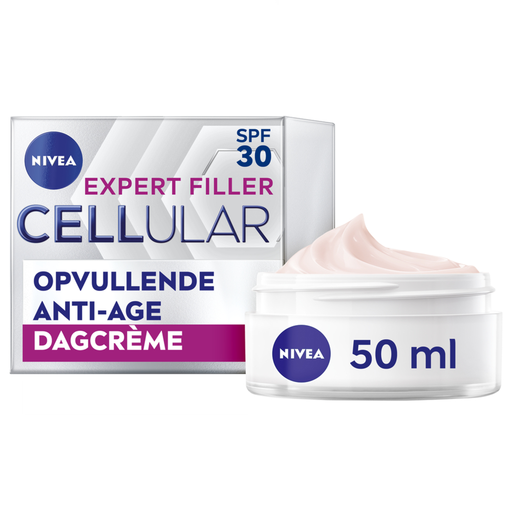
Why it suits this profile: A practical option if you want to combine hydration, anti-ageing skincare and SPF 30 in one product during the day.
The SPF rating and ingredients are clearly listed: hyaluronic acid, folic acid and creatine. This makes it easier to decide whether the combination suits your morning routine.
SPF 30 UVA/UVB filters, two forms of hyaluronic acid according to the product description, and a 50 ml size.
We’ve put together a complete, up-to-date list of products that meet these strict selection criteria and the applicable European safety regulations.
Follow the instructions on the packaging. A regular hydrating face cream can often be used every day. If you’re using a cream with retinol, it’s important to introduce it gradually. For example, follow the product instructions and start by using it every other evening. Stop if you experience noticeable irritation.
Check the expiry date and the period-after-opening symbol on the packaging. Store the cream in a cool, dry place, away from direct sunlight. A change in smell, colour or texture may mean you should stop using the product.
That depends on how much sun you’re exposed to and how much product you apply. SPF 15 or SPF 30 in a day cream is handy for everyday use, but for prolonged exposure, it’s better to use a separate broad-spectrum sunscreen and reapply it.
