
Vandaag of morgen in huis

Kwaliteit gegarandeerd
Download de app
Categorieën

A dead battery always strikes at the worst moment. Whether you're heading to an important meeting, travelling, or facing a long day of studying, a reliable power source is essential. However, choosing a power bank can be overwhelming. The wrong choice can leave you with a device that charges too slowly, is too heavy for your bag, or requires a cable you've forgotten to bring.
This guide will help you make an informed decision. We focus on the specifications that truly matter, so you can find an Anker power bank that perfectly matches your specific needs.
To find a model that's right for you, it's helpful to understand four key specifications.
Capacity, measured in milliampere-hours (mAh), determines how many times you can charge a device.
The power output, measured in Watts (W), indicates how quickly the power bank can charge your devices. A higher wattage means a shorter charging time, provided your device supports it.
Most modern devices use USB-C. A power bank with USB-C is therefore a future-proof choice. Some models offer added convenience with a power bank with a built-in cable, meaning you'll never have to carry a separate cable again. Pay attention to the number and type of ports (USB-C, USB-A) to determine if you can charge multiple devices simultaneously.
There is always a trade-off between capacity and portability. A high-capacity power bank is typically larger and heavier. Consider where you'll use the power bank most: in your pocket, in your backpack during a hike, or on your desk?
Based on the criteria above, we have selected a range of Anker power banks with different specifications, suitable for various users.
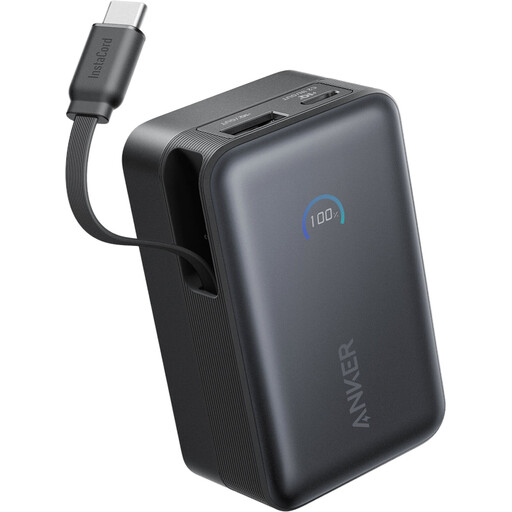
Why this product This model is a well-balanced all-rounder. It combines a solid 10,000mAh capacity with a powerful 45W output and the convenience of a built-in, retractable USB-C cable.
Advantages
Who is this for? For the daily user, student, or traveller looking for a reliable and convenient charging solution for a smartphone and tablet, without the hassle of separate cables.
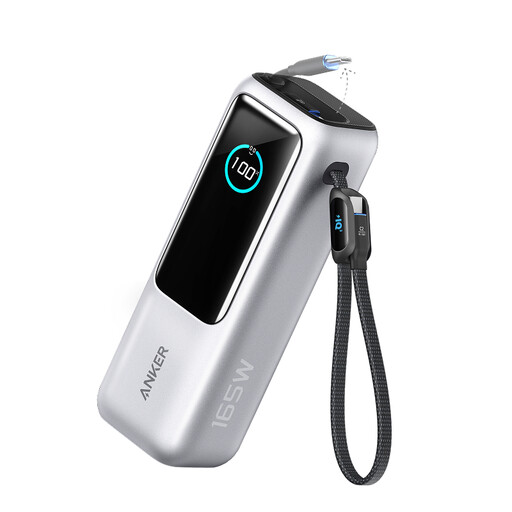
Why this product This is the powerhouse for demanding users. With a massive 25,000mAh capacity and a total output of 165W, this is a full-fledged power bank for a laptop and multiple other devices.
Advantages
Who is this for? For professionals, digital nomads, and families who need to power multiple devices on the go, including laptops. An excellent choice for those who require maximum power and capacity.
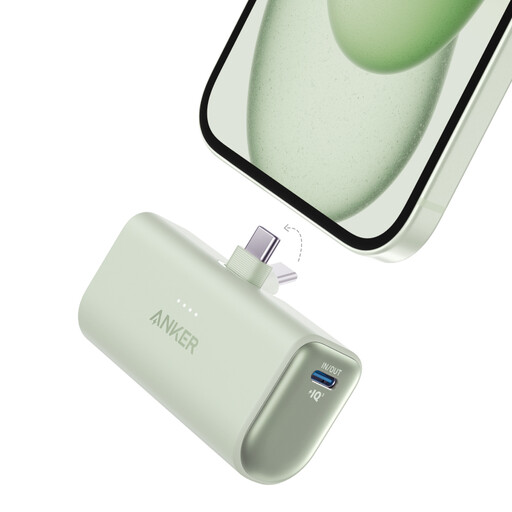
Why this product This Anker Nano model focuses entirely on portability. With its ultra-compact size and a built-in, foldable USB-C connector, it is the definition of a 'grab-and-go' power bank.
Advantages
Who is this for? For the minimalist seeking an emergency solution for a quick top-up. Perfect for a night out, a festival, or for anyone who simply hates carrying cables and wants the smallest power bank possible.
If the models above don't quite meet your needs, but you appreciate the benefit of an integrated cable, Anker offers a wider range of power banks that provide this convenience, with variations in capacity and size.
Explore more models in the Built-in USB C category here.
1. How many times can I charge my phone with a 10,000mAh power bank? This depends on your phone's battery capacity. An average smartphone has a battery between 4,000 and 5,000mAh. Due to energy loss during the transfer, you can realistically expect about 1.5 to 2 full charges from a 10,000mAh power bank.
2. Can I take an Anker power bank on an airplane? Yes, power banks are allowed on airplanes, but only in your carry-on luggage. The limit set by most airlines is 100Wh (Watt-hours). A 25,000mAh power bank (like the 165W model) is approximately 90Wh, which is well below this limit, making it a suitable power bank for travel. Always check your airline's specific regulations before departure.
3. What is the difference between Watts (W) and milliampere-hours (mAh)? mAh (milliampere-hours) is a measure of battery capacity; it indicates how much energy the power bank can store. W (Watts) is a measure of power; it indicates how fast that energy can be transferred to your device. A high mAh value means you can charge more often, while a high W value means you can charge faster.
Written by the Joybuy Product Recommendation Officer