
Fans of cocoa toppings
You’re looking for something chocolatey to enjoy with coffee and want to know the minimum cocoa solids in the sprinkles you choose. Dark chocolate sprinkles are a different type of product from crushed aniseed sprinkles.


Choose crushed aniseed sprinkles if you want to serve rusks with the familiar aniseed flavour alongside coffee; the variety described here is not dark chocolate. If you’re mainly looking for a cocoa-based topping, consider dark chocolate sprinkles: according to Albert Heijn, De Ruijter Specials Hagelslag Intens Puur contains at least 52% cocoa solids, while AH Hagelslag Puur contains at least 32%. If you’re choosing for guests, check the ingredients and allergens on the packaging too.
You’re looking for something chocolatey to enjoy with coffee and want to know the minimum cocoa solids in the sprinkles you choose. Dark chocolate sprinkles are a different type of product from crushed aniseed sprinkles.
You want to serve familiar aniseed sprinkles, perhaps on rusks for a celebratory coffee break. The aniseed flavour matters more to you than cocoa.
You’re serving several guests and want to check whether the ingredients suit their allergies or other stated dietary requirements before serving. Check the packaging of the product you’re actually using.
First decide whether you want to serve aniseed sprinkles or a chocolate topping. Then compare products within your chosen category: a cocoa percentage tells you nothing about the flavour of aniseed sprinkles.
| What to consider | What to check when buying | Who it matters to |
|---|---|---|
| Cocoa is your main priority | Check that it’s chocolate sprinkles and compare the stated minimum cocoa solids. | If I want to serve something with cocoa alongside coffee, I deliberately look for chocolate sprinkles rather than aniseed. This is the top priority for around 36% of consumers. |
| Aniseed sprinkles | Read the product name and ingredients to distinguish aniseed sprinkles from chocolate sprinkles. | I want to keep the familiar aniseed flavour on rusks, even if chocolate toppings are another option. Around 29% of consumers give this aniseed-sprinkle tradition top priority. |
| Allergens for guests | Read the ingredients list and allergen information on the packaging you’re going to serve. | When guests have allergies or dietary requirements, I need to be able to check what’s in each type of sprinkles. This is the main concern for around 21% of consumers. |
| Pack size | Compare the net weight with how much you plan to use for your gathering, and check the best-before information. | For a coffee break with others, I want to choose a pack size that suits my plans. This practical consideration comes first for around 14% of consumers. |
The differences between the products are clear: Albert Heijn describes De Ruijter Gestampte Muisjes as sugared aniseed seeds, De Ruijter Specials Hagelslag Intens Puur as containing at least 52% cocoa solids, and AH Hagelslag Puur as containing at least 32% cocoa solids. Those percentages apply to the chocolate-sprinkle products mentioned, not to aniseed sprinkles.
According to Albert Heijn, De Ruijter Gestampte Muisjes are sugared aniseed seeds. So if you’re expecting a dark cocoa flavour, this product offers something quite different.
Read the product name and ingredients first. If you’re looking for cocoa, compare chocolate sprinkles as a separate category.
‘Dark’ doesn’t tell you the minimum percentage of cocoa solids stated on a particular pack. Albert Heijn lists at least 52% for De Ruijter Specials Hagelslag Intens Puur and at least 32% for AH Hagelslag Puur.
Check the information on the current packaging, and also consider the product type and pack size you want to serve.
Albert Heijn lists wheat starch in De Ruijter Gestampte Muisjes. Jumbo lists milk fat and soya lecithin in De Ruijter Specials Intens Puur, and warns that milk protein and lactose may be present.
Check the label on every pack you’re using before serving, and keep it handy in case guests have any questions.
These brand names help distinguish the product types mentioned. The details below apply to the specific products, not to the brand’s entire range.
The brand features here in two different options: Gestampte Muisjes for aniseed and Specials Hagelslag Intens Puur for chocolate.
According to Albert Heijn’s product information, AH Hagelslag Puur is a dark chocolate sprinkle product in a 400 g pack.
These products suit you if you’re looking for a chocolate topping to enjoy with something sweet alongside coffee. They’re not a substitute for aniseed sprinkles if you specifically want aniseed on rusks. Compare the product types, and check the packaging if the cocoa content or allergens are important to your choice.
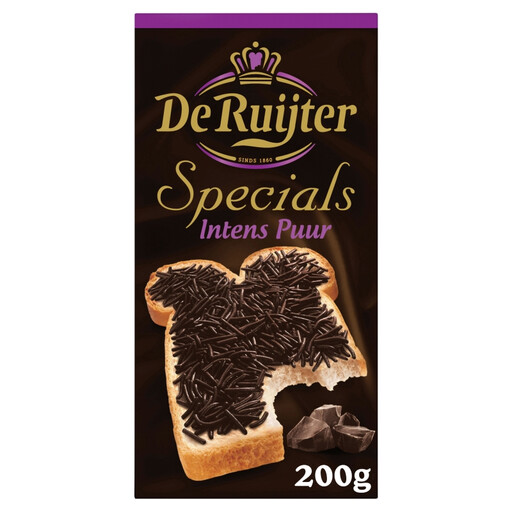 Image unavailable
An option if you’d like to serve chocolate sprinkles with coffee instead of aniseed sprinkles.
Pack size: 200 g. If the cocoa content or allergens matter to your guests, check the packaging.
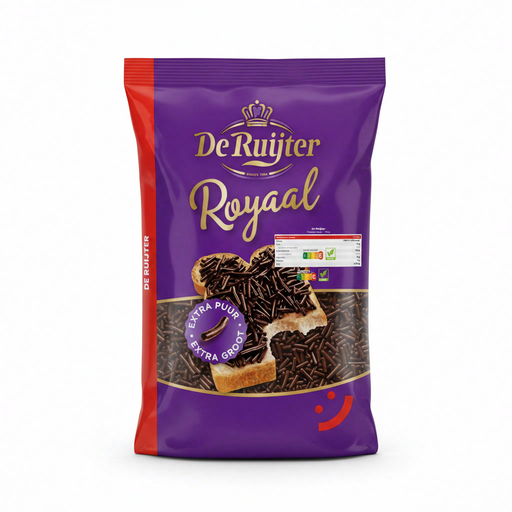 Image unavailable
An option if you want to serve chocolate pieces as a topping rather than the aniseed flavour of aniseed sprinkles.
Pack size: 390 g. Before choosing what to sprinkle over rusks or another snack, compare the product type with fine chocolate sprinkles.
 Image unavailable
A chocolate topping for anyone who’d prefer a cocoa flavour with coffee instead of traditional aniseed sprinkles.
Pack size: 390 g. If a particular cocoa percentage is important to you, check the packaging before choosing this product.
No. The De Ruijter Gestampte Muisjes described here are sugared aniseed seeds, while De Ruijter Specials Hagelslag Intens Puur is a chocolate-sprinkle product. According to Albert Heijn, those chocolate sprinkles contain at least 52% cocoa solids. Choose based on the flavour and product type you want to serve, not just the dark colour.
Check the ingredients and allergens on every pack you’re serving. Albert Heijn lists wheat starch in De Ruijter Gestampte Muisjes; Jumbo lists milk fat and soya lecithin in De Ruijter Specials Intens Puur, and warns that milk protein and lactose may be present. The Netherlands Food and Consumer Product Safety Authority explains that allergens must be listed on the label of pre-packed foods.
Once opened, follow the storage instructions on the packaging you’ve chosen. According to the Voedingscentrum, the stated best-before date applies while the pack is unopened. So if you’ve already opened it, don’t rely on that date alone.