Choose a jar size for aniseed sprinkles on a conference table based on how they’ll be served and how much you expect to use, not just how the jar looks. A smaller jar that you top up during service gives you more control over how much is on the table; a larger jar needs a stable position and a clear replenishment routine. If serving them unpackaged, make allergen information available to guests and follow the storage instructions for the product you choose.
Who is this choice relevant to?
Caterers with self-service tables
If you’re serving aniseed sprinkles for guests to help themselves to during a break or breakfast, you’ll need a replenishment routine, a clean serving area and accessible allergen information. The Netherlands Food and Consumer Product Safety Authority (NVWA) sets requirements for allergen information on unpackaged foods and for working hygienically.
Organisers planning a celebratory conference table
If colour and presentation matter to you, you’ll also need to decide whether guests will actually scoop the aniseed sprinkles from the jar. Whole De Ruijter Feestmuisjes and Gestampte muisjes call for a suitable jar opening and serving utensils.
Buyers looking to control how much is on the table
If it’s difficult to estimate demand in advance, you can match the jar size and stock to your planned top-ups. The Dutch Government cites smaller portions as one way businesses can help reduce food waste.
What should you consider when choosing?
First, decide how guests will help themselves to the aniseed sprinkles and who will keep an eye on the table during service. Then choose a jar size that suits expected demand, the space available on the table and your replenishment plans.
| Consideration |
What to check before buying |
Who it matters to |
| Allergens and self-service |
Check that there’s space at the serving point for product and allergen information, and that the jar and serving utensils can be used hygienically. |
If guests are serving themselves, I want them to be able to find information about the aniseed sprinkles on offer and for the serving area to stay clean; around 50% of consumers would choose this as their top consideration. |
| How much to put on the table |
Match the capacity and number of jars to expected footfall and to who can top them up during service. |
If demand is uncertain, I don’t want to transfer the entire stock at once; around 30% of consumers would prioritise being able to top up in a controlled way. |
| Presentation and product type |
First choose whole or crushed aniseed sprinkles, then check that the jar opening and serving utensils are suitable. |
For a themed table, I want the colour and texture I choose to suit the presentation; around 20% of consumers would give this the greatest weight. |
Common serving mistakes
-
Putting out a jar without allergen information at the serving point
When aniseed sprinkles are offered unpackaged, guests must be able to get information about any allergens present. The NVWA says this information can be provided in writing or electronically; oral information is permitted only under certain conditions, including displaying a clearly visible sign directing guests to it.
Link each jar to the information for the specific product. The product information for De Ruijter Feestmuisjes lists wheat, among other ingredients; when you mention cereals containing gluten, you must also name the specific cereal.
-
Pouring the entire stock into one large jar
If demand is uncertain during a conference, a completely full jar makes it harder to control how much is in the serving area. The Dutch Government cites smaller portions as a possible measure to help prevent food waste.
Keep a labelled reserve supply separate and top up according to actual demand.
-
Serving whole and crushed aniseed sprinkles in the same way
Albert Heijn’s product pages list De Ruijter Feestmuisjes in a 330 g pack, with 15 g portions, and Gestampte muisjes in a 270 g pack, with 6 g portions. These on-pack serving sizes are not fixed portions for conference guests.
Choose the product type to suit your intended presentation, then try it out to see whether the jar opening and serving utensils work well.
-
Losing track of product information after decanting
Ingredients, allergens, best-before information and storage advice must remain linked to the correct aniseed sprinkles. Albert Heijn’s product information for the variants mentioned refers to the packaging for the best-before date and says to store them in a dry place.
Keep the original packaging with the labelled reserve supply and check the information for each variant you use.
Relevant brands to consider
De Ruijter
Albert Heijn lists De Ruijter Feestmuisjes in a 330 g pack and Gestampte muisjes in a 270 g pack. The difference in product type is relevant to your presentation and choice of serving utensils.
- The product pages list ingredients, allergens, portion size and storage information, among other details, which you can link to the variant you choose.
- The stated pack weights and portions don’t determine which glass jar size is right for demand at your conference.
Glass jars for your serving setup
These Joybuy products are glass storage jars for two different setups: two smaller jars that you can top up in rotation, or one larger jar as a central display piece. For either setup, check that the opening suits your serving utensils and keep product information available for guests.
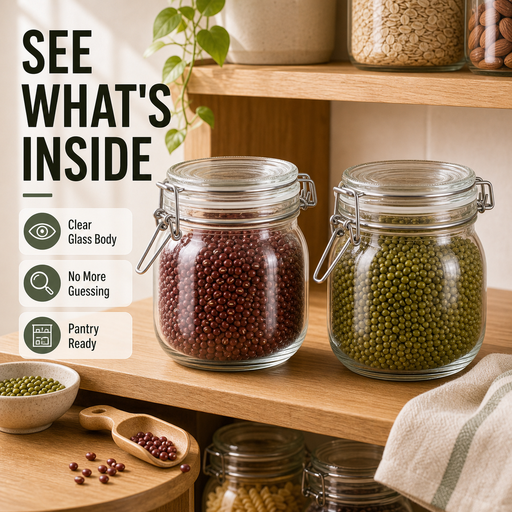 Image unavailable
PURECOOK glass storage jars, 2 × 700 ml
You can use the two jars in a setup where you top them up during service, rather than putting all the aniseed sprinkles on the table at once.
The set contains two glass jars, each with a 700 ml capacity, with clip-top lids and silicone sealing rings. Before buying, check that the opening suits your serving utensils and confirm the cleaning instructions for the complete set: the product title and description give conflicting information about whether the jars are dishwasher-safe.
View on Joybuy
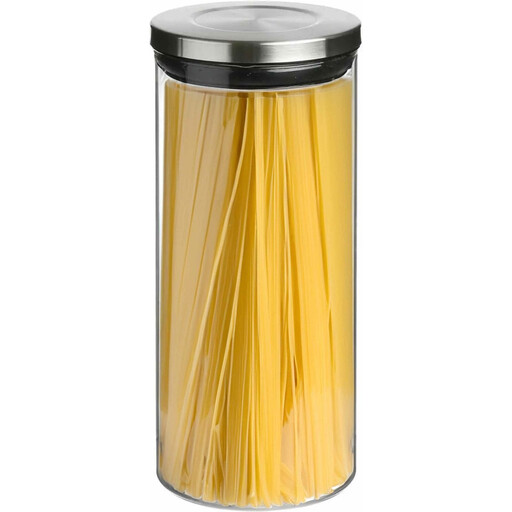 Image unavailable
5five glass storage jar with stainless steel lid, 1.7 l
The 1.7 l jar is an option for a central display piece if it suits the expected demand and the space available on your table.
The jar is transparent and has a stainless steel lid. Check that guests can easily reach the aniseed sprinkles with your chosen serving utensils, and top up the jar as needed rather than automatically filling it to the brim.
View on Joybuy
Frequently asked questions
Do I need to provide allergen information if I serve aniseed sprinkles from a glass jar?
Yes. When aniseed sprinkles are offered unpackaged, guests must be able to get information about any allergens present. The NVWA says this information can be provided in writing or electronically, or given orally under certain conditions with a clearly visible sign directing guests to it. Use the allergen information for the specific variant; the product information for De Ruijter Feestmuisjes lists wheat, among other ingredients.
Can I throw away the original packaging once the aniseed sprinkles are in the jar?
Keep the packaging or make sure the correct product information remains available during service. This lets you link ingredients, allergens, best-before information and storage advice to the contents of each jar, including when you top them up.
What should I consider when cleaning and positioning the jars?
Include the jars, lids, serving utensils and table in your hygiene routine. The NVWA requires the areas and materials used to store and serve food to be clean and safe, and food to be handled in accordance with HACCP rules. Also follow the cleaning instructions for the jar you choose and its individual components.


