
Anyone serving aniseed sprinkles as a topping or decoration
You’d like to offer rusks, yoghurt or cupcakes topped with aniseed sprinkles to enjoy with coffee. Albert Heijn suggests these uses for De Ruijter pink and white aniseed sprinkles.


If you want to serve aniseed sprinkles from a squeezy bottle, only choose a dispensing solution if the manufacturer confirms it is suitable for dry sprinkles. For serving from a standard pack, compare the product type and pack size: Albert Heijn lists whole aniseed sprinkles in a 330 g pack and crushed sprinkles in a 270 g pack. Check the current label on either option before serving it to guests.
You’d like to offer rusks, yoghurt or cupcakes topped with aniseed sprinkles to enjoy with coffee. Albert Heijn suggests these uses for De Ruijter pink and white aniseed sprinkles.
You want to know before serving whether your chosen sprinkles contain wheat or gluten-containing cereals. Albert Heijn lists these allergens for the whole and crushed varieties reviewed.
Decide how you want to serve the aniseed sprinkles and which product type suits the occasion. Check the label before putting them out for guests.
| What to consider | What to check when buying | Most relevant for |
|---|---|---|
| Dispensing without spills | Check that any dispensing pack you’re considering is explicitly suitable for dry aniseed sprinkles and their grain size. | If I want to put aniseed sprinkles on the table without spilling loose grains, I need a suitable dispensing opening. Around 45% of consumers prioritise ease of dispensing. |
| Product type and pack size | Compare whole aniseed sprinkles in a 330 g pack with crushed sprinkles in a 270 g pack, depending on what you want to serve. Albert Heijn lists these product types and pack sizes. | For rusks or decoration, I want to choose a type that suits my coffee menu, in a pack I can use. Product type and pack size matter most to around 33% of consumers. |
| Allergens | Check the ingredients and allergens on the exact pack you buy; the De Ruijter varieties reviewed list wheat and gluten-containing cereals. | If a guest needs to avoid wheat or gluten, I want to check the label before serving anything. Around 22% of consumers prioritise this allergen check. |
A squeezy bottle isn’t automatically suitable for dry, sugar-coated aniseed seeds. The opening and intended contents determine whether it’s right for what you want to serve.
Only buy a dispensing solution if the product information or manufacturer confirms it’s suitable for dry sprinkles and the grain size you need.
The whole and crushed De Ruijter sprinkles reviewed list wheat and gluten-containing cereals. This matters if a guest needs to avoid these ingredients.
Read the label on the pack you buy and keep it available for guests who want to check the ingredients.
A serving size on a product page doesn’t tell you how many aniseed sprinkles you’ll need for your group or coffee menu.
Choose the amount based on the number of guests and what you’re serving alongside; compare packs by their weight in grams.
Albert Heijn and Jumbo list several De Ruijter aniseed sprinkle varieties, including whole and crushed sprinkles.
These whole aniseed sprinkles are suitable for serving on rusks or as a decoration with coffee. If you want to dispense them from a squeezy bottle, check separately that the dispensing solution you’re considering is suitable.
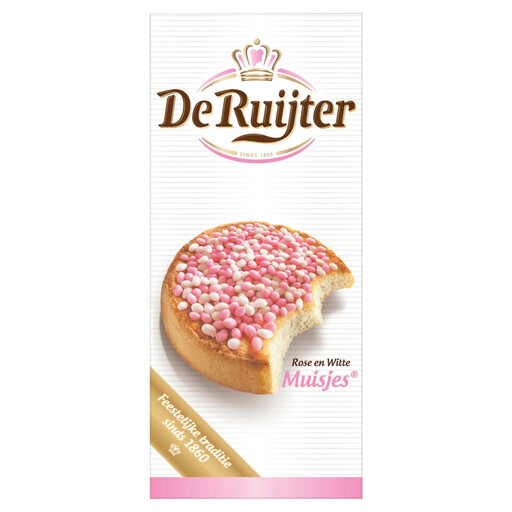 Image unavailable
For sprinkling on rusks or decorating treats to enjoy with coffee.
Pack size: 330 g. Before serving, check the current label for wheat and gluten-containing cereals.
No. Albert Heijn lists wheat and gluten-containing cereals for the pink and white and crushed varieties reviewed. Check the label on the pack you buy before serving the sprinkles.
Store the aniseed sprinkles reviewed in a dry place and follow the best-before date on the pack, as shown on Albert Heijn’s product pages.