
Parents looking to limit added sugars
You’re looking for a rusk base with no added sugars and want to know what that claim means for the sugars in both the rusk and the sprinkles.


If you want to keep an eye on sugar in rusks with aniseed sprinkles, first decide whether you’re looking for a sugar-free product or simply want to avoid added sugars in the rusk. A rusk with no added sugars may still contain sugars; for the whole treat, you’ll also need to consider your choice of sprinkles and how much you use. So compare both packs, and if you’re serving the treat to others, check the allergens and the number of pieces too.
You’re looking for a rusk base with no added sugars and want to know what that claim means for the sugars in both the rusk and the sprinkles.
You want to make sure you have enough rusks and sprinkles for your guests. The number of pieces in each pack, allergens and availability when you order are all practical things to consider.
You’re comparing plain, wholemeal and seed or kernel rusks. You want to compare sugars and fibre without using a single nutritional value to judge the whole treat.
Start with the sugar claim that matters to you. Then compare the rusk with your chosen sprinkles, and check the practical details for your treat before buying.
| What to consider | What to check when buying | Who it matters to |
|---|---|---|
| Sugar claim | If you have a strict requirement, look for the ‘sugar-free’ claim and check the sugars per 100 g. Under EU Regulation 1924/2006, solid foods can only carry this claim if they contain no more than 0.5 g of sugars per 100 g. | If I’m specifically looking for a sugar-free product, ‘no added sugars’ doesn’t mean the same thing to me. Around 50% of consumers prioritise checking this claim. |
| Base and topping | Compare the nutritional information and ingredients for the exact rusk and sprinkles you’re buying. Also check how much topping you’ll use on each rusk. | I want to know what goes on one treat, not just what’s in the pack of rusks. This combination is the main consideration for around 30% of consumers. |
| Planning your treat | Read the allergen information on both packs, count how many rusks you need and check availability when you order. | When I’m hosting, I need to consider allergens and make sure I have enough pieces. That’s the first concern for around 20% of consumers. |
These claims don’t mean the same thing. Under EU Regulation 1924/2006, solid foods can only carry the ‘sugar-free’ claim if they contain no more than 0.5 g of sugars per 100 g.
If you have a strict requirement, check the claim on the pack and the ‘of which sugars’ value per 100 g.
Rusks with aniseed sprinkles consist of a base and a topping. The nutritional value of the rusk won’t tell you how much sugar is in the complete treat.
Check the label on your chosen sprinkles too, and include the amount you’ll use on each rusk in your comparison.
Whether a set or individual pack suits your plans also depends on the number of pieces and availability when you order.
Check both details again; you can choose the rusks and sprinkles separately if needed.
Ingredients vary from one product and variety to another. For example, Jumbo lists egg, gluten and wheat in its Beschuit Naturel; this doesn’t tell you what’s in other rusks or the sprinkles.
Read the current allergen information for the exact rusk and topping before buying them for others.
Worth considering if you’re specifically looking for a rusk base with no added sugars.
A good option if you want to compare traditional and wholemeal rusks with other varieties.
A brand to consider for the sprinkles used as a topping on rusks with aniseed sprinkles.
These two TastyBasics varieties are rusk bases to consider if you want to avoid added sugars in the base. Choose your sprinkles separately and check the current packaging for both products.
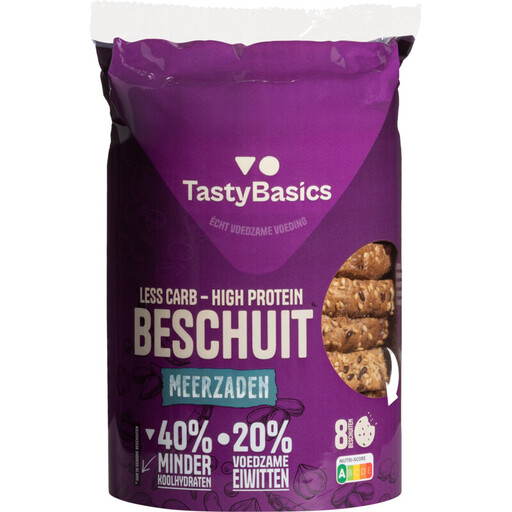 Image unavailable
A rusk base to consider if you want to avoid added sugars in the base. The pack contains 184 g; check the current nutritional information and ingredients for this variety, and assess the sprinkles separately.
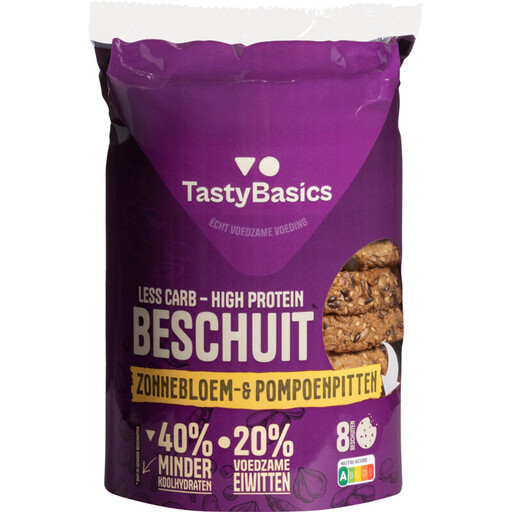 Image unavailable
A rusk base to consider if you need eight pieces and want to avoid added sugars in the base. Check the claim, nutritional information and allergens on the current pack; your chosen sprinkles count separately.
No, not necessarily. Under EU Regulation 1924/2006, solid foods can only carry the ‘sugar-free’ claim if they contain no more than 0.5 g of sugars per 100 g. Albert Heijn labels its TastyBasics Beschuit zonnebloem- en pompoenpitten ‘no added sugars’, while also listing 4.7 g of sugars per 100 g.
Yes, as long as you also check the weight per piece. For its nutritional data, the Voedingscentrum gives a 20 g serving for plain rusks and a 10 g piece for wholemeal rusks. So compare products per 100 g too, and use the information on the exact pack when making your purchase.
Check the allergens in both the rusk and your chosen sprinkles. Jumbo lists egg, gluten and wheat in its Beschuit Naturel, but other products may have different ingredients. So check the current information on both packs.
Follow the storage instructions on the pack and, ideally, add the topping shortly before serving. This means the rusks won’t sit with the topping on for longer than necessary.