Who is this choice relevant to?

Certification-conscious shopper stocking up

Wants to know whether Fairtrade certification on a chocolate product applies to the whole product or a specific ingredient, such as cocoa. According to Fairtrade Nederland, a certification mark with an arrow directs you to more information on the back of the pack about the ingredients and sourcing.

Planning a birth celebration or party

Is looking for anise sprinkles for rusks, bread or decoration, and wants to choose an amount that suits the occasion and the space available in the cupboard.

Shopper comparing ingredients

Wants to check the ingredients, allergens and nutritional information for the chosen variety before putting it in the cupboard. Average nutritional values are no substitute for the information on the specific product.

What should you look for when buying?

First decide whether you want anise-flavoured sprinkles or a chocolate bread topping with Fairtrade cocoa as the priority. Then choose a pack and variety that suit the occasion.

What to consider What to check before buying Especially relevant to
Fairtrade certification on chocolate Check the certification mark on the exact pack. If there’s a logo with an arrow, read the information on the back about ingredients and sourcing; according to Milieu Centraal, a logo on a white background may refer to just one certified ingredient. If Fairtrade cocoa matters more to me than the anise flavour of traditional sprinkles, I want to know exactly what the certification covers. For around 50% of consumers, this is the main thing to check.
Tradition and stock levels Compare the variety, net weight and storage instructions. Choose an amount you can use up around the planned occasion. For rusks at a birth celebration or decorations at a party, I want traditional anise sprinkles ready to use without having too much left over. Around 30% of consumers say this use and planning how much to stock are their top priorities.
Ingredients and allergens Read the ingredients list and allergen information for the variety you’ve chosen. Compare sugars per 100 g or per serving only on a like-for-like basis. If I use the sprinkles regularly, I want to be able to assess their ingredients and serving size. For roughly 20% of consumers, ingredients, sugars and allergens are the most important things to consider when buying.

Common mistakes

  • Assuming a shop’s range means its anise sprinkles are certified

    Fairtrade Nederland lists Fairtrade cocoa in PLUS own-brand products, including chocolate sprinkles. That tells you nothing about a pack of anise sprinkles or another brand sold in the same shop.

    Check the certification mark and ingredient information on the pack of the product you’re actually buying.

  • Confusing anise sprinkles with chocolate products

    Traditional anise sprinkles are a topping flavoured with anise. Chocolate sprinkles have a different composition, while the Choceur Milk Mouse listed by ALDI is a chocolate mouse, not a sprinkle topping.

    Choose anise sprinkles for the traditional use; look separately for a chocolate bread topping if Fairtrade cocoa is a requirement for you.

  • Choosing a pack without planning for after opening

    According to Voedingscentrum, the use-by date applies while the pack is unopened. Once opened, follow the storage instructions on the product.

    Choose an amount that suits how you’ll use it, reseal the pack as instructed and put products that need using first at the front of the cupboard.

    A forgotten, opened pack can lead to waste.

  • Choosing by the colour of the sprinkles alone

    Ingredients can vary between varieties. An ingredients list published for De Ruijter crushed anise sprinkles includes, among other things, wheat starch and flavouring with milk.

    Check the current ingredients list and allergen information on the exact pack, along with the use-by date and storage instructions.

Brands and shops to consider

De Ruijter

De Ruijter is a traditional choice for anise sprinkles; Jumbo lists blue and white, pink and white, party and crushed varieties.

  • There are varieties for different uses, such as a bread topping or decoration.
  • Don’t assume a product is Fairtrade-certified based on the brand name or product category; check the certification mark on the pack you choose.

PLUS huismerk

An option to explore if Fairtrade cocoa matters more to you than traditional anise sprinkles.

  • According to Fairtrade Nederland, the cocoa in PLUS own-brand products, including chocolate sprinkles, is Fairtrade-certified.
  • That statement doesn’t automatically apply to other brands sold by PLUS, and it doesn’t confirm that PLUS own-brand anise sprinkles are Fairtrade-certified.

Jumbo

Jumbo lists both De Ruijter anise sprinkles and separate Fairtrade chocolate products in its range.

  • You can compare traditional anise sprinkles and a chocolate alternative as two different types of product.
  • A Fairtrade category tells you nothing about the certification of a specific pack of anise sprinkles.

Albert Heijn

Albert Heijn lists De Ruijter party sprinkles, crushed anise sprinkles, and pink and white sprinkles.

  • These varieties give you a starting point for comparing shape and use.
  • Check the ingredients and any certification marks on the current pack of the variety you choose.

Choceur (ALDI)

ALDI lists a Choceur Milk Mouse: chocolate shaped like a mouse, not traditional anise sprinkles.

  • The product listing names Rainforest Alliance as a separate certification.
  • Rainforest Alliance is not the same as Fairtrade; a chocolate mouse is also no substitute for anise sprinkles on a rusk.

Traditional anise sprinkles on Joybuy

This product suits anyone looking for traditional anise sprinkles as a bread topping or decoration. If Fairtrade certification is a requirement for you, check the current pack separately.
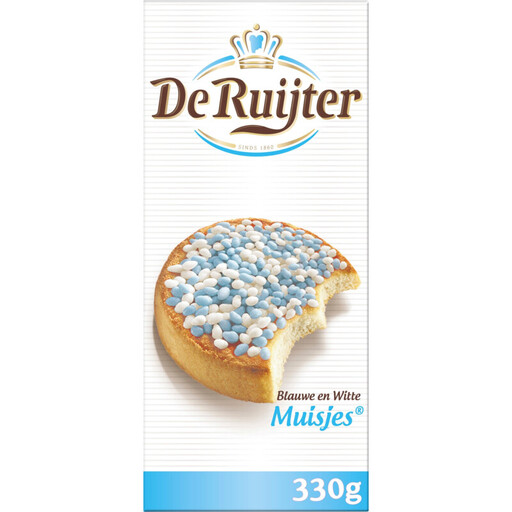
De Ruijter blue and white anise sprinkles 330 g

De Ruijter blue and white anise sprinkles 330 g

For traditional use on bread or rusks, and as a festive decoration.

Store in a cool, dry place and close the pack securely after opening. If you have an allergy, check the current ingredients and allergen information on the pack.

View on Joybuy

Frequently asked questions

Is traditional anise sprinkle topping automatically Fairtrade chocolate?

No. Traditional anise sprinkles are not automatically chocolate products: an ingredients list for De Ruijter crushed anise sprinkles names anise seeds and sugar, but no cocoa. If Fairtrade chocolate is what you’re looking for, check the current ingredients and certification marks on the exact variety.

How do I read a Fairtrade certification mark on chocolate bread toppings?

Check the certification mark on the exact pack and what it applies to. For a logo with an arrow, Fairtrade Nederland directs you to the back of the pack for information about ingredients and sourcing. According to Milieu Centraal, a logo on a white background may identify just one certified ingredient.

How should I store anise sprinkles in the cupboard?

Follow the storage instructions on the pack; Jumbo says De Ruijter anise sprinkles should be stored in a dry place. Voedingscentrum recommends keeping products in their original packaging as much as possible, so the use-by date stays visible. Follow the product instructions after opening.

Should I check allergens again when choosing a different variety of anise sprinkles?

Yes. Check the allergen information for the exact variety. The Netherlands Food and Consumer Product Safety Authority says allergens must be listed in the ingredients list on food labels, so don’t rely on the colour or the ingredients of another variety.

What does an average nutritional value tell me about my pack of anise sprinkles?

An average isn’t the nutritional information for your specific variety. Voedingscentrum gives average values of 11.9 g of sugars and 60 kcal for a 15 g portion of anise sprinkles. Use the information on the pack you’ve chosen to compare products and serving sizes.
