
Vandaag of morgen in huis

Kwaliteit gegarandeerd

Welkomstaanbiedingen ontgrendelen: GRATIS bezorging | Tot 80% korting | Gratis 30 dagen JoyPlus-proefperiode
Download de app
An angled cooker hood gives you more headroom than a traditional horizontal model and works well above a hob measuring 60 to 90 cm. However, it’s not wise to focus only on a black glass front or a high extraction rate in cubic metres per hour. Installation, noise levels and the type of filtration all play an equally important part in how happy you’ll be with your choice day to day.
A manufacturer may quote a maximum extraction rate that’s only available on the intensive or boost setting. The normal operating noise level and extraction rate may be lower. Always check:
An extractor hood with external extraction vents cooking fumes outside through a duct. With a recirculating cooker hood, air passes through grease and carbon filters before being returned to the kitchen. Recirculation is handy in a flat or rented home, but carbon filters need to be replaced as instructed.
A 60 cm cooker hood makes sense above a hob of a similar width. For an 80 or 90 cm hob, a wider wall-mounted cooker hood may provide more coverage. Measure more than just the width. Check:
Always follow the installation manual for the minimum distance. For example, the Bosch DWK87FN60 specifies a minimum of 450 mm above an electric hob and 650 mm above a gas hob. The required distance may vary by model.
Black glass has a sleek look, but fingerprints and grease splashes can show up. According to the product descriptions for some models, a matt finish can help minimise this, but regular cleaning is still necessary. Pay particular attention to the washable grease filter, preferably aluminium or metal. Also check whether it’s dishwasher-safe and whether suitable carbon filters are available.
For a typical kitchen, the highest figure isn’t the only one that matters. In practice, a model that moves enough air on its normal setting is often more pleasant to use than a cooker hood that only performs well on boost. When looking for a quiet cooker hood, start by checking the dB rating for each setting. The quoted figures come from the product specifications; your experience will also depend on the duct length, bends, installation and wall type.
Examples from the range:
The Siemens has a high quoted maximum, but its stated noise level is also higher. So don’t compare extraction rates alone.
For external extraction, the duct must fit the hood’s connection. Several models use a 150 mm connection, while other versions specify 120 mm. An unsuitable or very narrow duct can affect performance and create extra noise.
For recirculation, you’ll need carbon filters. Check whether they’re included. The specifications for the Ciarra CBCB6102-B list two CBCF003 carbon filters. The Siemens LC91KLT60 doesn’t include a recirculation kit. This difference affects the actual purchase cost.
An energy-efficient cooker hood could be a good choice if you cook every day. As well as the energy rating, check the stated annual energy consumption. The Ciarra CBCG6736H-G is rated A+++ and uses 10 kWh per year, while the Bosch DWK87FN60 is rated A+ and uses 31,7 kWh per year.
Also consider the controls. Simple push buttons are practical if you don’t want to use an app. A Wi-Fi cooker hood with an app can be useful if you want to adjust the speed, lighting or automatic functions from your smartphone. Check whether any smart features require a connected hob, an account or a home network.
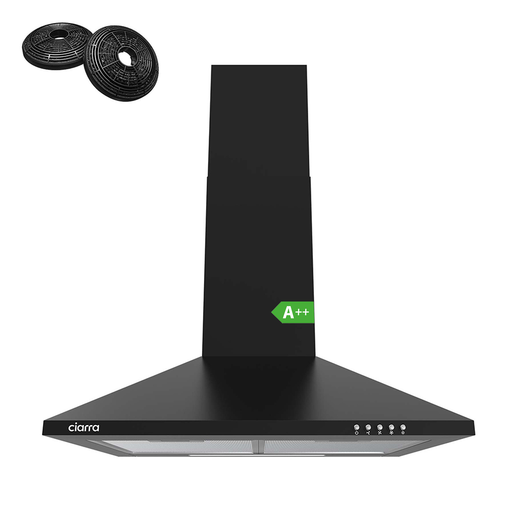
Why it suits this type of user: This 60 cm model has simple push-button controls and supports both external extraction and recirculation. It’s a good fit for standard kitchens and for anyone who doesn’t need an app.
The product specifications list three speeds, a washable aluminium filter and both ventilation modes. Check whether the carbon filter you need is included with your version.
60 cm size, push-button controls, washable aluminium filter, LED lighting and two installation options.
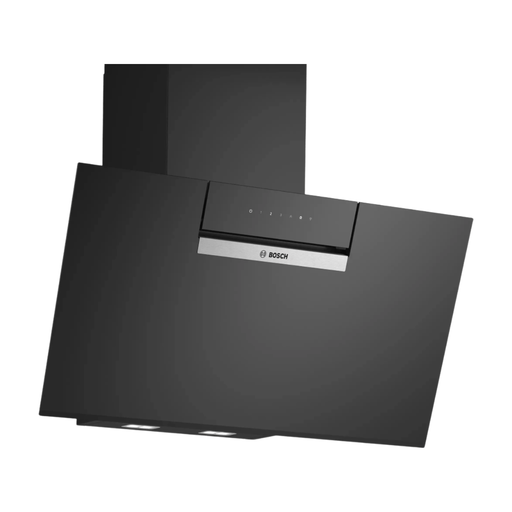
Why it suits this type of user: This 80 cm-wide black wall-mounted cooker hood offers several settings, an intensive setting, app controls and a dishwasher-safe aluminium filter.
The specifications distinguish between normal and intensive extraction. This makes it easier to assess the extraction rate and noise more realistically, rather than looking only at the highest figure.
431 m³/h on the normal maximum setting, 768 m³/h on intensive, Home Connect, EcoSilence Drive and adjustable LED colour temperature.
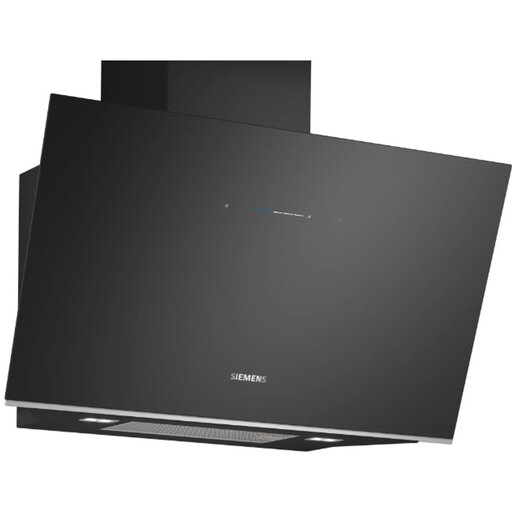
Why it suits this type of user: This wide angled hood is designed for a 90 cm cooking zone and, according to the product specifications, supports both external extraction and recirculation.
The stated maximum extraction rate and noise level are listed separately. Bear in mind that, according to the product information, the recirculation kit isn’t included.
89 cm product width, stated maximum of 1007 m³/h, Home Connect, touchscreen and dishwasher-safe filters.
We’ve put together a complete, up-to-date list of products that meet these strict selection criteria and the applicable European safety requirements.
Make sure the wall can support the weight of the hood and follow the installation instructions. An extraction duct with lots of sharp bends can increase noise and airflow resistance. For recirculation, keep the air outlet clear and replace carbon filters on time.
Clean a metal or aluminium grease filter regularly. Ciarra’s product information recommends cleaning it every two to four weeks, depending on use. Switch off the appliance and unplug it before removing filters or carrying out maintenance. Don’t use abrasive products on black glass or painted surfaces.
Not always. A 60 cm cooker hood is often a good fit for a 60 cm hob, but check the position of the cooking zones and the installation height too. For an 80 or 90 cm hob, a wider hood may provide more coverage.
It depends on your home. External extraction vents moisture and cooking fumes outside, but requires a suitable duct. Recirculation doesn’t need an external duct, making it practical for flats or rented homes. You’ll still need to clean the grease filters and replace the carbon filters as instructed.
This depends on its annual energy consumption, your electricity tariff and how often you use the hood. Compare both the energy rating and the stated consumption in kWh per year. Lighting, use of the boost setting and your chosen ventilation mode also affect the running costs.
