
Listeners who want to catch every detail
You want to follow names, dates and connections in spoken passages, even when there’s noise at home. So compare voice reproduction and noise cancelling separately.


Choose ANC headphones based on how clearly you can hear spoken details and whether they remain comfortable throughout a whole episode. The Consumentenbond considers voice reproduction and noise cancelling separately; Bose explains that ANC may be less effective at reducing sudden sounds than steady background noise. If you want to stay aware of housemates or alerts, compare how easy it is to use the transparency mode, too.
You want to follow names, dates and connections in spoken passages, even when there’s noise at home. So compare voice reproduction and noise cancelling separately.
You want to be able to hear what’s happening at home while listening to a podcast. Look not just at the transparency mode, but also at how easy it is to use while listening.
You listen for longer stretches and prioritise comfort and battery life. A stated battery life doesn’t necessarily mean the headphones will feel comfortable to you.
Start with clarity and fit, then consider how much background noise you want to let in and which features you’ll actually use.
| What to consider | What should you check? | Who will this matter most to? |
|---|---|---|
| Spoken details | Listen to a familiar passage at a comfortable volume and assess voice reproduction and ANC separately. | If I want to follow names and connections while it’s noisy at home, I pay extra attention to clarity. Around 39% of consumers prioritise spoken details. |
| Sounds around the home | Try switching to transparency mode while audio is playing. | If I want to be able to respond quickly to housemates or sounds at home while listening, how easy the mode is to use matters. Around 23% of consumers prioritise being able to hear their surroundings. |
| Comfort during long episodes | If possible, wear the headphones for a longer period and check the pressure from the ear cushions and headband. | If I want to listen to a long episode without the headphones becoming uncomfortable, fit is my priority. Around 23% of consumers prioritise long-wearing comfort. |
| Features and battery life | Check which controls you need and compare battery life using the same ANC setting. | If I mainly want the features I’ll actually use at home and enough battery life, extra settings only matter if I need them. Around 15% of consumers prioritise those features and battery life. |
Sudden, higher-pitched sounds may be reduced less effectively than steady background noise. The fit and seal also affect how much sound you can hear.
Assess voice reproduction, fit and noise reduction separately using a familiar podcast passage.
Sony states that the WH-CH720N offers up to 35 hours of music playback with NC on and up to 50 hours with NC off.
Compare battery life using the same ANC setting, and treat these figures as manufacturer maximums rather than guaranteed listening time at home.
JBL describes the Tour One M3 Smart Tx as a version supplied with a Bluetooth audio transmitter.
Check the full model and bundle name, and choose the version based on whether you need the transmitter.
According to ACM ConsuWijzer, statutory warranty in the Netherlands has no set time limit; a commercial warranty package is separate.
Check what an additional package covers, and contact the retailer about your statutory rights if a fault develops.
These product ranges offer different features to compare. The manufacturers’ stated specifications don’t prove how clearly you’ll hear podcasts at home.
The WH-CH720N and WH-1000XM6 are over-ear ranges with ANC and an ambient sound mode.
The MOMENTUM 4 Wireless is an over-ear option with adaptive ANC and a transparency mode.
The Tour One M3 offers features such as Smart Talk and adaptive ANC.
The Space One is an over-ear range with adjustable transparency and a stated battery life.
This selection includes over-ear ANC headphones for podcasts in a noisy home, with options that also take ambient sound or wearing comfort into account.
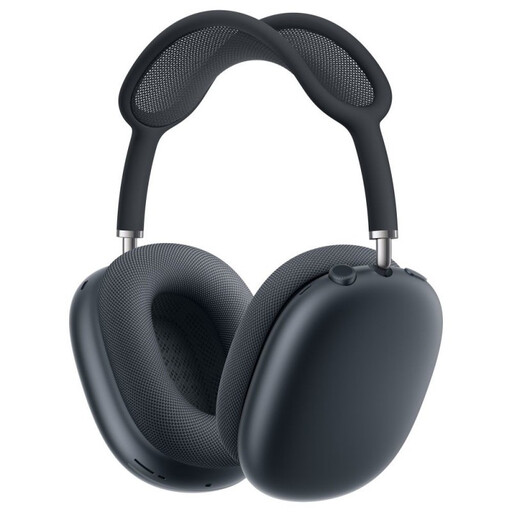 No image available
An option to consider if you’re weighing up ANC against features that let in ambient sound.
The product description mentions Adaptive Audio, Transparency and Conversation Awareness.
 No image available
An option to consider when weighing up ANC, transparency and fit for longer listening sessions.
The product information mentions adaptive ANC and Transparency Mode. Sennheiser states that playback time is up to 60 hours; this is a manufacturer specification.
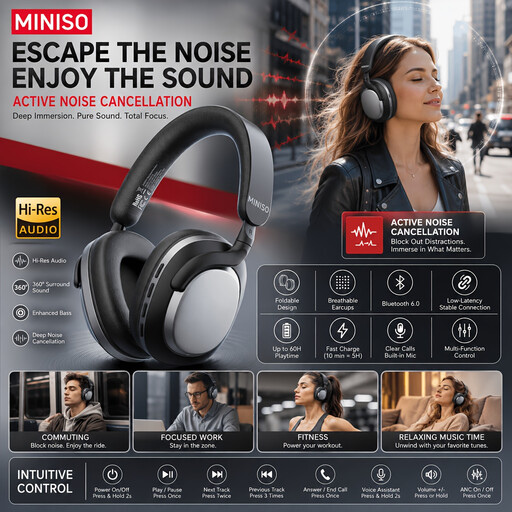 No image available
An option to consider if ANC and the stated battery life suit your listening sessions.
The product title mentions noise cancelling and a 24-hour battery life.
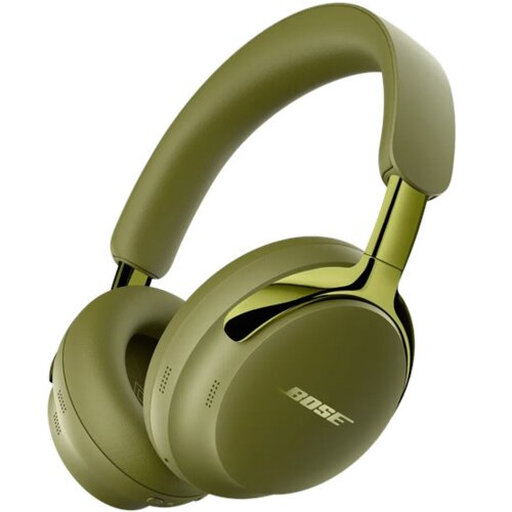 No image available
An option to consider when weighing up ANC and the choice of wired or Bluetooth listening.
The product information mentions Bluetooth 5.4 and a detachable cable. No charger is included, and PD fast charging is not supported.
 No image available
An option to consider if you want ANC with the option of letting in sounds from home when needed.
The product information mentions a transparency mode that can be selected using a button.
No, ANC isn’t guaranteed to block out those sounds completely. It generally works better against steady, low-frequency noise; fit and the seal also play a part. Try listening to a podcast in a similar environment to see how clearly you can hear it.
Before a long listening session, try using the transparency mode. Sony lists this mode for the WH-CH720N, while Sennheiser lists a transparency mode for the MOMENTUM 4 Wireless; the controls vary by model.
Not straight away: check the fit and listening mode first. The WHO identifies both sound level and listening duration as factors that matter for hearing risks. The WHO gives 80 dB for up to 40 hours a week as an example of safe listening, not as a recommended target volume.
For most distance purchases from a business, you have 14 days to change your mind; check the terms and any exceptions that apply to your purchase. ACM ConsuWijzer explains that statutory warranty has no set time limit: with normal use, what matters is how long you can reasonably expect the product to last. Contact the retailer if a fault develops.