
当日/次日达

品质保障

开启新人专享福利: 全场免邮 | 低至 2 折 | 免费试用 30 天 JoyPlus 会员
下载 Joybuy
An aloe vera drink combines a fruity flavour with pieces or pulp of aloe vera. This gives it a different texture and mouthfeel from ordinary juice or soft drinks. In Dutch shops and online stores, you can find aloe vera juice, aloe vera drinks with kiwi, mango, lychee, peach or pomegranate, as well as lower-sugar varieties.
However, the packaging can give a misleading impression. A tropical name tells you little about the amount of aloe vera pulp, while “natural” does not automatically mean that the drink contains no sweeteners or sugar. Use these checks to avoid making the wrong choice.
Mango, lychee and watermelon sound like they should be the main fruit ingredients. In practice, the proportion of fruit juice may be limited, with some of the flavour coming from flavourings. So check the ingredients list carefully. For example, T’best mango drink lists 1% mango juice, alongside 16% aloe vera juice and pulp.
When choosing an aloe vera mango or aloe vera lychee drink, it is therefore useful to distinguish between:
An aloe vera drink with no added sugar may still contain sweeteners. For example, Tropical Aloe Vera Zero 500 ml lists acesulfame K. According to the product information, Drinks Aloe Vera Zero contains sucralose. For some shoppers, this may be more important than the number of grams of sugar alone.
Compare the nutritional values per 100 ml, rather than looking only at the figures for the whole bottle. A product with little sugar may still contain sweeteners, while a regular variety may use sugar as its main sweetening ingredient.
A 500 ml bottle of aloe vera drink is practical for taking with you, keeping at the office or having with lunch. A box of aloe vera drink containing 20 bottles is better suited to a household, shop, catering business or business stockroom. Do bear the available storage space, shelf life and storage requirements in mind.
After opening, the drink should be stored in the fridge and used within the stated period, according to the product information. Tropical Aloe Vera Watermelon, for example, states that the bottle should be consumed within three days of opening. Always check the label on the packaging you receive.
The amount of pulp partly determines the texture of an aloe vera drink with pulp. The stated percentages vary across the range. Examples include:
A higher percentage does not automatically mean that the flavour will suit you better. It does, however, provide a measurable basis for comparing texture and formulation.
Look at the energy, carbohydrate and sugar content per 100 ml. The values vary noticeably between recipes:
As well as checking the table, look at the ingredients. “No added sugar” does not mean the drink is unsweetened.
A 500 ml bottle is a standard size. For occasional use, a single bottle or six-pack is easy to manage. If you regularly serve aloe vera drinks, choosing 12 or 20 bottles means you will not need to reorder as often.
When buying boxes, check:
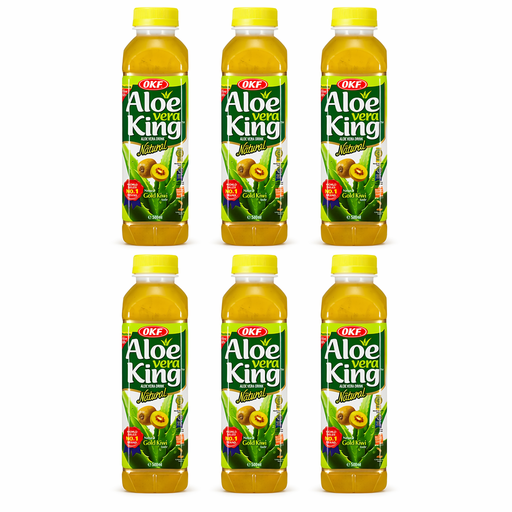
Why it suits this profile: A box of six bottles offers an easy introduction to kiwi as a refreshing fruit flavour, without immediately having 20 bottles at home.
The product information lists the nutritional values and ingredients, so you can check the sugar, pulp and flavourings before ordering.
500 ml per bottle, six bottles per pack, kiwi flavour and 20 kcal per 100 ml according to the listed nutritional information.
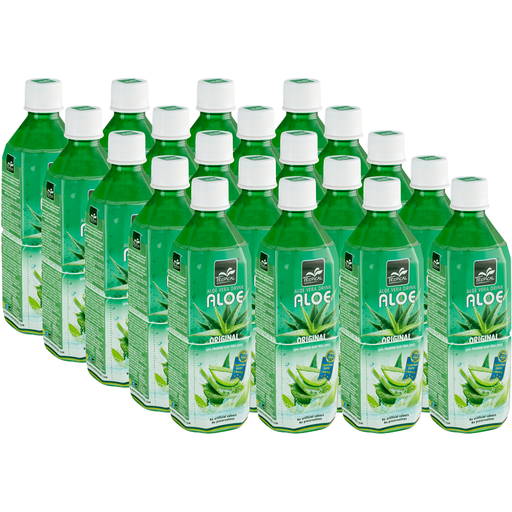
Why it suits this profile: The original variety is suitable for anyone looking for a clearly stated pulp percentage and a large supply.
The label states 30% aloe vera juice and pulp. This makes it easier to assess the ingredients than by relying on the product name alone.
20 bottles of 500 ml, 30% aloe vera juice and pulp, 28 kcal and 6.8 grams of sugar per 100 ml according to the product information.
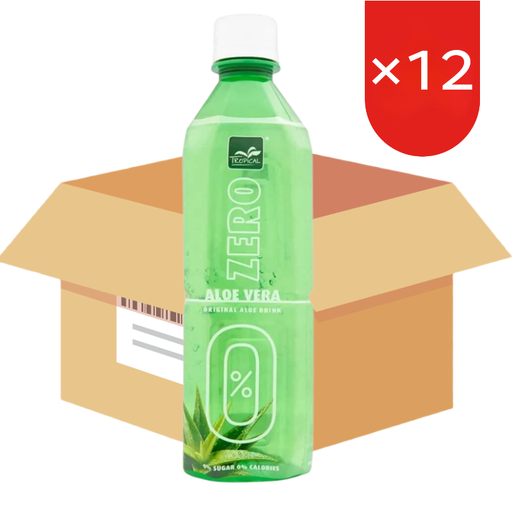
Why it suits this profile: This box is ideal for anyone who regularly wants to take a 500 ml bottle with them while keeping a close eye on their sugar intake.
The product information lists 0 grams of sugar per 100 ml, but also sucralose. This makes it clear that sugar-free does not mean free from sweeteners.
12 bottles of 500 ml, 20% aloe vera juice and pulp according to the product information, with 0.4 kcal and 0 grams of sugar per 100 ml.
We have put together a complete, up-to-date list of products that fully meet these strict selection criteria and the applicable European safety regulations.
Not always. The terms are often used interchangeably, but check the ingredients list. Some drinks contain both aloe vera juice and pulp, while others are mainly made up of water, flavourings, sugar or sweeteners. The stated pulp percentage tells you more than the product name alone.
Store an opened bottle in the fridge and make sure the cap is tightly closed. Use the drink within the period stated on the label. If the packaging recommends it, shake a variety containing pulp before drinking. Store an unopened bottle according to the instructions provided, usually in a cool place away from direct sunlight.
That depends on the price per litre, delivery costs and how much you actually use. Divide the total price by the number of bottles or the total volume. A box of 20 is practical for regular use, but less suitable if you first want to compare different flavours such as aloe vera kiwi, aloe vera pomegranate or aloe vera peach.
