
Vandaag of morgen in huis

Kwaliteit gegarandeerd

Welkomstaanbiedingen ontgrendelen: GRATIS bezorging | Tot 80% korting | Gratis 30 dagen JoyPlus-proefperiode
Download de app
An aloe vera drink is popular for its refreshing flavour, pulp and wide choice of fruit varieties. Yet many bottles look alike. Attractive packaging reveals little about the sugar content, amount of aloe vera or practical value of a multipack.
When shopping online, you’re most likely to encounter three pitfalls:
So don’t use the product photo as your only reference point. Check the ingredients, nutritional information, volume and storage advice on the product page and packaging.
Compare the nutritional values per 100 ml, not just per bottle. A 500 ml bottle may contain several servings. For example, the OKF Aloe Vera Drink Kiwi Flavor 500ml lists 4.8 grams of sugar per 100 ml. The OKF lychee-flavoured version lists 5 grams of sugar per 100 ml.
If you’re looking for an aloe vera drink without sugar, you can consider a sugar-free version. However, pay attention to the difference between:
The product information for OKF Sugar-Free 500 ml x 6 states that it has a sugar-free formulation. For the 20-bottle version, the available nutritional information states 0 grams of carbohydrates and 0 grams of sugar per 100 ml. Always check the current packaging, as labels may vary by version or market.
An aloe vera drink with pulp has a different mouthfeel from a clear soft drink. Products may contain aloe vera juice, gel, pulp or a combination of these. These terms are not automatically interchangeable.
The available product information for OKF Kiwi mentions aloe vera pulp, among other ingredients. According to the ingredients list, T'best Mango contains 16% aloe vera juice and pulp, as well as apple and mango juice. The Tropical Strawberry packaging states 20% aloe vera juice and pulp.
Also check the order of the ingredients. Ingredients are generally listed in descending order by quantity. A flavour such as strawberry, lychee, kiwi, mango or pomegranate may be mainly created by flavouring, while the proportion of fruit juice remains limited.
A 500 ml aloe vera drink is convenient for travelling, work, school or a picnic. For drinking at home, a 1-litre bottle may be more practical. A box of aloe vera drinks is worth considering if you drink them regularly or want to stock up for several people.
Pay attention to:
Also check whether a deposit or refundable charge is included in the offer. Some multipacks list this separately.
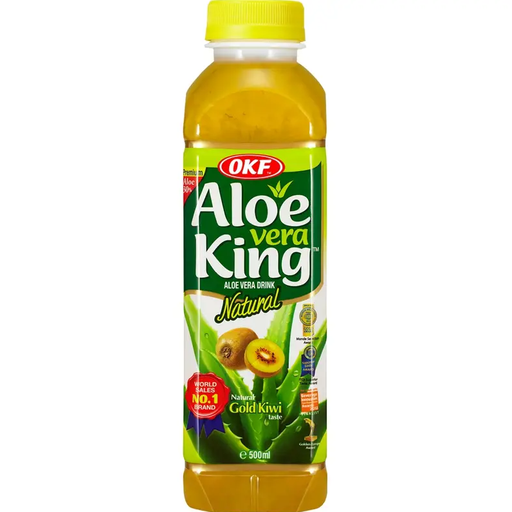
Why it suits this profile: The 500 ml bottle makes it easy to try a fruity kiwi flavour without immediately buying a large box.
The product information mentions aloe vera pulp and states 4.8 grams of sugar per 100 ml. This allows you to compare the flavour and sugar content in advance.
500 ml volume, kiwi flavour, aloe vera pulp and a nutritional value of 20 kcal per 100 ml according to the product information.
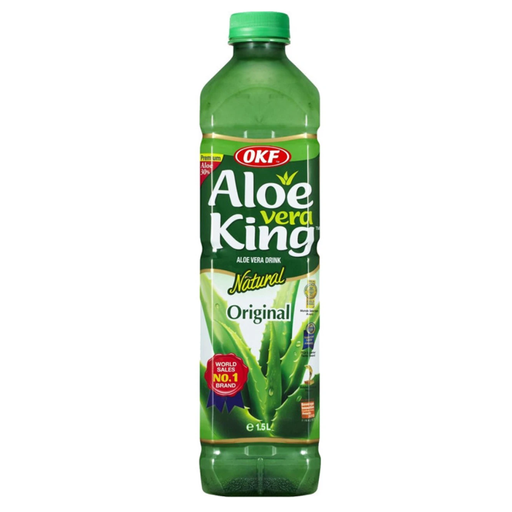
Why it suits this profile: A large box is ideal for shoppers who want to build up a regular supply for home, a club room or an office.
The contents are clearly stated as 12 bottles of 1.5 litres. You therefore know in advance that this is a bulk purchase rather than individual trial packs.
18 litres in total, natural grape flavour according to the product description, and 8 grams of sugar per 100 ml according to the nutritional information.
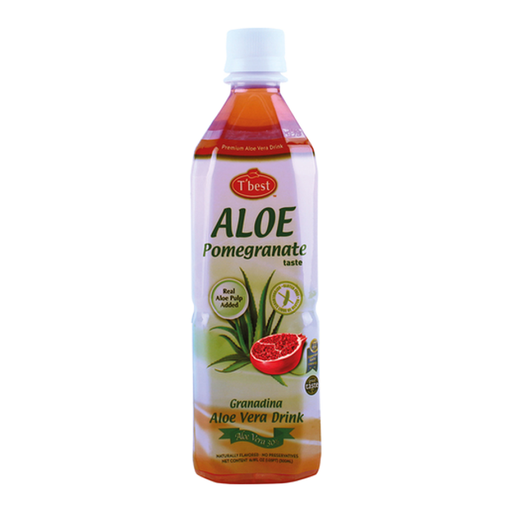
Why it suits this profile: The box of 20 bottles, each 500 ml, is practical for frequent consumption, an office or a retail outlet catering to different flavour preferences.
The box contents, bottle size and origin in Korea are stated in the product information. However, check the current labelling and certification information before buying.
20 bottles, 500 ml per bottle, pomegranate flavour and a box weight of approximately 11.5 kg according to the product details.
Alongside kiwi, strawberry and pomegranate, there are varieties with mango, lychee and green tea peach. According to the ingredients list, Tropical Aloe Vera Green Tea Peach combines aloe vera juice and pulp with green tea and peach. This version lists 7.9 grams of sugar per 100 ml.
A Korean aloe vera drink such as OKF or T'best may appeal to fans of Asian supermarket products. Always check the language on the label, the origin, the volume and whether halal certification is stated. A brand’s product information is not independent evidence of efficacy, so choose based on verifiable ingredients and your own flavour preferences.
We’ve put together a complete, up-to-date list of products that fully meet these strict selection criteria and the applicable European safety regulations.
No. Many standard varieties contain sugar, fructose or fruit juice. Check the nutritional table and ingredients list. Even if a product title says “sugar-free”, you should still verify this on the label.
Store an unopened bottle according to the instructions on the packaging, usually in a cool place away from direct sunlight. Once opened, the bottle should generally be kept in the fridge. Close the cap securely and consume within the period stated on the label.
That depends on the price per litre, any delivery costs and the deposit. Divide the total price by the total number of litres. A multipack is particularly practical when you already know you like the flavour and will use the stock.
