
Vandaag of morgen in huis

Kwaliteit gegarandeerd

Welkomstaanbiedingen ontgrendelen: GRATIS bezorging | Tot 80% korting | Gratis 30 dagen JoyPlus-proefperiode
Download de app
At first glance, choosing an aloe vera drink seems straightforward: pick a flavour you like and add it to your basket. But these drinks can vary in sugar content, aloe vera content, texture, flavour and pack size. If you only look at the front of the bottle, you could end up paying more for a product that doesn’t suit the way you plan to use it.
This buying guide will help you make a more informed choice when buying an aloe vera drink. You’ll find out what to look for in an aloe vera drink with pulp, when a 500 ml bottle is a handy choice, and why a multipack isn’t always better value.
A sugar-free aloe vera drink may contain sweeteners. This means the label says there’s no sugar, but it doesn’t mean the drink tastes neutral or contains no sweeteners. So always check both the ingredients list and the nutrition table.
Product descriptions and packaging information can sometimes differ, too. For the latest details on a product’s ingredients, check the label on the bottle. For example, the product page for OKF Aloe Vera Drink Strawberry Sugar-Free states 0 grams of sugar per listed nutritional value, while the ingredients list mentions a sweetener.
Strawberry, mango or peach mainly describes the flavour. The amount of fruit or flavouring ingredients can vary from one product to another. For example, a mango drink may contain mango juice, flavouring or both. If you’re looking for a fruity aloe vera juice, check:
According to the product description, the T’best aloe vera mango drink contains 16% aloe vera juice and pulp, 6% apple juice and 1% mango juice. That gives you more to go on than the picture of mangoes on the label alone.
A multipack of aloe vera drinks is handy for a household, office or event, but it takes up space. A box of 20 500 ml bottles contains 10 litres of drink. So check in advance:
Store unopened bottles in a cool place, away from direct sunlight, as indicated in the product information. Once opened, keep the bottle chilled and use it within the time stated on the packaging.
An aloe vera drink in a 500 ml bottle fits easily in a bag, fridge door or desk drawer. This size makes sense if you want to try different flavours or tend to use one bottle at a time.
For home, a shared household or a workplace, a pack of six or twenty bottles may be more practical. As well as checking the number of bottles, look at the total volume. Six 500 ml bottles add up to 3 litres; a box of twenty contains 10 litres.
The terms juice, gel and pulp aren’t automatically interchangeable. Aloe vera gel often gives the drink its distinctive pieces or thicker texture. An aloe vera drink with pulp is therefore different from a completely clear drink.
Check the order of the ingredients. They’re generally listed from highest to lowest proportion. Also check the percentage if the manufacturer provides it. For example, the product information for OKF Aloe Vera Juice King 1.5L states that it contains 30% aloe vera gel. The same description also says the drink contains sugar, so it isn’t comparable to a sugar-free version.
Compare nutritional values per 100 ml, not just per bottle. A 500 ml bottle contains five times the amount shown per 100 ml. The OKF Peach variant states that it contains 9 grams of sugar per 100 ml. That works out at around 45 grams of sugar per 500 ml bottle, if the same value applies to the whole bottle.
Look out for words such as fructose, too. Fructose is a sugar, so it isn’t the same as being sugar-free. If in doubt, go by the current packaging and EU nutrition declaration.
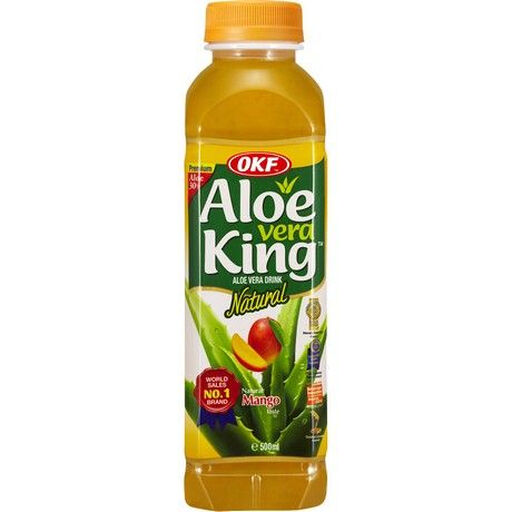
Why it suits this profile: A single 500 ml bottle is a sensible choice if you’re trying aloe vera drink for the first time and don’t want to buy a large supply straight away.
You won’t be buying a large quantity before you know whether you like the mango flavour and aloe vera texture. Check the latest label for sugar and ingredients.
500 ml per bottle; mango flavour; suitable for home, on the go or at work.
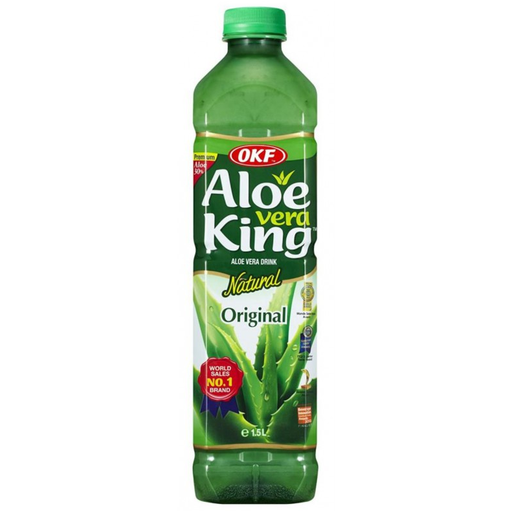
Why it suits this profile: The larger bottle is a good option for fans who pay close attention to the amount of aloe vera gel and want to stock up for home.
The product description states that it contains 30% aloe vera gel, so you can compare its composition. The same description also mentions sugar, so this isn’t a sugar-free option.
1.5 litres; 30% aloe vera gel according to the product information; pulpy texture.
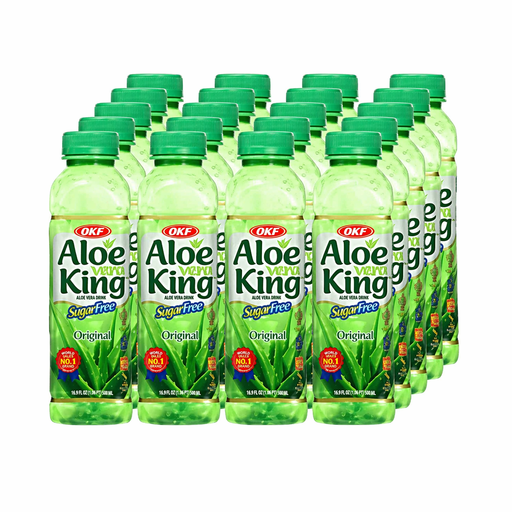
Why it suits this profile: The box of twenty bottles is designed for regular use, sharing or keeping stocked in the office.
The pack makes the total volume clear: 20 bottles of 500 ml each. Before buying, check you have enough storage space, and look at the best-before date and latest nutritional values.
20 individual 500 ml bottles; described as sugar-free in the product description; natural grape flavour according to the product information.
We’ve put together a complete, up-to-date list of products that meet these strict selection criteria and the applicable European safety requirements.
Not always. Aloe vera juice may contain a higher proportion of juice, while an aloe vera drink often also contains water, sugar, fructose, flavourings, acids and stabilisers. Check the percentage of aloe vera juice or gel on the label.
Keep an opened bottle in the fridge, make sure the cap is tightly closed and use the drink within the time stated on the packaging. Throw the bottle away if the seal was damaged before opening, or if the smell, colour or flavour has changed noticeably.
Not necessarily. Check the nutritional values per 100 ml. A sugar-free product may contain sweeteners and still have a different energy value. So always compare both ‘of which sugars’ and ‘energy’ on the label.
